Equipment
Ingredients
Dry Ingredients
- 125 g all-purpose flour
- 2 g fine sea salt
Wet Ingredients
- 300 ml whole milk, room temperature
- 2 large egg
- 30 g unsalted butter, melted and slightly cooled
Cooking Fat
- 15 g unsalted butter
Nutrition (per serving)
Method
Place a fine mesh sieve over a large mixing bowl and sift the all-purpose flour and fine sea salt to remove any lumps.
In a separate medium mixing bowl, whisk together the room-temperature whole milk and eggs until thoroughly combined and uniformly yellow.
Create a well in the center of the dry ingredients. Gradually pour the wet mixture into the well, whisking continuously in tight circles from the center outwards to gradually incorporate the flour and prevent lumps.
Pour the melted 30g of unsalted butter into the batter in a steady stream, whisking constantly until fully emulsified into the liquid.
Cover the bowl with a clean towel and let the batter rest at room temperature. This step allows the flour to fully hydrate and the gluten to relax.
Place a non-stick skillet over medium heat until it reaches approximately 190°C/375°F. Melt a tiny scraping of butter to lightly coat the surface.
Using a ladle, pour about 40ml of batter into the center of the hot skillet. Immediately lift the pan off the heat and tilt it in a circular motion to swirl the batter into a thin, even circle covering the base.
Return the skillet to the heat and cook for 1 to 2 minutes. Watch for the edges to turn golden brown and begin to curl away from the pan, while the surface loses its wet shine.
Slide a thin flexible spatula under the center of the pancake and gently flip it over. Cook for an additional 30 seconds until lightly speckled with brown spots.
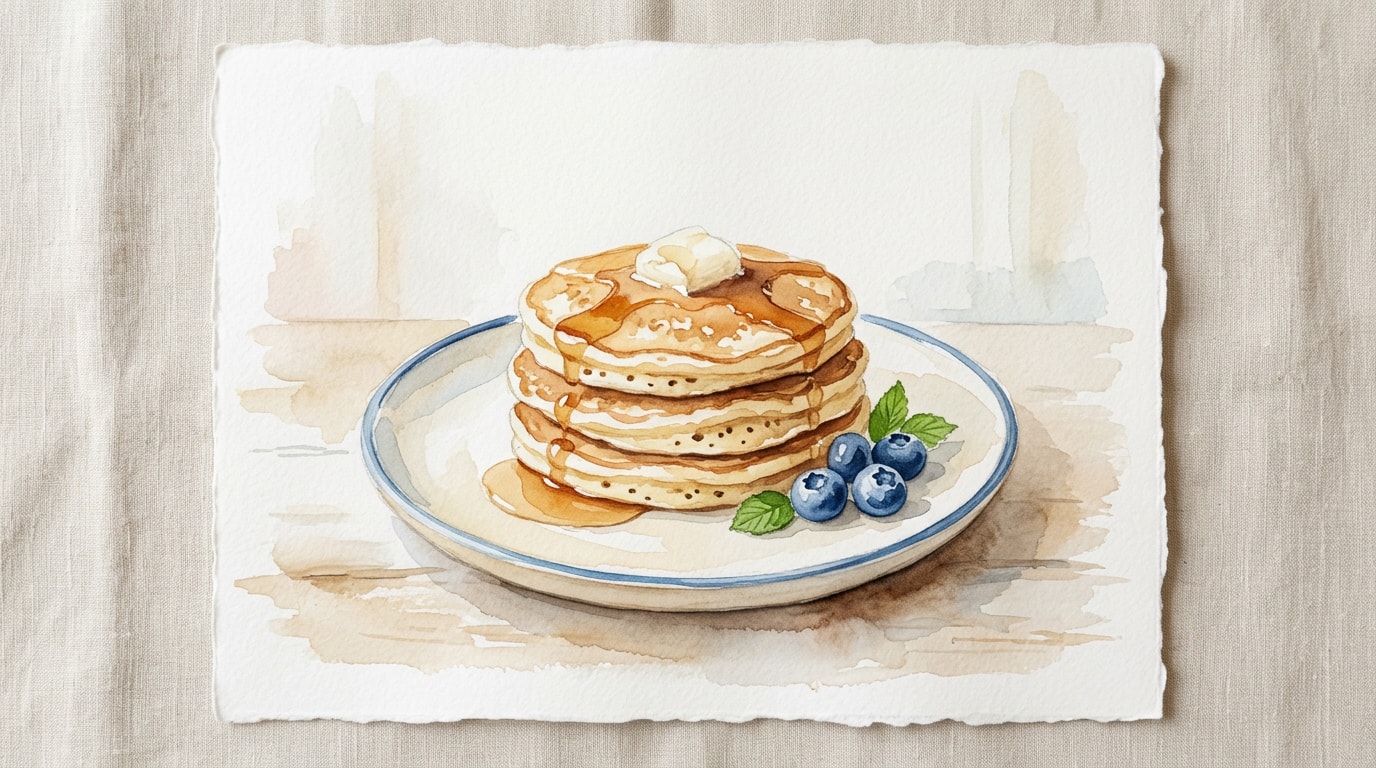
Slide the finished pancake onto a warm plate. Cover with a clean kitchen towel to retain moisture and flexibility. Repeat the cooking process with the remaining batter.
Chef's Notes
- Resting the batter is a non-negotiable step. It gives the starches time to absorb the liquid and allows the gluten formed during mixing to relax, ensuring tender pancakes that will not shrink drastically in the pan.
- To guarantee maximum versatility for savoury fillings like ham and gruyere or sweet toppings like lemon and sugar, keep the salt level moderate and completely omit vanilla extract or sugar from the batter itself.
- For the thinnest, most delicate texture, the batter consistency should resemble heavy cream. If it thickens excessively during the resting phase, thin it with a tablespoon of water or milk until it swirls effortlessly in the pan.
- Using clarified butter to grease the skillet prevents the milk solids from burning over medium heat, keeping the surface of your pancakes golden rather than dotted with black, scorched specks.
Storage
Refrigerator: 2 days — Store in an airtight container. Whisk vigorously before using as separation may occur.
Freezer: 1 month — Cooked pancakes can be frozen with parchment paper between each layer.
Reheating: Reheat cooked pancakes in a dry skillet over medium-low heat for 30 seconds per side.