Equipment
* optional
Ingredients
Yeast Activation
- 350 ml water, lukewarm
- 7 g active dry yeast
Dry Ingredients and Enrichment
- 500 g bread flour
- 12 g fine sea salt
- 15 g extra virgin olive oil
Nutrition (per serving)
Method
Measure out the lukewarm water, ensuring it is around 35 degrees Celsius or 95 degrees Fahrenheit. Sprinkle the active dry yeast over the water and let it sit undisturbed for 10 minutes until a frothy layer develops on the surface.
In a large mixing bowl, thoroughly whisk together the bread flour and fine sea salt. Pour in the activated yeast mixture and the extra virgin olive oil. Mix vigorously with a wooden spoon or your hands until a shaggy, cohesive dough forms and no dry spots of flour remain.
Turn the dough out onto a clean, lightly floured work surface. Knead the dough firmly for 10 minutes, pushing away with the heel of your hand and folding it back over itself. Continue until the dough becomes smooth, supple, and mildly tacky but not sticky.
Lightly coat a large, clean bowl with a drizzle of olive oil. Form the kneaded dough into a tight ball, place it in the bowl, and roll it once to coat the surface in oil. Cover securely with a damp towel or plastic wrap. Let it rest in a warm, draft-free spot for 1 hour and 30 minutes, or until doubled in volume.
Gently punch down the dough to release excess gas. For pizza, use a dough scraper to divide it into two or three equal portions, shape each into a tight ball, and let them rest covered for 45 minutes. For focaccia, stretch the entire mass of dough gently into an oiled 9 by 13 inch baking pan, cover, and let it proof for 45 minutes.
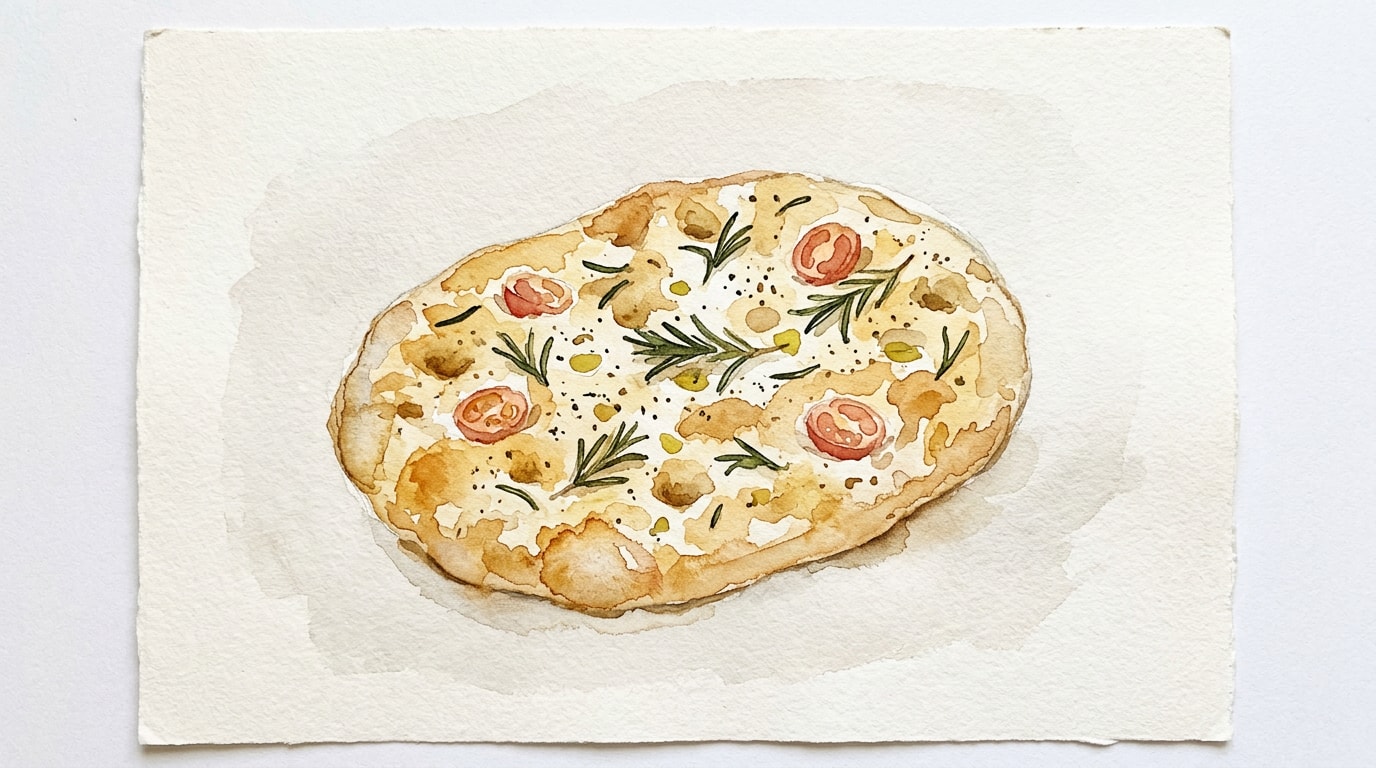
Prepare the final shape for baking. For pizza, gently stretch each ball outward from the center, leaving a slightly thicker rim for the crust, and top as desired. For focaccia, generously coat your fingers in olive oil and press deeply into the dough, pushing all the way down to the pan to create characteristic dimples across the entire surface, then drizzle with more oil and flaky salt.
Bake the prepared dough. For pizza, bake at 260 degrees Celsius or 500 degrees Fahrenheit on a preheated pizza stone for 10 to 12 minutes. For focaccia, bake at 220 degrees Celsius or 425 degrees Fahrenheit for 20 to 25 minutes until the top is deeply golden brown and the edges are crisp.
Chef's Notes
- For vastly superior flavor and a more digestible crust, place the covered bowl of dough in the refrigerator immediately after kneading for a 24 to 72 hour cold fermentation, then proceed with shaping.
- Hydration in this recipe is at 70 percent. This creates a beautifully open crumb but makes the dough slighly tackier than a standard bread dough. Trust the process and avoid over-flouring your workspace.
- When stretching pizza dough, always use gravity to your advantage by draping the dough over your knuckles. Never use a rolling pin, which will push out the precious gas bubbles you developed during proofing.
Storage
Refrigerator: 3 days — Store in an airtight, oiled container. Cold fermentation improves flavor significantly.
Freezer: 3 months — Freeze in individual tight dough balls wrapped lightly in oil and plastic wrap.
Reheating: Thaw frozen dough overnight in the refrigerator, then bring to room temperature for 2 hours before shaping.