Equipment
Ingredients
Cabbage & Brine
- 2500 g napa cabbage, whole
- 200 g coarse sea salt
- 500 ml water
Rice Flour Porridge (Binder)
- 350 ml water
- 20 g sweet rice flour
- 25 g sugar
Kimchi Paste Seasoning
- 60 g garlic, peeled
- 10 g ginger, peeled
- 80 g onion, peeled
- 120 ml fish sauce
- 30 g salted shrimp (saeujeot)
- 100 g gochugaru
Vegetables
- 400 g korean radish (mu), julienned
- 60 g carrot, julienned
- 60 g green onions, cut into 3cm lengths
Nutrition (per serving)
Method
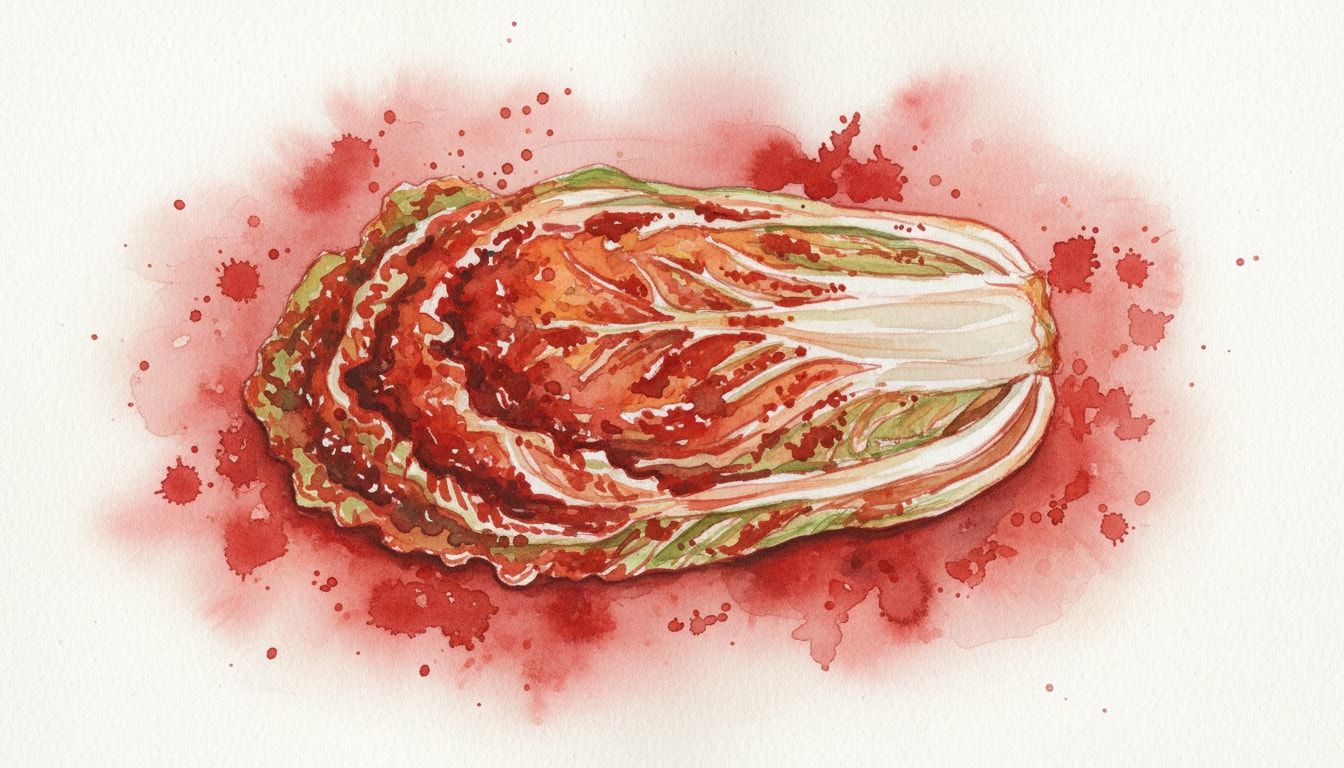
Prepare the cabbage: Cut a slit in the base of each cabbage head and tear it open by hand to preserve the leaves. Cut each half again into quarters if the heads are large. Rinse efficiently with cold water.
Salt the cabbage: Dissolve half the salt in 500ml water. Dip each cabbage quarter in this brine. Then, taking the remaining dry salt, lift each leaf and sprinkle salt directly onto the thick white stems (leaves need less salt). Place in a large basin.
Let stand for 6 hours (turn them over every 2 hours) until the stems are flexible and bend without snapping. Rinse thoroughly 3 times in cold water to remove excess salt, then drain in a colander for at least 1 hour.
Make the porridge: In a small saucepan, whisk water and sweet rice flour. Bring to a boil over medium heat, stirring constantly until it bubbles and thickens. Stir in the sugar, cook 1 more minute, then remove from heat and let cool completely.
Make the base: Blend garlic, ginger, onion, fish sauce, and salted shrimp until smooth. Pour this into a large mixing bowl. Add the cooled porridge and the Gochugaru (red pepper flakes). Mix well.
Finish the filling: Add the julienned radish, carrots, and green onions to the red pepper paste. Mix by hand (wearing gloves) until the vegetables are well-coated.
Stuff the kimchi: Working with one cabbage quarter at a time, spread the radish paste mixture over each leaf, focusing on the white stem parts. Take the outermost leaf and wrap it around the rest of the quarter to form a tight packet.
Pack the jar: Press the kimchi packets firmly into the jar to remove air pockets. Leave at least 3-4cm (1.5 inches) of headspace at the top for fermentation gases.
Ferment: Leave at room temperature for 1-2 days until it smells sour and gas bubbles appear (press down with a spoon to check). Then move to the refrigerator to slow-ferment for at least 3-5 days before eating.
Chef's Notes
- Burping the Jar: Fermentation produces carbon dioxide. If using a standard screw-top jar, open the lid once a day during the room-temperature phase to release pressure and prevent glass breakage or leaks.
- Vegan Modification: To make this vegan, substitute the fish sauce with an equal amount of soy sauce or strong kelp/mushroom stock, and replace the salted shrimp with 1 tablespoon of miso paste or simply omit.
- Fermentation Timeline: 1-2 days at room temp kickstarts the bacteria. It is edible immediately, but the flavor is 'raw'. The 'ripe' sour taste develops after about 1-2 weeks in the fridge.
- Gloves: Always use food-safe rubber or vinyl gloves when handling the paste. Gochugaru can stain skin and cause burning sensations.
- Texture: For the crunchiest kimchi, ensure the cabbage is thoroughly drained after rinsing. Excess water dilutes the seasoning and can make the cabbage mushy.
Storage
Refrigerator: 3 months — Flavor deepens and sours over time. Can be kept for 6+ months for soups/stews.