Equipment
Ingredients
Lamb Stew
- 800 g lamb shoulder, diced into 3cm cubes
- 30 ml olive oil
- 150 g brown onion, finely diced
- 200 g carrots, cut into thick rounds
- 100 g celery, sliced
- 15 g garlic, minced
- 30 g tomato paste
- 150 ml dry white wine
- 800 ml chicken stock, hot
- 5 g fresh rosemary, leaves stripped and chopped
- 150 g frozen spring peas, thawed
Ricotta Spinach Dumplings
- 200 g fresh spinach, washed
- 250 g whole milk ricotta, drained of excess liquid
- 50 g parmesan cheese, finely grated
- 1 egg, beaten
- 80 g plain flour, sifted
- 1 g ground nutmeg
- 5 g salt
Nutrition (per serving)
Method
Heat half of the olive oil in a Dutch oven over high heat. Season the diced lamb generously with salt and pepper. Working in batches, sear the lamb until deeply browned on all sides. Transfer the browned lamb to a plate. Ensure raw meat surfaces and utensils are washed to prevent cross-contamination.
Reduce the heat to medium and add the remaining olive oil. Add the onion, carrots, and celery. Cook until the vegetables begin to soften and the onion turns translucent.
Stir in the minced garlic and tomato paste, cooking for one minute until fragrant and slightly darkened. Pour in the white wine to deglaze the pot, scraping up all the browned bits from the bottom with a wooden spoon.
Return the lamb and any resting juices to the pot. Pour in the hot chicken stock and add the fresh rosemary. Bring to a boil, then reduce the heat to low, cover, and simmer gently until the lamb is fork-tender and reaches an internal temperature of at least 90 Celsius or 195 Fahrenheit.
While the stew simmers, bring a large saucepan of salted water to a boil. Blanch the fresh spinach for 30 seconds until wilted. Drain immediately in a colander and rinse with cold water to stop the cooking. Squeeze the spinach aggressively to remove as much water as possible, then chop finely.
In a mixing bowl, combine the drained ricotta, finely chopped spinach, grated parmesan, beaten egg, salt, and nutmeg. Gently fold in the sifted flour until just combined into a soft, slightly sticky dough.
Using damp hands, roll the ricotta mixture into small walnut-sized balls, placing them on a lightly floured tray until ready to cook.
Return the saucepan of salted water to a very gentle simmer. Carefully drop the dumplings into the water in batches. Cook until they float to the surface, then allow them to cook for 1 more minute. Remove with a slotted spoon and set aside.
During the final 5 minutes of the stew cooking time, stir in the thawed spring peas. Taste the broth and adjust the seasoning with salt and pepper if needed.
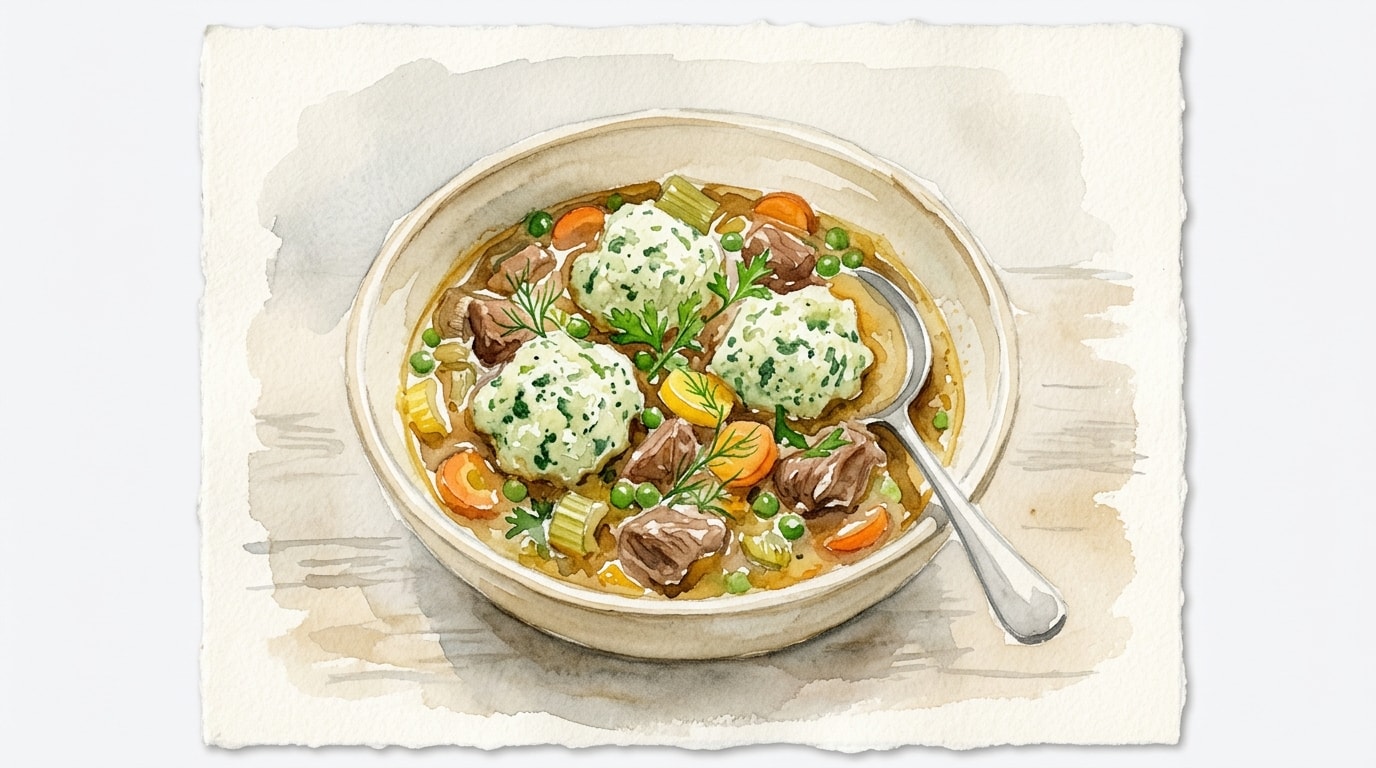
Ladle the hot lamb stew into shallow, warm serving bowls. Gently arrange the cooked ricotta spinach dumplings on top of the stew. Garnish with an extra dusting of grated parmesan and fresh black pepper if desired.
Chef's Notes
- When selecting lamb shoulder, look for cuts with good marbling. The intramuscular fat will render out during the long braise, enriching the broth and keeping the meat exceptionally tender.
- The secret to feather-light dumplings is managing moisture. If your ricotta is very wet, spread it on paper towels or cheesecloth over a sieve for an hour before starting.
- Avoid vigorously boiling the dumplings. A rolling boil creates severe agitation that can tear the delicate ricotta mixture apart. A gentle simmer is all that is required.
- White wine is preferred over traditional red in this dish to maintain a lighter, brighter flavor profile that complements the spring peas and delicate ricotta.
Storage
Refrigerator: 3 days — Store stew and dumplings in separate airtight containers to prevent the dumplings from becoming soggy.
Freezer: 2 months — Freeze the stew only. The ricotta dumplings do not freeze well once cooked.
Reheating: Reheat the stew gently on the stovetop over medium heat. Warm the dumplings separately in a steamer or a splash of hot broth.