Equipment
Ingredients
Wrappers
- 30 dried corn husks
Pork Braise
- 1000 g boneless pork shoulder, cut into 5cm chunks
- 150 g white onion, quartered
- 20 g garlic, peeled whole cloves
- 15 g fine sea salt
- 1500 ml water
Red Chile Sauce
- 40 g dried guajillo chiles, stemmed and seeded
- 30 g dried ancho chiles, stemmed and seeded
- 15 g garlic, peeled
- 3 g ground cumin
- 2 g dried mexican oregano, crushed
- 15 ml vegetable oil
Blue Corn Masa
- 300 g vegetable shortening, room temperature
- 1000 g freshly ground nixtamalized blue corn masa, smooth and hydrated
- 10 g baking powder
- 12 g fine sea salt
- 250 ml reserved pork broth, warm
Nutrition (per serving)
Method
Place the dried corn husks in a large bowl or sink and cover completely with hot water. Place a heavy plate on top to keep them submerged. Let them soak until completely pliable.
Combine the pork shoulder, onion, 20g garlic, 15g salt, and water in a Dutch oven. Bring to a gentle boil, then reduce heat, cover, and simmer until the pork falls apart easily. The internal temperature of the pork should reach at least 90C/195F.
Remove the pork from the liquid and let cool slightly. Strain the cooking liquid and reserve 250ml for the masa and extra for blending the chiles. Shred the pork using two forks and discard any large pieces of fat.
Heat a dry skillet over medium heat. Briefly toast the guajillo and ancho chiles for 10-15 seconds per side until fragrant but not burned. Transfer the toasted chiles to a bowl and cover with hot water to soften.
Drain the chiles and place them in a blender with 15g garlic, cumin, oregano, and about 200ml of the reserved pork cooking liquid. Blend on high until exceptionally smooth. Pass through a fine mesh strainer if a smoother texture is desired.
Heat the vegetable oil in a skillet over medium heat. Carefully pour in the strained chile puree and simmer until slightly thickened. Fold in the shredded pork, tossing gently until the meat is completely coated. Remove from heat and cool to room temperature.
In a stand mixer fitted with the paddle attachment, whip the vegetable shortening on medium-high speed until incredibly light, fluffy, and stark white.
Reduce mixer speed to medium. Gradually add the fresh blue corn masa, baking powder, and 12g salt to the whipped shortening. Slowly stream in the warm reserved pork broth, beating continuously until the mixture resembles thick cake batter.
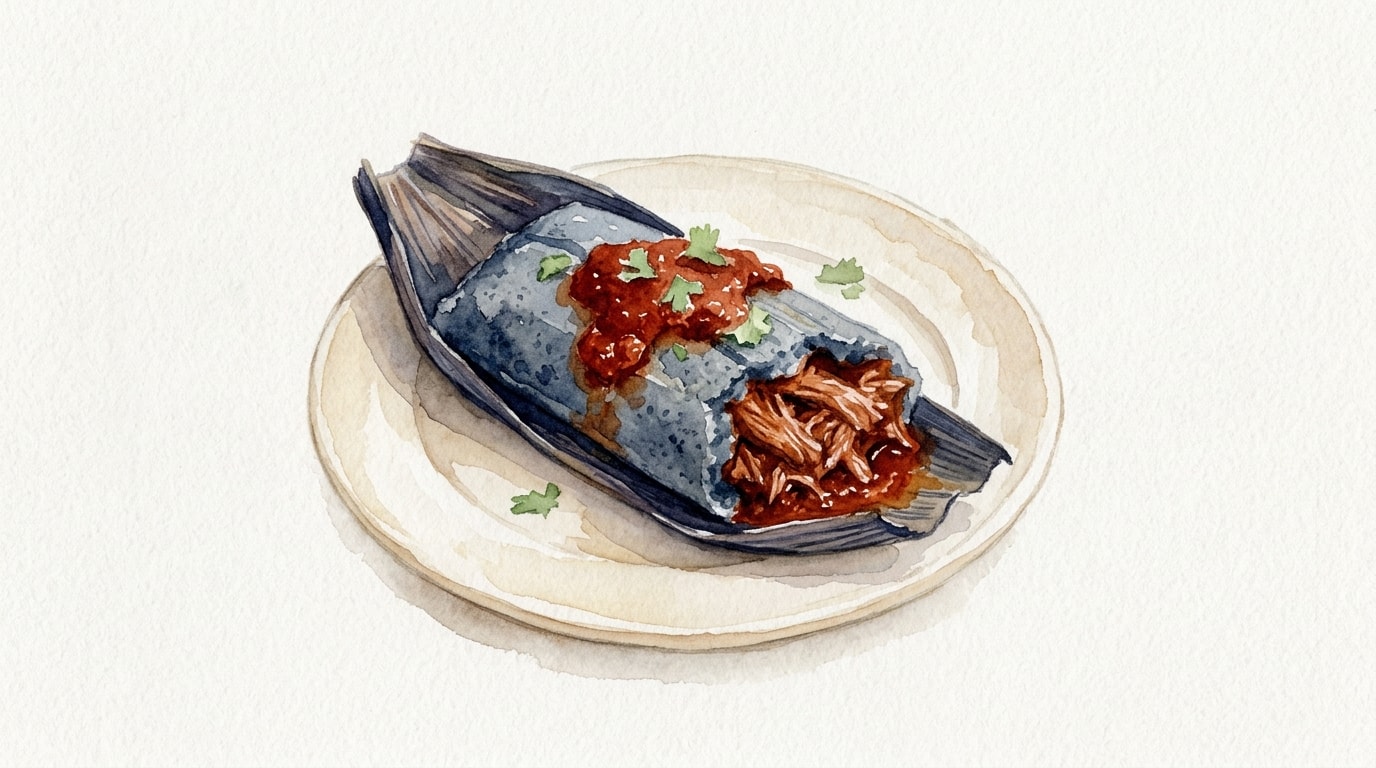
Take a softened corn husk and pat it dry. Spread about 40g of the blue masa evenly over the top, wider half of the husk, leaving a border at the edges. Place a generous spoonful of the red chile pork filling in the center of the masa.
Fold one side of the husk over the filling, then fold the other side overlapping it, ensuring the masa completely surrounds the meat. Fold the empty, narrow bottom tail up against the seam to secure the tamal. Repeat for remaining ingredients.
Fill the bottom of a large pot with water up to the steamer rack. Bring to a boil. Arrange the tamales vertically, open ends pointing up, leaning against each other. Cover with extra husks, a damp towel, and a tight-fitting lid. Steam continuously.
Carefully remove the steamer pot from the heat and take off the lid. Let the tamales rest undisturbed in the pot to allow the masa to firm up and set its structure before serving.
Chef's Notes
- The float test is crucial for impeccably light tamales: drop a small bead of beaten masa into a glass of cold water; if it floats securely at the surface, your masa is adequately aerated.
- Using vegetable shortening instead of traditional lard provides a clean, neutral flavor profile that allows the nuanced, earthy sweetness of the freshly ground blue corn to shine brilliantly.
- Always shred the pork shoulder while it is still warm; the muscle fibers separate cleanly and will absorb the rich red chile sauce much more effectively than cold meat.
- Do not skip reserving the braising liquid to hydrate your masa. This liquid imparts a savory depth and cohesion that simple water cannot replicate.
- Fresh nixtamalized blue corn masa can sometimes vary in moisture content. Adjust the added broth slowly, looking for the texture of a thick, spreadable buttercream frosting.
Storage
Refrigerator: 5 days — Store cooked tamales tightly wrapped in their husks in an airtight container.
Freezer: 3 months — Freeze fully cooked and cooled tamales in vacuum-sealed bags to prevent freezer burn.
Reheating: Steam from cold or frozen until heated through, or wrap in a damp paper towel and microwave on medium power.