Equipment
Ingredients
Tuna
- 300 g tuna steaks, sashimi grade, cut into 2 equal pieces
- 2 g salt
- 2 g black pepper, freshly cracked
- 15 ml neutral cooking oil
Teriyaki Glaze
- 45 ml soy sauce
- 45 ml mirin
- 45 ml sake
- 15 g sugar
- 5 g ginger, peeled and finely grated
Crispy Noodles and Garnish
- 50 g dried thin rice vermicelli noodles
- 500 ml neutral cooking oil
- 10 g scallions, finely sliced
- 3 g sesame seeds, toasted
Nutrition (per serving)
Method
In a small saucepan, combine the soy sauce, mirin, sake, sugar, and grated ginger.
Bring the sauce mixture to a gentle simmer over medium heat. Cook until it reduces by half and coats the back of a spoon, which takes about 5 to 7 minutes. Remove from heat and set aside.
In a wok or deep frying pan, heat the deep-frying oil to 200°C/390°F.
Carefully drop the dried rice noodles into the hot oil in two separate batches. They will puff up and become crispy almost instantly, taking only 2 to 3 seconds per batch.
Using tongs, immediately remove the puffed noodles from the oil and drain them on a wire rack or paper towel-lined plate.
Pat the sashimi-grade tuna steaks completely dry with paper towels. Season both sides evenly with the salt and black pepper.
Heat a heavy-bottomed skillet or cast iron pan over high heat until visibly smoking. Add the 15ml of searing oil, then carefully place the tuna steaks in the pan. Sear for 45 to 60 seconds per side to achieve a rare center, aiming for an internal temperature of 46°C/115°F.
Transfer the seared tuna to a clean cutting board and let it rest for 2 minutes before slicing against the grain into 1 centimeter thick pieces.
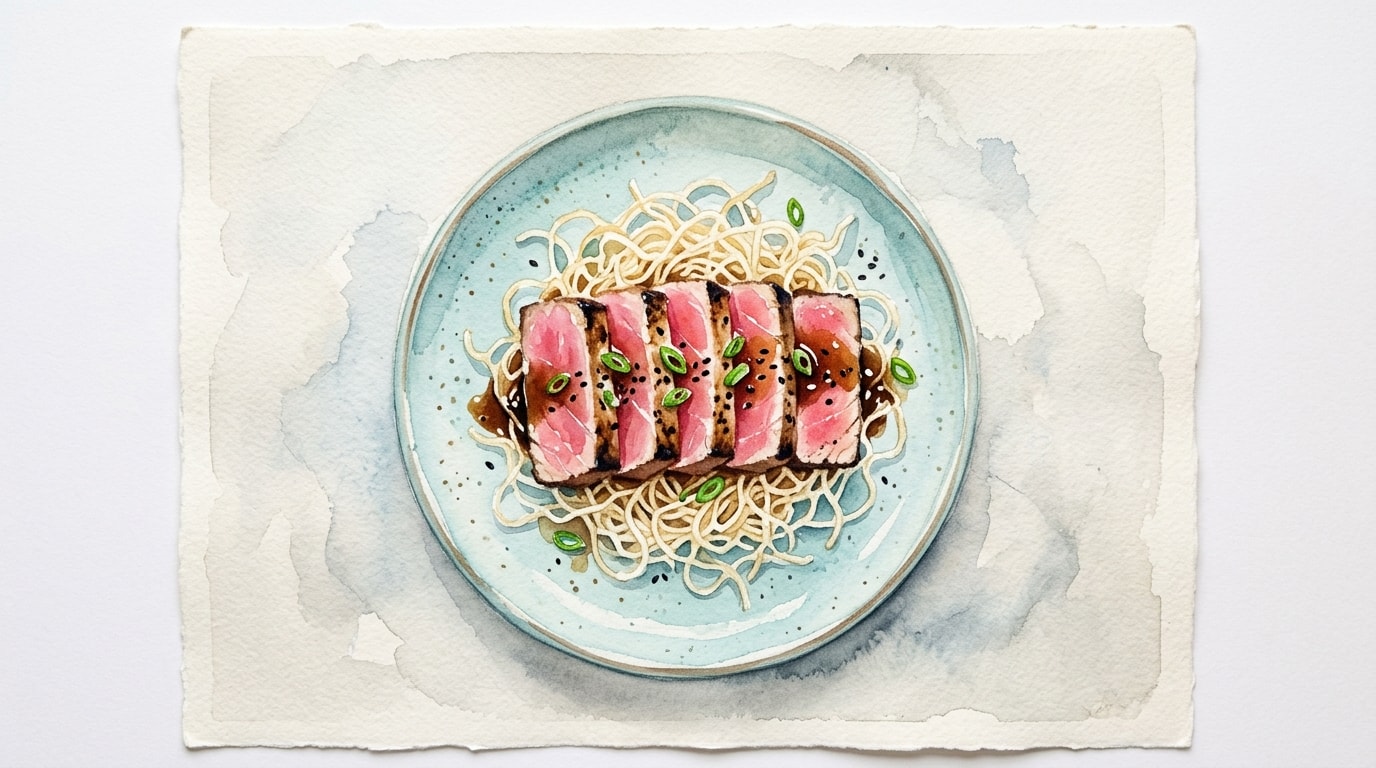
Divide the crispy rice noodles among plates. Arrange the sliced seared tuna on top, drizzle generously with the warm teriyaki glaze, and garnish with sliced scallions and toasted sesame seeds.
Chef's Notes
- Using sashimi-grade tuna is strictly required since the center will be served raw. Inform your fishmonger that you plan to lightly sear it.
- Moisture is the enemy of a good sear. Patting the tuna completely dry ensures the pan's heat goes directly into creating a crust rather than evaporating surface water.
- For the crispiest rice noodles, ensure they are completely dry before frying. Even a drop of water can cause the intensely hot oil to splatter aggressively.
- Homemade teriyaki sauce relies on the balance of sake, mirin, and soy sauce. Avoid substituting with pre-made sauces for the most authentic flavor profile.