Equipment
Ingredients
Aromatics & Broth
- 400 ml full-fat coconut milk
- 50 g thai red curry paste
- 240 ml chicken or seafood broth, warm
- 15 ml fish sauce
- 15 g palm sugar, finely chopped
- 4 kaffir lime leaves, torn, stems removed
- 1 lemongrass, bruised and cut into 5cm lengths
Protein & Noodles
- 400 g large raw shrimp, peeled, deveined, tails removed
- 200 g dried rice noodles, medium width like sen lek or pad thai noodles
Garnish
- 100 g bean sprouts, rinsed and drained
- 10 g fresh cilantro, roughly chopped
- 30 g roasted peanuts, crushed
- 1 lime, cut into wedges
Nutrition (per serving)
Method
Place the dried rice noodles in a medium pot or large heatproof bowl. Cover with boiling water and let soak until pliable and tender, usually 5 to 8 minutes depending on the brand. Drain thoroughly in a colander, rinse under cold running water to remove excess starch and stop the cooking, then set aside.
Open the can of coconut milk without shaking it. Scoop about 60ml of the thick coconut cream from the top into a large wok or skillet. Heat over medium heat until the cream bubbles and begins to reduce.
Add the Thai red curry paste to the hot coconut cream. Stir continuously until the paste becomes highly fragrant and the coconut oil begins to separate and pool around the edges of the paste, taking about 3 minutes.
Pour in the remaining coconut milk and the warm broth. Stir to dissolve the curry paste completely. Add the fish sauce, palm sugar, bruised lemongrass, and torn kaffir lime leaves. Bring the mixture to a gentle simmer and let it cook to meld the flavors for 10 minutes.
Carefully add the peeled shrimp to the gently simmering broth. To ensure food safety, wash your hands and the cutting board after handling the raw seafood. Poach the shrimp until they turn opaque and firm, reaching a safe internal temperature of 74°C or 165°F. Remove the wok from the heat immediately.
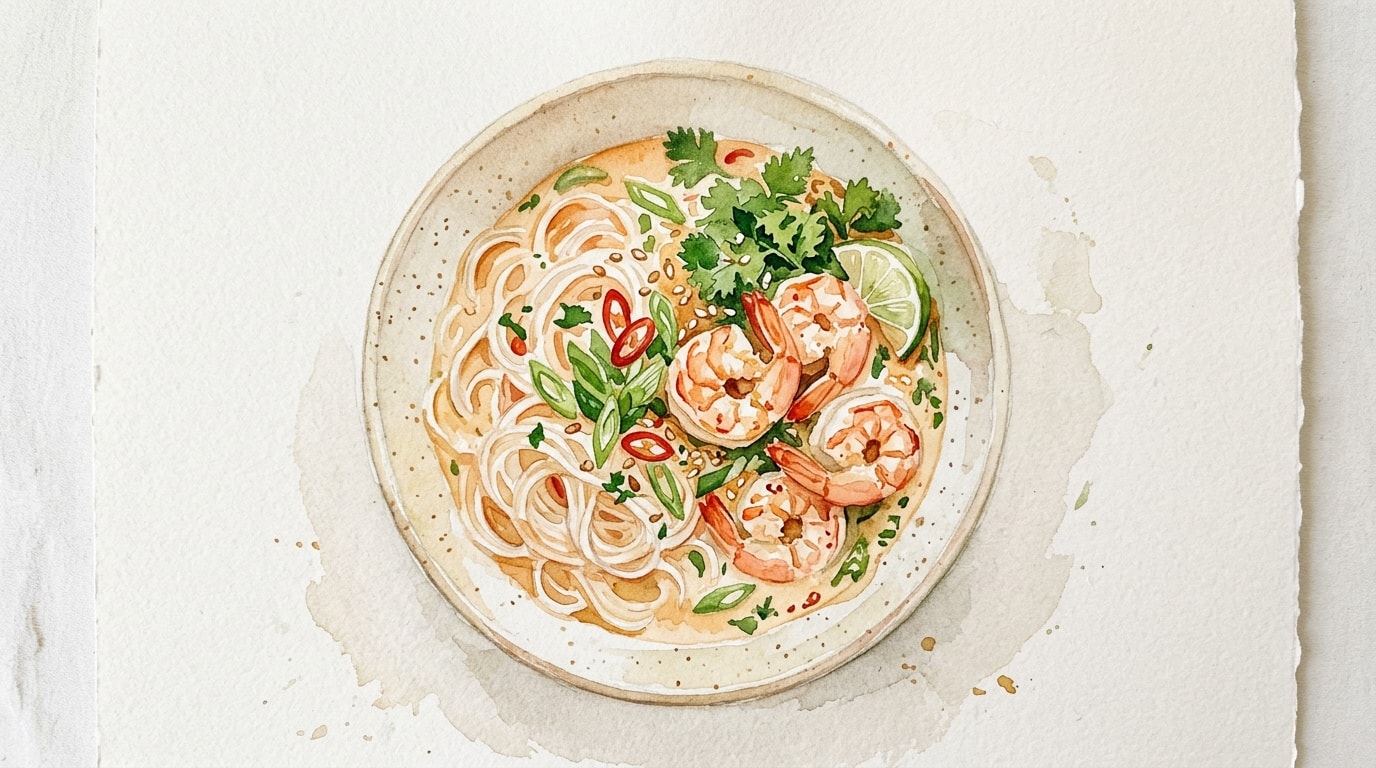
Divide the prepared rice noodles evenly among four deep bowls. Use tongs to distribute the cooked shrimp, then ladle the hot, fragrant coconut broth generously over the noodles. Discard the woody lemongrass stalks. Garnish each bowl with fresh bean sprouts, chopped cilantro, and crushed roasted peanuts. Serve immediately with a lime wedge on the side.
Chef's Notes
- Frying the curry paste in the separated coconut cream is a foundational Thai technique known as chao kathi. Do not rush this step, as it unlocks the fat-soluble flavor compounds in the spices.
- Because heat levels vary wildly between brands of curry paste, start with the recommended 50 grams and add more if you prefer a spicier dish.
- Bruising the lemongrass lightly with the back of your knife or a rolling pin helps shatter the fibrous cells, releasing its fragrant citrus oils into the broth.
- Fresh rice noodles can be used instead of dried; simply blanch them in boiling water for 15 to 30 seconds to warm them through before plating.
Storage
Refrigerator: 3 days — Store the broth and shrimp separately from the noodles to prevent the noodles from absorbing all the liquid and becoming mushy.
Freezer: 1 month — Freeze the broth only. Shrimp will become tough upon reheating, and rice noodles do not freeze well.
Reheating: Reheat the broth gently on the stove over medium-low heat until steaming. Pour over fresh or briefly soaked rice noodles.