Equipment
Ingredients
Noodles & Produce
- 200 g soba noodles, dried
- 150 g baby spinach, washed and dried
- 15 g garlic, minced
- 10 g ginger, peeled and grated
- 40 g scallions, sliced, white and green parts separated
Pantry & Seasonings
- 240 g black-eyed peas, canned, drained and rinsed
- 15 ml canola oil
- 2 g smoked paprika
- 240 ml low-sodium vegetable broth
- 15 ml low-sodium soy sauce
- 15 ml rice vinegar
- 10 ml toasted sesame oil
Nutrition (per serving)
Method
Bring a large pot of water to a boil at 100 degrees C or 212 degrees F. Add the soba noodles and cook according to package directions until tender but still chewy.
Drain the noodles in a colander and immediately rinse thoroughly under cold running water to remove surface starch. Set aside.
Heat the canola oil in a large skillet or wok over medium heat. Add the minced garlic, grated ginger, and the white parts of the sliced scallions. Cook until fragrant and softened.
Sprinkle the smoked paprika over the aromatics and stir constantly to bloom the spice and release its smoky aroma.
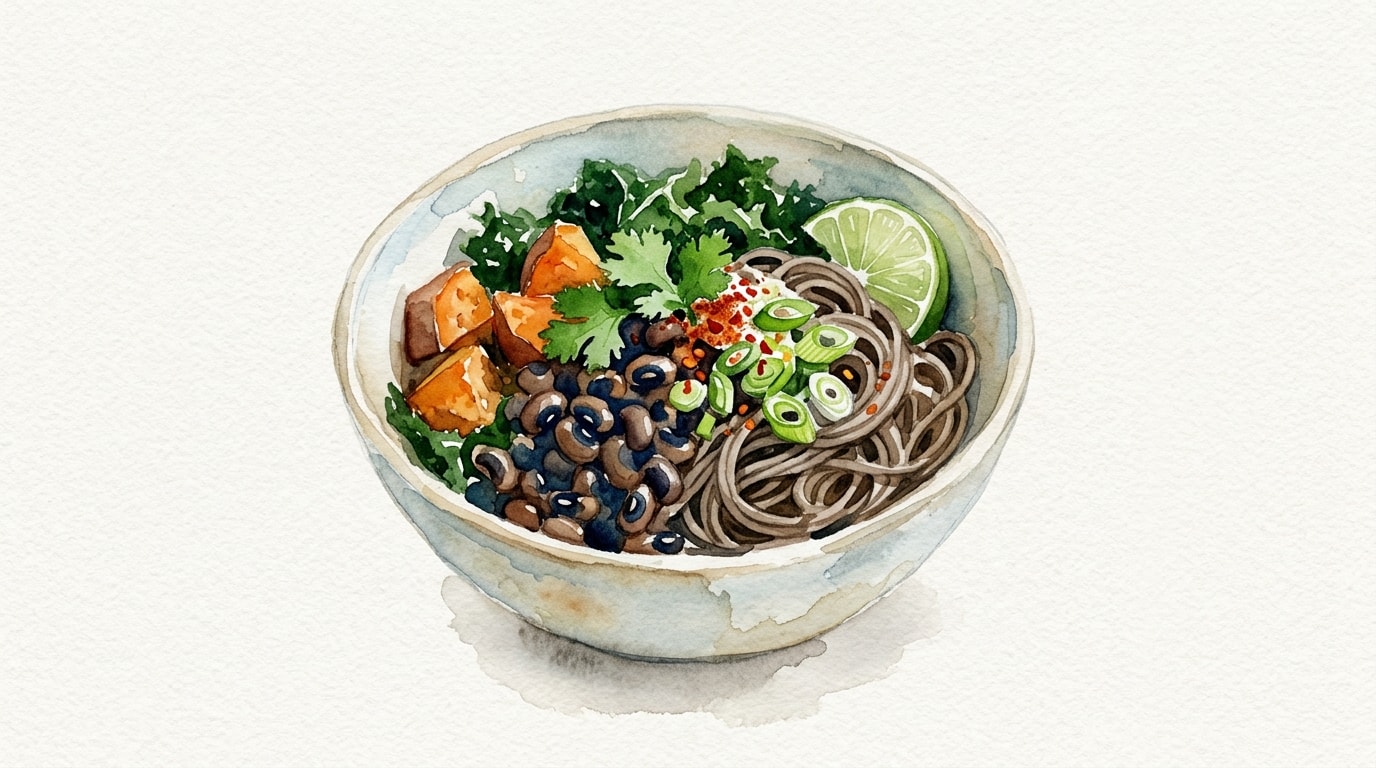
Pour in the low-sodium vegetable broth, low-sodium soy sauce, rice vinegar, and drained black-eyed peas. Bring to a gentle bubble and cook to allow the flavors to meld.
Add the baby spinach to the skillet in handfuls, gently folding it into the hot broth until it is just wilted.
Add the rinsed soba noodles and toasted sesame oil to the skillet. Toss everything together gently until the noodles are warmed through and evenly coated.
Divide the mixture among four bowls and top with the remaining green parts of the scallions.
Chef's Notes
- Rinsing soba noodles is a non-negotiable step in Japanese cooking. Buckwheat releases a lot of starch, and washing it off prevents gummy, clumping noodles.
- Smoked paprika serves as a powerful vegetarian stand-in for the smoked ham hocks or bacon traditionally used in Southern black-eyed pea recipes.
- To maintain the strict low-sodium profile, ensure your canned black-eyed peas clearly state no salt added on the label, and rinse them well before use.
- Soba noodles vary in their buckwheat to wheat ratio. For the most authentic flavor and highest fiber content, look for juwari soba, which is 100 percent buckwheat.
Storage
Refrigerator: 3 days — Noodles may soften further; store broth separately if possible
Reheating: Warm gently in a pan over medium heat with a splash of water, or microwave in 30-second intervals until steaming.