Equipment
Ingredients
Lamb
- 4 lamb shanks, trimmed of excess surface fat
- 10 g kosher salt
- 5 g black pepper, freshly ground
- 30 ml olive oil
Aromatics and Liquid
- 400 g leeks, white and light green parts only, washed thoroughly and sliced into 1cm rings
- 4 garlic, crushed but kept whole
- 250 ml dry white wine
- 500 ml chicken stock
- 5 g fresh thyme, whole sprigs
- 2 bay leaves, dried or fresh
Nutrition (per serving)
Method
Preheat your oven to 150°C or 300°F. Ensure your oven rack is in the lower-middle position to accommodate the Dutch oven.
Pat the lamb shanks completely dry with paper towels. Season generously on all sides with the kosher salt and freshly ground black pepper. Wash your hands and thoroughly clean any surfaces or utensils that came into contact with the raw lamb to prevent cross-contamination.
Heat the olive oil in the Dutch oven over medium-high heat until shimmering. Add the lamb shanks and sear until deeply browned on all surfaces. Take your time, allowing about 3 to 4 minutes per side.
Transfer the browned lamb shanks to a clean plate. Reduce the heat to medium. Add the sliced leeks and crushed garlic to the residual fat in the pot. Sauté until the leeks have softened significantly and are lightly caramelized.
Pour the dry white wine into the pot. Use a wooden spoon to scrape up all the flavorful browned bits from the bottom of the Dutch oven. Allow the wine to reduce by half.
Return the lamb shanks to the pot, nestling them into the leeks. Pour in the chicken stock, and add the fresh thyme sprigs and bay leaves. Bring the liquid to a gentle simmer on the stove.
Cover the Dutch oven with its lid and transfer it to the preheated oven. Braise until the meat is meltingly tender and registers an internal temperature of at least 93°C or 200°F.
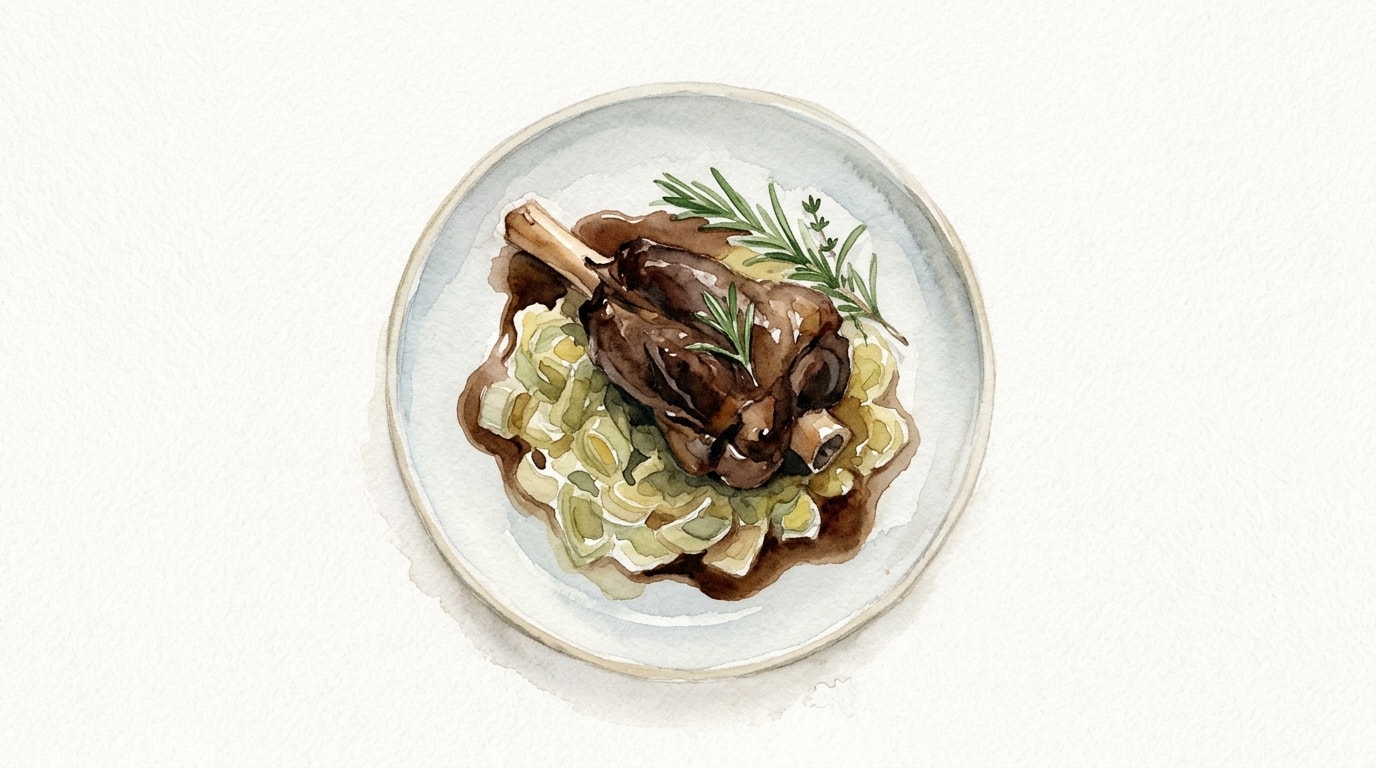
Carefully remove the pot from the oven. Transfer the lamb shanks to a platter and cover loosely with foil to rest. Skim any excess fat from the surface of the braising liquid, then discard the thyme stems and bay leaves before spooning the rich leek sauce over the meat.
Chef's Notes
- Searing is the foundation of this dish. Take the time to get a deep, dark crust on all sides of the shanks. The Maillard reaction provides the essential savory depth for the final sauce.
- Leeks can harbor a surprising amount of hidden sand between their layers. Always slice them first, then wash thoroughly in a large bowl of cold water, lifting them out so the dirt remains safely at the bottom.
- For the most refined texture and flavor, prepare this dish a day ahead. Chilling the pot overnight allows the fat to solidify at the top for easy removal, and the complex flavors will deepen exponentially.
- Do not skip checking the internal temperature of the lamb. While safe to eat at 63 degrees C or 145 degrees F, the connective tissue requires temperatures above 90 degrees C or 195 degrees F to melt into gelatin, which creates the signature fall-apart texture.
Storage
Refrigerator: 4 days — Store meat and sauce together in an airtight container. The flavor improves significantly on the second day.
Freezer: 3 months — Freeze in airtight containers, ensuring the meat is fully submerged in the braising liquid to prevent freezer burn.
Reheating: Thaw overnight in the refrigerator if frozen. Reheat gently in a covered pot over medium-low heat until the meat reaches 74 degrees C or 165 degrees F internally.