Equipment
Ingredients
Aromatics and Base
- 15 ml olive oil, room temperature
- 1 shallot, finely diced
- 3 garlic, minced
Sauce and Pasta
- 480 ml vegetable broth, hot
- 400 g marinara sauce
- 200 g no-boil lasagna noodles, broken into 5cm pieces
- 2 g kosher salt
- 1 g black pepper, freshly cracked
Vegetables and Herbs
- 250 g asparagus, woody ends trimmed, cut into 3cm pieces
- 15 g fresh basil, roughly torn
Cheeses
- 150 g ricotta cheese, whole milk preferred
- 100 g low-moisture mozzarella cheese, shredded
- 30 g parmesan cheese, freshly grated
Nutrition (per serving)
Method
Heat the olive oil in a large deep skillet over medium heat. Add the finely diced shallot and cook until softened and translucent, about 3 minutes. Stir in the minced garlic and cook for 1 minute further until highly fragrant. Do not let the garlic brown.
Pour the hot vegetable broth and marinara sauce into the skillet. Season with salt and black pepper. Stir well to combine and bring the liquid to a rolling boil at approximately 100°C/212°F.
Scatter the broken no-boil lasagna noodles into the boiling sauce. Use a wooden spoon to press them down, ensuring they are mostly submerged. Reduce the heat to medium-low, cover with a tight-fitting lid, and simmer gently at around 90°C/195°F for 10 minutes. Stir every 3 minutes to prevent the noodles from sticking together or scorching on the bottom.
Remove the lid and stir in the cut asparagus pieces. If the sauce looks excessively thick or dry, add a splash of warm water. Replace the lid and continue to simmer for 3 to 5 minutes.
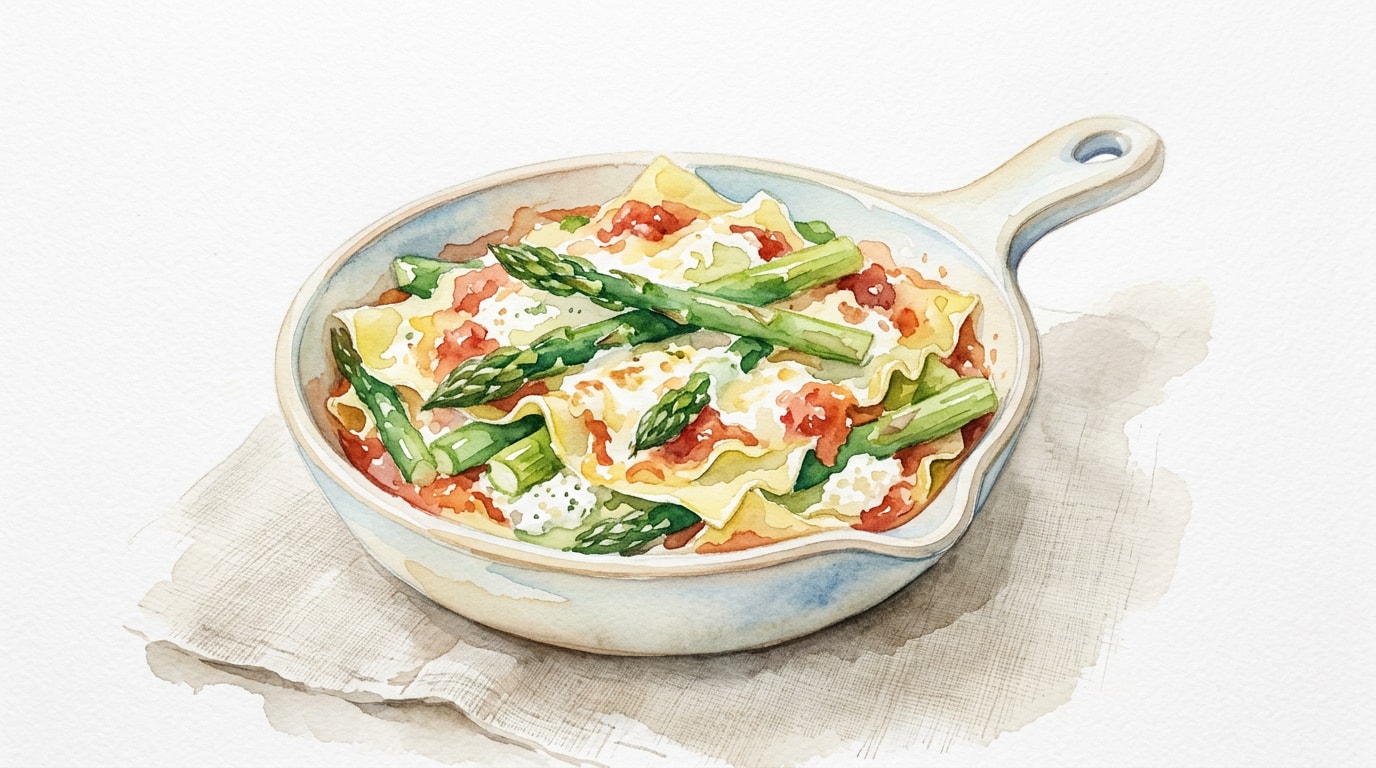
Turn off the heat. Stir half of the torn fresh basil and all of the grated parmesan cheese into the sauce and noodles. Using a spoon, drop evenly spaced dollops of ricotta cheese over the surface of the pasta. Sprinkle the shredded mozzarella evenly over the top.
Place the lid back on the skillet and let the residual heat melt the cheeses for 2 to 3 minutes, ensuring the dairy reaches a safe bubbling temperature of at least 74°C/165°F. Remove the lid, garnish with the remaining fresh basil, and serve immediately straight from the skillet.
Chef's Notes
- Breaking no-boil noodles can send shards flying. Place the dry sheets inside a clean kitchen towel before snapping them to contain the pieces safely.
- For the best texture and flavor, use whole milk ricotta. Skim milk ricotta has a lower fat content and tends to break or become grainy when exposed to the heat of the skillet.
- If your store-bought marinara sauce is highly acidic, stir in a pinch of granulated sugar or a small splash of heavy cream during step 2 to balance the flavor profile.
- Stirring the pasta gently but frequently is crucial. The starches from the no-boil noodles release directly into the skillet, creating a beautifully thick, glossy gravy, but this also makes the pasta highly prone to sticking to the bottom.
Storage
Refrigerator: 4 days — Store in an airtight container. The noodles will continue to absorb liquid as they sit.
Freezer: 1 month — Pasta may soften significantly upon thawing and reheating. Thaw overnight in the refrigerator.
Reheating: Reheat gently in a skillet over medium-low heat with a splash of water or broth to loosen the sauce.