Equipment
Ingredients
Eggplant Preparation
- 500 g eggplant, cut into 5cm batons
- 5 g salt
- 15 g cornstarch
- 45 ml neutral oil
Aromatics and Pork
- 150 g minced pork
- 15 g garlic, finely minced
- 10 g ginger, finely minced
- 20 g scallions, chopped, white and green parts separated
- 15 g doubanjiang, finely chopped
Yu Xiang Sauce
- 15 ml light soy sauce
- 5 ml dark soy sauce
- 15 ml chinkiang vinegar
- 10 g granulated sugar
- 60 ml chicken stock
- 5 g cornstarch
Nutrition (per serving)
Method
Toss the eggplant batons with salt in a colander. Let rest for 10 minutes to draw out bitter juices and partially collapse the sponge-like cellular structure.
Squeeze the eggplant gently to extract excess liquid, then pat completely dry with paper towels.
Transfer the dried eggplant to a mixing bowl and toss with cornstarch until lightly and evenly coated.
Combine the light soy sauce, dark soy sauce, chinkiang vinegar, sugar, chicken stock, and cornstarch in a small bowl. Stir vigorously until the sugar and cornstarch are completely dissolved.
Heat 30ml of neutral oil in a wok over medium-high heat (around 190°C/375°F). Fry the eggplant for 4 to 5 minutes until golden brown and tender. Remove from the wok and set aside.
Add the remaining 15ml of oil to the wok over high heat. Add the minced pork and brown thoroughly, breaking it apart continuously until it is fully cooked and reaches a safe internal temperature of 74°C/165°F.
Lower the heat to medium. Add the doubanjiang, minced garlic, minced ginger, and the white parts of the scallions. Stir-fry for 1 minute until the oil turns a vibrant red and the aromatics are highly fragrant.
Stir the prepared sauce mixture once more to ensure the cornstarch has not settled, then pour it into the wok, scraping up any browned bits from the pork.
Bring the sauce to a gentle bubble. Allow it to simmer and thicken for 1 to 2 minutes until glossy.
Return the fried eggplant to the wok. Gently toss to coat the eggplant completely in the thickened sauce, being careful not to mash the tender pieces.
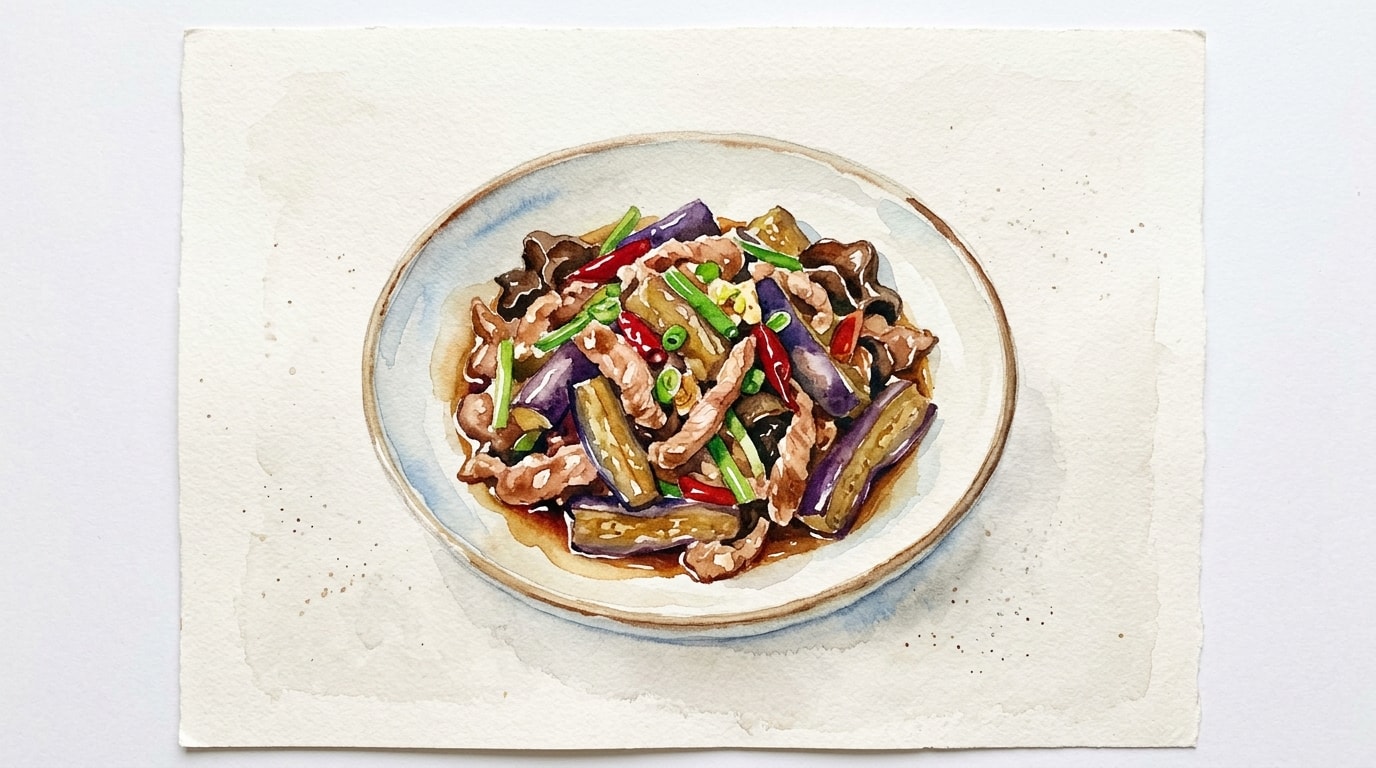
Transfer the stir-fry to a serving dish and top with the reserved green parts of the scallions. Serve immediately while piping hot.
Chef's Notes
- Salting the eggplant is a non-negotiable step. It collapses the spongy air pockets in the flesh, preventing it from absorbing excessive oil during the pan-frying stage.
- Chop your doubanjiang finely before adding it to the wok. The paste often contains large, whole fermented fava beans that can disrupt the texture of the refined sauce.
- The balance of sweet, sour, and savory is the hallmark of the Yu Xiang flavor profile. Do not skip the sugar; it is essential to mellow the sharp black vinegar and aggressive fermented chili paste.
- For the best texture, slice the eggplant so each piece has a little bit of the skin attached. The skin helps the tender flesh hold its shape during the final tossing.
Storage
Refrigerator: 3 days — Store in an airtight container.
Reheating: Reheat gently in a wok or microwave until piping hot, ensuring the pork reaches 74°C/165°F.