Equipment
Ingredients
Sea Bream and Salt Crust
- 1 whole sea bream, gutted, gills removed, scales left on
- 1000 g coarse sea salt
- 4 egg whites
- 30 ml water
- 1 lemon, sliced
- 10 g fresh thyme, whole sprigs
Beurre Blanc
- 60 ml dry white wine
- 30 ml white wine vinegar
- 1 shallot, finely minced
- 150 g unsalted butter, cold and cubed
- 2 g sea salt
- 1 g white pepper
Asparagus
- 300 g green asparagus, trimmed
Nutrition (per serving)
Method
Preheat the oven to 200°C/400°F. Line a large baking sheet with parchment paper.
In a mixing bowl, combine the coarse sea salt and egg whites. Mix thoroughly until the texture resembles wet sand, adding a splash of water if the mixture feels too dry to clump together.
Rinse the sea bream and pat it completely dry. Stuff the cavity with the lemon slices and fresh thyme. Wash your hands and sanitize surfaces immediately after handling the raw fish to prevent cross-contamination.
Spread a half-inch layer of the salt mixture on the prepared baking sheet in the rough shape of the fish. Place the stuffed sea bream on the salt bed, then pack the remaining salt mixture over the top and sides. Ensure the fish is completely sealed with no exposed flesh.
Bake the salt-encased fish for 30 minutes, or until an instant-read thermometer inserted directly through the crust into the thickest part of the fish registers an internal temperature of 55°C/130°F.
While the fish bakes, combine the dry white wine, white wine vinegar, and minced shallot in a small saucepan. Simmer over medium heat until the liquid reduces down to roughly one tablespoon.
Reduce the heat under the saucepan to the absolute lowest setting. Add the cold cubed butter one piece at a time, whisking continuously to form an emulsion. Season with sea salt and white pepper, then remove from heat and keep in a warm place.
Bring a pot of well-salted water to a boil. Blanch the trimmed green asparagus for 3 to 4 minutes. Drain thoroughly.
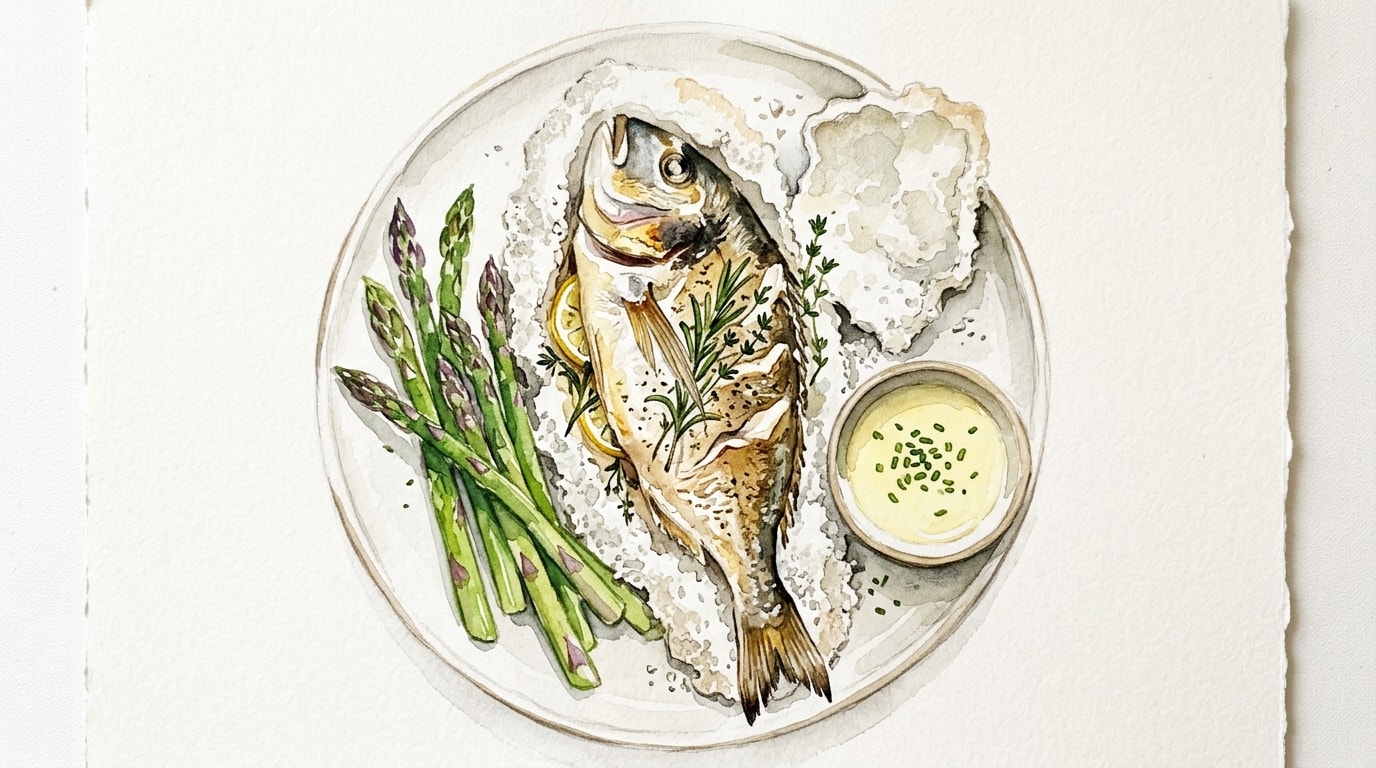
Using the back of a heavy spoon, strike the edges of the baked salt crust to crack it open. Carefully lift away the hardened salt and peel back the skin of the fish. Fillet the warm sea bream and serve immediately with the asparagus and beurre blanc.
Chef's Notes
- Always leave the scales on the sea bream when preparing a salt crust. The scales act as a crucial barrier to prevent the delicate flesh from becoming overly salty during the baking process.
- To crack the salt crust elegantly tableside, use the back of a heavy spoon or a small wooden mallet. Strike the lower edges first to lift the top crust off in larger, cleaner pieces.
- A classic beurre blanc relies heavily on a strong reduction, known as a sec, of the vinegar and wine. Do not rush this step; it provides the essential acidic backbone needed to cut through and balance the rich butter.
- Hold the finished beurre blanc in a pre-warmed thermos or keep it near, but not on, the stove. If the sauce gets too hot, the emulsion will break into an oil slick; if it cools down too much, the butter will solidify.
Storage
Refrigerator: 2 days — Fish and asparagus keep well; beurre blanc will split when chilled and is difficult to reheat properly.
Reheating: Gently reheat fish in a warm oven. Asparagus can be briefly sauteed. Beurre blanc is best made fresh.