Equipment
Ingredients
Dry Ingredients
- 300 g bread flour
- 200 g dark rye flour
- 10 g fine sea salt
- 7 g instant yeast
- 15 g unsweetened cocoa powder
- 8 g caraway seeds, whole or lightly crushed
Wet Ingredients
- 330 ml dark beer, room temperature
- 60 g dark molasses
- 30 g neutral cooking oil
Nutrition (per serving)
Method
In a large mixing bowl, whisk together the bread flour, dark rye flour, fine sea salt, instant yeast, cocoa powder, and caraway seeds until evenly distributed.
In a separate vessel, stir the room-temperature dark beer, dark molasses, and neutral oil until the molasses is fully dissolved into the liquid.
Pour the wet ingredients into the dry ingredients and mix with a wooden spoon or your hands until a shaggy, rough dough forms and no dry spots of flour remain.
Turn the dough out onto a lightly floured surface and knead for about 10 minutes. The dough will remain somewhat sticky due to the rye flour; resist adding too much extra flour. Knead until it feels elastic and holds its shape.
Place the dough in a lightly oiled bowl, cover tightly with a damp towel or plastic wrap, and let it rest in a warm area for 1 hour, or until roughly doubled in size.
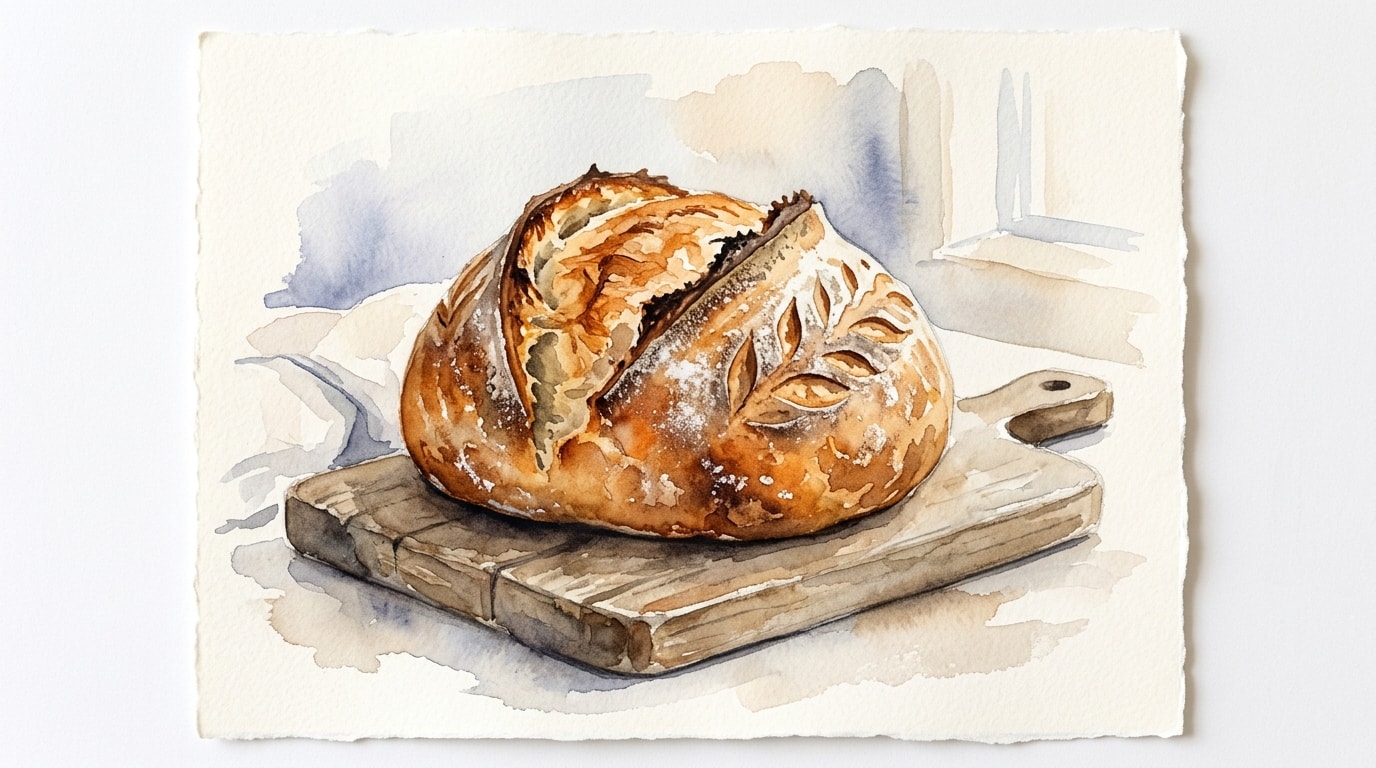
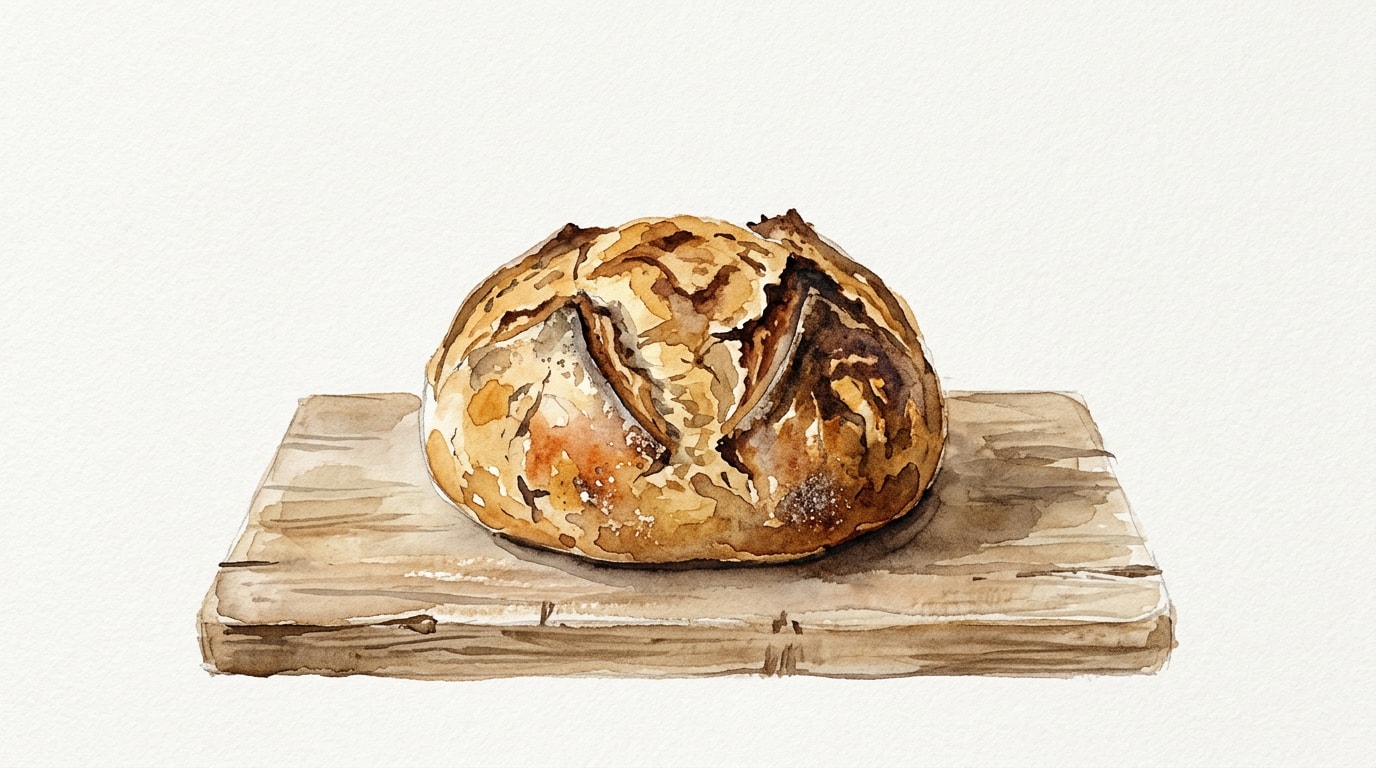
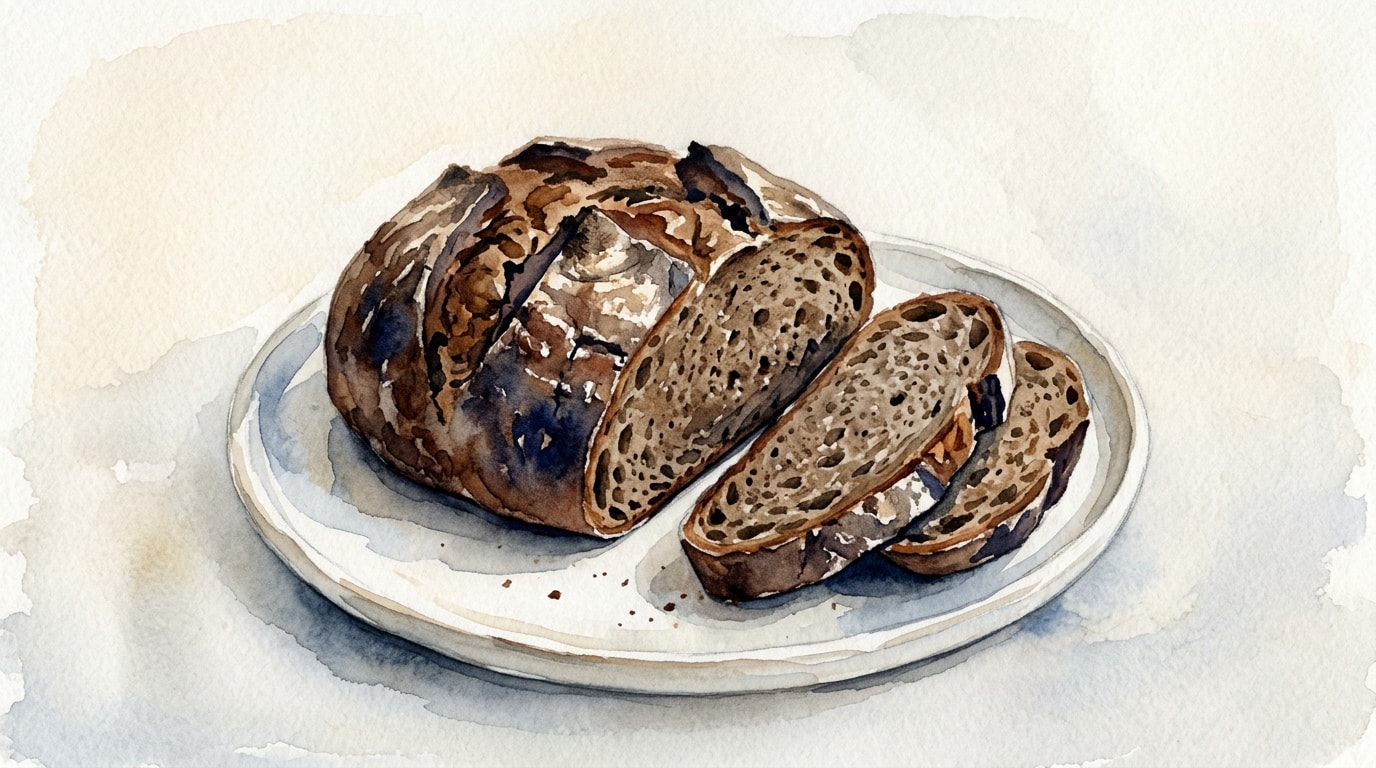
Gently punch down the dough to release large gas bubbles. Shape the dough into a tight, round boule by pulling the edges into the center and rolling it seam-side down on the counter. Transfer to a square of parchment paper.
Cover the shaped boule lightly with a towel and let it proof a second time for 45 minutes.
While the dough is in its final proof, place a Dutch oven with its lid inside the oven and preheat the oven to 230 degrees Celsius (450 degrees Fahrenheit). Let the pot heat for at least 30 minutes.
Once the dough has proofed, use a bread lame or a very sharp knife to score an X or a single deep slash across the top of the loaf, about 1.5 centimeters deep.
Carefully remove the hot Dutch oven from the oven. Using the corners of the parchment paper as a sling, lift the dough and lower it into the hot pot. Cover with the lid and bake for 20 minutes at 230 degrees Celsius (450 degrees Fahrenheit).
Remove the lid from the Dutch oven and reduce the oven temperature to 200 degrees Celsius (400 degrees Fahrenheit). Continue baking uncovered for another 20 minutes until the crust is deeply browned.
Carefully remove the baked loaf from the Dutch oven and transfer it to a wire cooling rack. Allow it to cool completely for at least 2 hours before slicing.
Chef's Notes
- Rye flour contains significantly less gluten-forming protein than wheat flour. It relies on complex carbohydrates called pentosans to trap gas. This means the dough will feel fundamentally different than a standard white loaf: stickier, denser, and less elastic. Trust the process and utilize bread flour to provide the structural scaffolding.
- The alcohol in the beer evaporates entirely during the baking process, but the remaining complex sugars, maltose, and roasted malt compounds caramelize beautifully, contributing to a darker crust and prolonged shelf life.
- For an authentic, traditional 'pumpernickel' aesthetic, use the darkest blackstrap molasses you can find. The small addition of unsweetened cocoa powder is a bakery secret to deepen the color without adding chocolate flavor.
- If your environment is particularly cold, proofing times may extend significantly. You can create a makeshift proofing box by placing your bowl in a turned-off oven next to a large mug of boiling water.
Storage
Freezer: 3 months — Slice the cooled loaf completely, wrap tightly in plastic wrap, and store in a freezer-safe bag. Toast slices straight from frozen.
Reheating: Toast individual slices at medium heat until the edges are crispy and the center is warm.