Equipment
Ingredients
Levain
- 25 g active sourdough starter, fed recently and peaking
- 50 g bread flour
- 50 g water, room temperature
Dough
- 400 g bread flour
- 100 g whole wheat flour
- 350 g water, warm, around 27 Celsius
- 10 g fine sea salt
- 30 g rice flour, for dusting
Nutrition (per serving)
Method
Prepare the levain by mixing the active sourdough starter, bread flour, and room temperature water in a small jar. Mix thoroughly, cover loosely, and let rest in a warm spot for 4 to 6 hours until doubled in volume and bubbly.
About 1 hour before the levain is ready, begin the autolyse. In a large mixing bowl, combine the bread flour, whole wheat flour, and warm water. Mix with your hands or a dough scraper until no dry flour remains. Cover the bowl and let rest for 1 hour to allow the flour to fully hydrate and gluten to begin forming.
Once the levain is ready, spread 100g of it evenly over the top of the autolysed dough. Sprinkle the fine sea salt on top. Dimple the dough with wet fingers to push the levain and salt into the dough, then fold and squeeze the dough until fully incorporated. Slap and fold the dough on the counter for 5 minutes to build initial strength.
Transfer the dough back to the large mixing bowl, cover, and begin the bulk fermentation. Over the next 2 hours, perform 4 sets of stretch and folds spaced 30 minutes apart. To stretch and fold, wet your hands, grab one side of the dough, pull it up until it resists, and fold it over itself. Repeat on all four sides.
After the final fold, cover the bowl and let the dough rest undisturbed for another 2 hours. The dough should become aerated, smooth, and increase in volume by roughly 50 percent. Look for bubbles on the surface and a slight jiggle when you shake the bowl.
Turn the dough out onto an unfloured work surface. Using a bench knife, gently round the dough into a loose ball, building surface tension by pulling the dough lightly against the counter. Leave it uncovered on the counter for 20 minutes to relax.
Lightly flour the top of the dough and flip it over. Fold the bottom edge up to the center, pull the right and left sides out and fold them over the center, then fold the top down over the entire bundle. Roll the dough away from you, using your hands to tuck the edges underneath and create a tight, uniform boule. Dust the banneton generously with rice flour and place the dough in upside down.
Place the banneton inside a large plastic bag or cover tightly. Transfer to the refrigerator for a cold retard lasting 14 to 16 hours. This slows fermentation, deepens the flavor profile, and makes the dough easier to score.
Place your empty Dutch oven with its lid into the oven and preheat to 260 Celsius or 500 Fahrenheit. Allow the oven and the pot to heat fully for 1 hour.
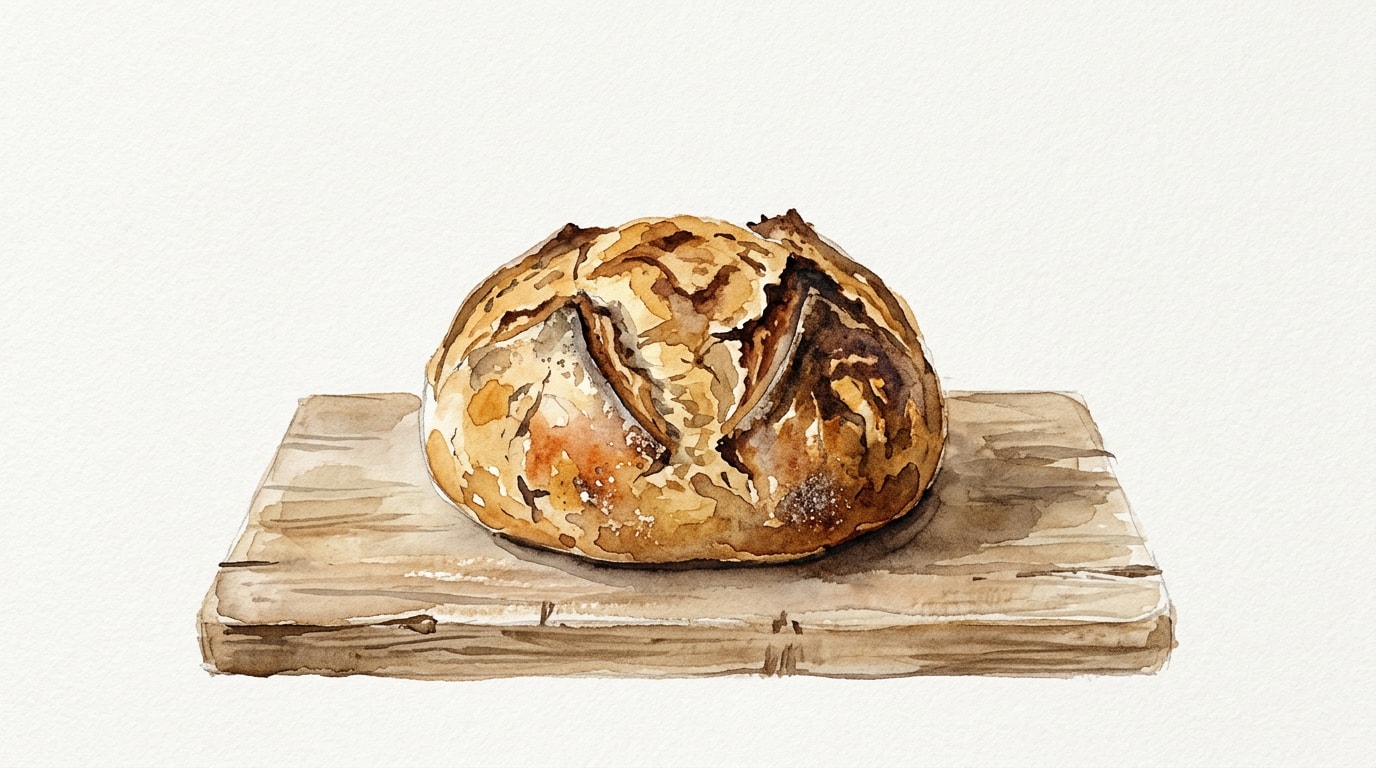
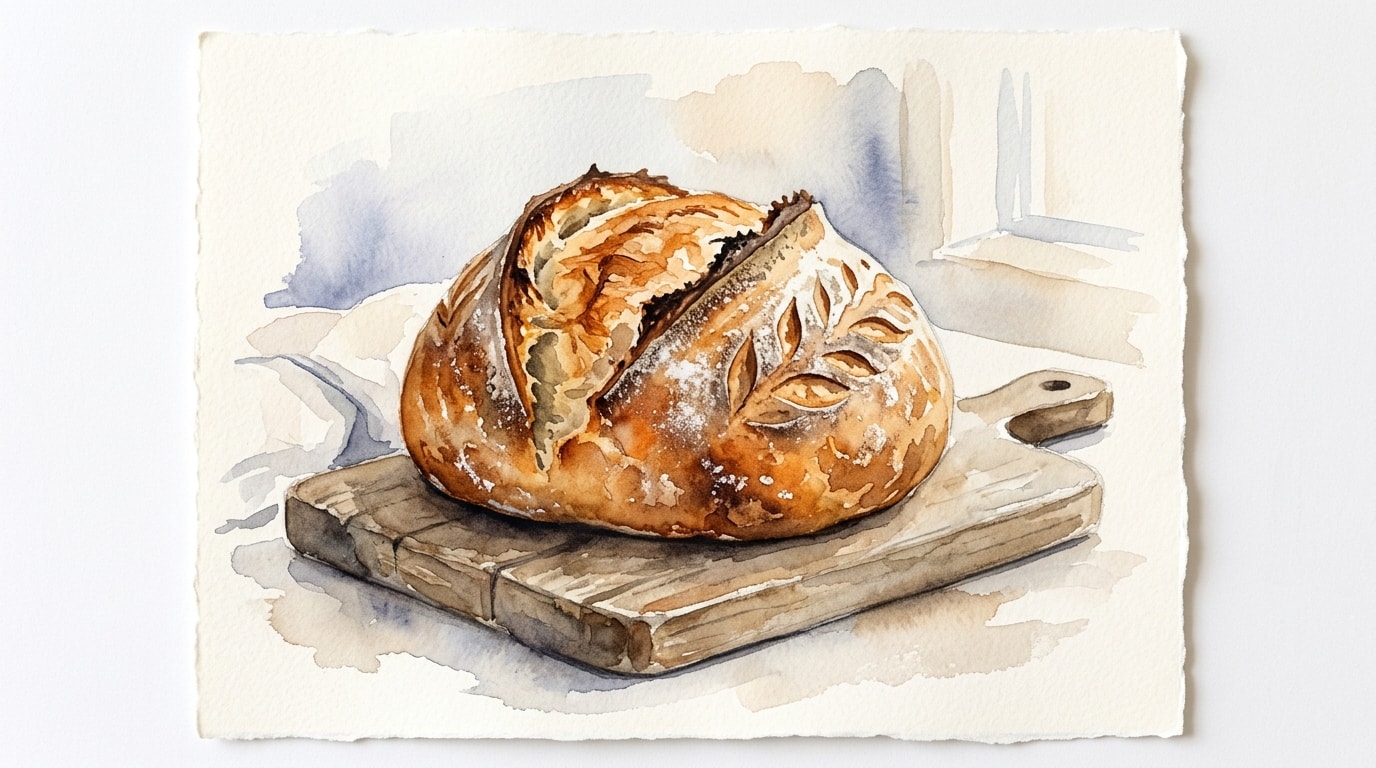
Cut a square of parchment paper. Turn the cold dough out onto the paper and brush off any excess rice flour. Using a lame or sharp razor blade, make a swift, decisive cut down the length of the dough, about 1 centimeter deep at a slight angle.
Carefully remove the hot Dutch oven from the oven. Using the corners of the parchment paper, lift the dough and lower it into the pot. Place the lid back on and return it to the oven. Reduce the heat to 245 Celsius or 475 Fahrenheit and bake for 20 minutes. The enclosed steam will help the bread expand and form a glossy crust.
After 20 minutes, carefully remove the lid from the Dutch oven. Lower the oven temperature to 230 Celsius or 450 Fahrenheit. Continue to bake uncovered for another 20 to 25 minutes until the crust reaches a deep mahogany brown.
Use a spatula to lift the loaf out of the Dutch oven and transfer it to a wire cooling rack. Allow the bread to cool completely for at least 2 hours before slicing to prevent a gummy interior.
Chef's Notes
- Temperature is an ingredient. Fermentation times will drastically shorten in a warm summer kitchen and lengthen in a cold winter one. Use water temperature to balance your dough.
- Using a mix of rice flour and all-purpose flour for dusting the banneton acts as ball bearings, completely eliminating the risk of your wet dough sticking to the basket.
- Never cut into a hot loaf of sourdough. The bread continues to bake and set structure via residual heat and steam as it rests. Slicing early releases this steam and leaves you with a sticky, gummy crumb.
- If your lame is dragging during scoring, try placing your banneton in the freezer for the final 20 minutes of the cold retard. The firmer surface will score much cleaner.
- Autolyse without salt or starter allows the flour enzymes to begin breaking down starches and proteins, radically improving the extensibility and eventual crumb structure of the bread.
Storage
Refrigerator: 1 week — Store in a tightly sealed plastic bag or airtight container to prevent drying out.
Freezer: 3 months — Slice the entire loaf and freeze in a double layer of freezer bags. Toast slices directly from frozen.
Reheating: Mist crust with water and warm in a 175 Celsius oven for 5 to 10 minutes to refresh the crust.