Equipment
Ingredients
Dough Base
- 240 ml whole milk, scalded and cooled
- 57 g unsalted butter, melted
- 25 g white sugar
- 5 g fine sea salt
Yeast and Flour
- 7 g active dry yeast
- 60 ml warm water, around 40 C
- 450 g all-purpose flour
Finishing
- 45 g unsalted butter, melted, for brushing
Nutrition (per serving)
Method
In a small saucepan, heat the whole milk over medium heat until small bubbles form around the edges, reaching about 82 C / 180 F. Remove from heat immediately.
Stir the 57g of unsalted butter, white sugar, and fine sea salt into the hot milk until the butter is completely melted and sugar dissolves. Set aside to cool to lukewarm, approximately 40 C / 105 F.
In a large mixing bowl, sprinkle the active dry yeast over the warm water. Let it sit for 5 minutes until frothy, then pour in the cooled lukewarm milk mixture.
Gradually stir the all-purpose flour into the liquid until a shaggy dough forms. Turn the dough out onto a lightly floured surface and knead for 8 to 10 minutes until smooth and elastic. The dough should feel tacky but not sticky.
Place the kneaded dough in a lightly greased bowl, turning once to coat the top. Cover with a damp towel or plastic wrap and let rise in a warm, draft-free area until doubled in volume, about 1 hour.
Punch the dough down gently to deflate it. Turn it out onto a lightly floured surface and use a rolling pin to roll it into an even sheet about 1 centimeter thick.
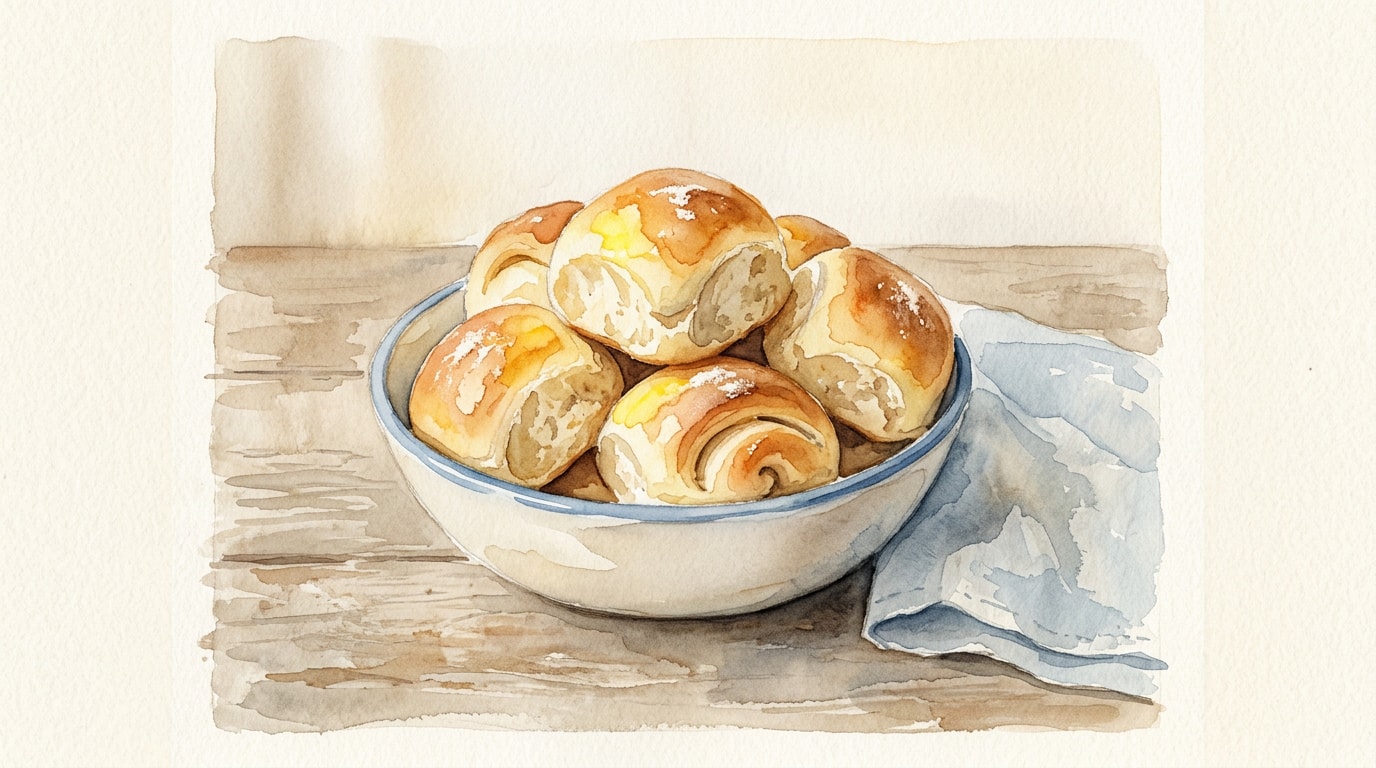
Cut the dough into rounds using a 7-centimeter cutter. Brush the surface of each round lightly with a portion of the melted finishing butter. Use the dull edge of a knife to make an off-center crease in each round, then fold the smaller half over the larger half. Press the folded edge lightly to secure.
Arrange the folded rolls on a parchment-lined baking sheet, spacing them closely together so they touch slightly as they rise. Cover loosely and let proof a second time until puffy, about 45 minutes. Toward the end of the rise, preheat the oven to 200 C / 400 F.
Bake the rolls in the preheated 200 C / 400 F oven for 12 to 15 minutes, rotating the baking sheet halfway through, until the tops are deeply golden brown.
Remove the baking sheet from the oven and immediately use a pastry brush to coat the hot tops of the rolls with the remaining melted butter. Let them cool on the pan for 5 minutes before transferring to a wire rack or serving basket.
Chef's Notes
- Scalding the milk is a traditional and vital step. It denatures the whey proteins in the milk which can otherwise interfere with gluten development, ensuring your rolls turn out incredibly soft and pillowy.
- For the softest sides, place the rolls close together on the baking sheet so they kiss as they rise and bake. This prevents hard crusts from forming on the edges.
- Do not skip brushing the hot rolls with butter the moment they exit the oven. This seals in moisture and gives them their signature gleaming, tender crust.
- The off-center crease is the secret to the Parker House shape. Folding the smaller lip over the larger lip allows the roll to expand upward rather than simply springing open flat.
Storage
Refrigerator: 3 days — Store in an airtight container to prevent drying out.
Freezer: 1 month — Freeze fully baked and cooled rolls in a sealed freezer bag.
Reheating: Wrap rolls in aluminum foil and warm in a 175 C / 350 F oven for 5 to 7 minutes.