Equipment
Ingredients
Duck & Base
- 2 duck legs, whole, bone-in, skin-on
- kosher salt
- black pepper, freshly ground
Aromatics & Broth
- 1 onion, medium dice
- 2 carrot, medium dice
- 2 celery stalk, medium dice
- 3 garlic cloves, minced
- 4 fresh thyme
- 1 dried bay leaf
- 1500 ml duck stock or high-quality chicken stock, low sodium
- 60 ml dry sherry
Rice & Finish
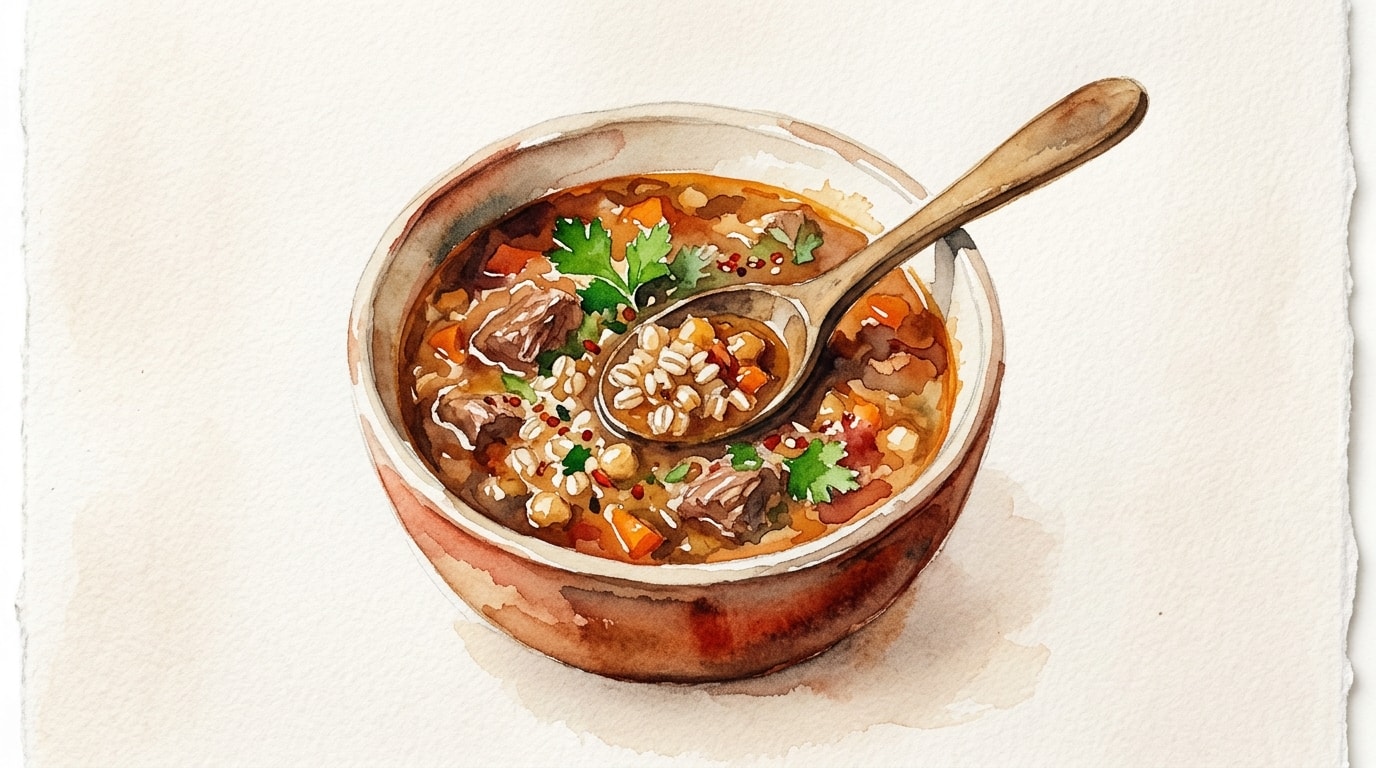
- 180 g wild rice, raw, rinsed thoroughly
- 15 g fresh parsley, finely chopped
Nutrition (per serving)
Method
Using a sharp knife, score the skin of the duck legs in a crosshatch pattern without cutting into the meat. Season generously with salt and pepper on all sides.
Place the duck legs skin-side down in a cold Dutch oven. Turn heat to medium and cook undisturbed until the skin is deep golden brown and the fat has rendered significantly. Flip and sear the flesh side for 2 minutes. Remove duck to a plate, leaving about 30ml (2 tbsp) of fat in the pot.
Add the diced onion, carrot, and celery to the hot duck fat. Sauté over medium heat until the onions are translucent and vegetables begin to soften.
Stir in the minced garlic and cook for 1 minute until fragrant. If using sherry, add it now to deglaze the pan, scraping up any browned bits (fond) from the bottom.
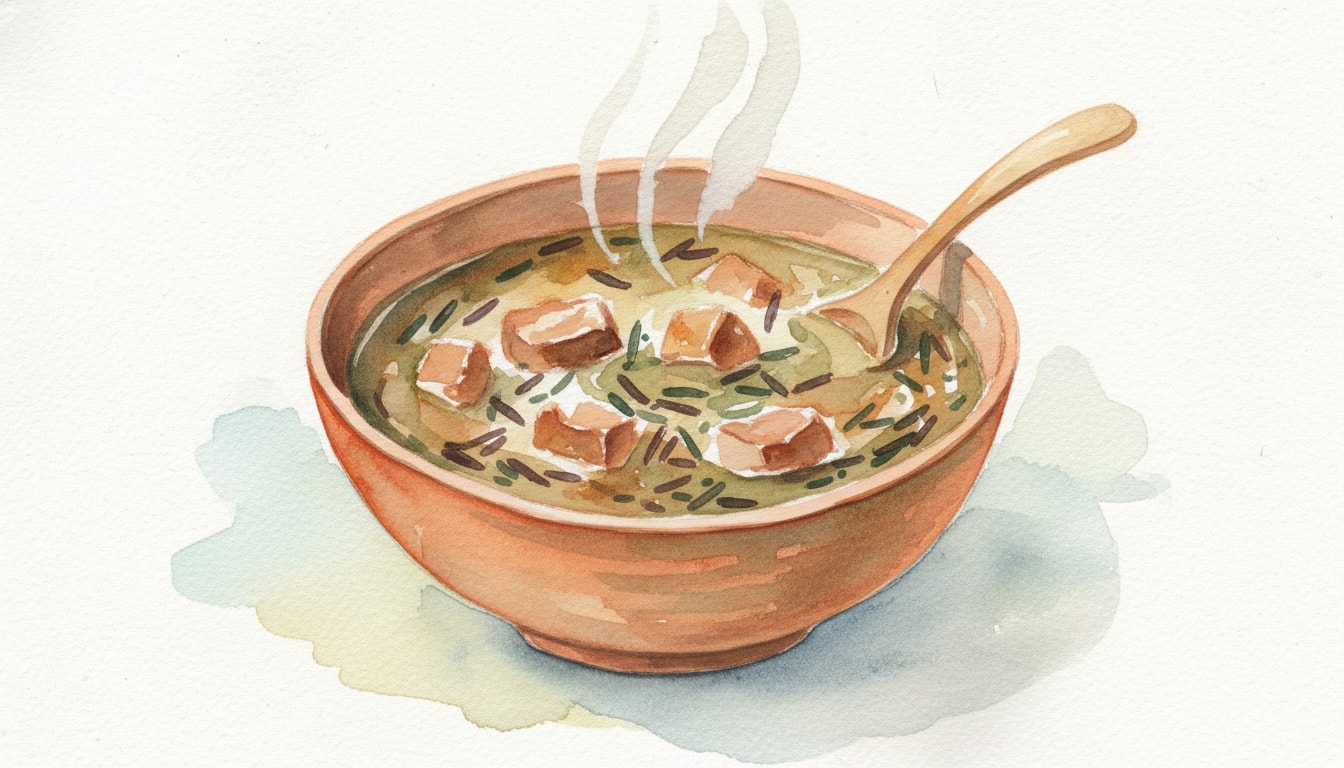
Add the stock, thyme sprigs, bay leaf, and rinsed wild rice to the pot. Return the seared duck legs (and any accumulated juices) to the pot. The duck should be mostly submerged.
Bring the liquid to a boil, then reduce heat to low. Cover and simmer gently until the wild rice has blossomed (some grains split open) and the duck meat is tender enough to pull away from the bone with a fork. Internal temperature of duck should exceed 74°C/165°F for tenderness.
Remove the duck legs and transfer to a cutting board. Discard the thyme stems and bay leaf. Once the duck is cool enough to handle, remove and discard the skin and bones. Shred the meat into bite-sized pieces.
Return the shredded duck meat to the soup. Taste the broth and adjust seasoning with salt and pepper if needed. Stir in fresh parsley just before serving.
Chef's Notes
- Always rinse wild rice thoroughly in a fine-mesh sieve before cooking to remove dust and bitterness.
- Duck legs are superior to breasts for this recipe as the connective tissue breaks down during the long simmer, enriching the broth.
- For an even clearer broth, you can blanch the wild rice in a separate pot of boiling water for 5 minutes, drain, and then add to the soup. This removes excess starch and color that can muddy the stock.
- If you prefer a thicker, creamy-style soup, whisk 15g cornstarch with a little cold water and stir in at the end, or add a splash of heavy cream.
- Leftover duck fat from the searing step is liquid gold—strain it and keep it in the fridge for roasting potatoes.
Storage
Refrigerator: 4 days — Flavor improves overnight; fat may solidify on top, remove before reheating if desired.
Freezer: 3 months — Wild rice may become slightly softer upon thawing.
Reheating: Simmer gently on stove until piping hot. Do not boil vigorously to preserve meat texture.