Equipment
Ingredients
Steak and Seasoning
- 1000 g thick-cut rib-eye steaks, room temperature
- 15 g kosher salt
- 5 g black pepper, freshly ground
Searing
- 30 ml neutral cooking oil
- 45 g unsalted butter
Nutrition (per serving)
Method
Preheat your oven to 120C or 250F. Line a baking sheet with aluminum foil and set a wire rack inside it to allow air to circulate completely around the steaks.
Thoroughly pat the rib-eye steaks completely dry with paper towels. Removing surface moisture is critical for achieving a dark, crusty sear later.
Season the steaks generously on all sides, including the thick edges, with the kosher salt and freshly ground black pepper.
Place the steaks on the wire rack and roast in the preheated oven. Cook until the internal temperature registers 46C or 115F on a meat thermometer for a final medium-rare doneness. This typically takes 45 to 55 minutes. Note that culinary medium-rare is lower than the official food safety recommendation of 63C or 145F.
About 10 minutes before the steaks are finished roasting, place a heavy cast iron skillet over high heat until it becomes intensely hot and begins to smoke slightly. Add the neutral cooking oil.
Carefully transfer the roasted steaks into the extremely hot skillet. Sear them completely undisturbed for 60 seconds to establish the initial crust.
Flip the steaks using tongs and immediately add the unsalted butter to the skillet. Sear this second side for another 60 seconds while continuously spooning the melting, foaming butter over the top of the steaks.
Using tongs, lift the steaks and briefly press the fat cap edges against the hot skillet to render the fat and crisp the edges, about 30 seconds per steak.
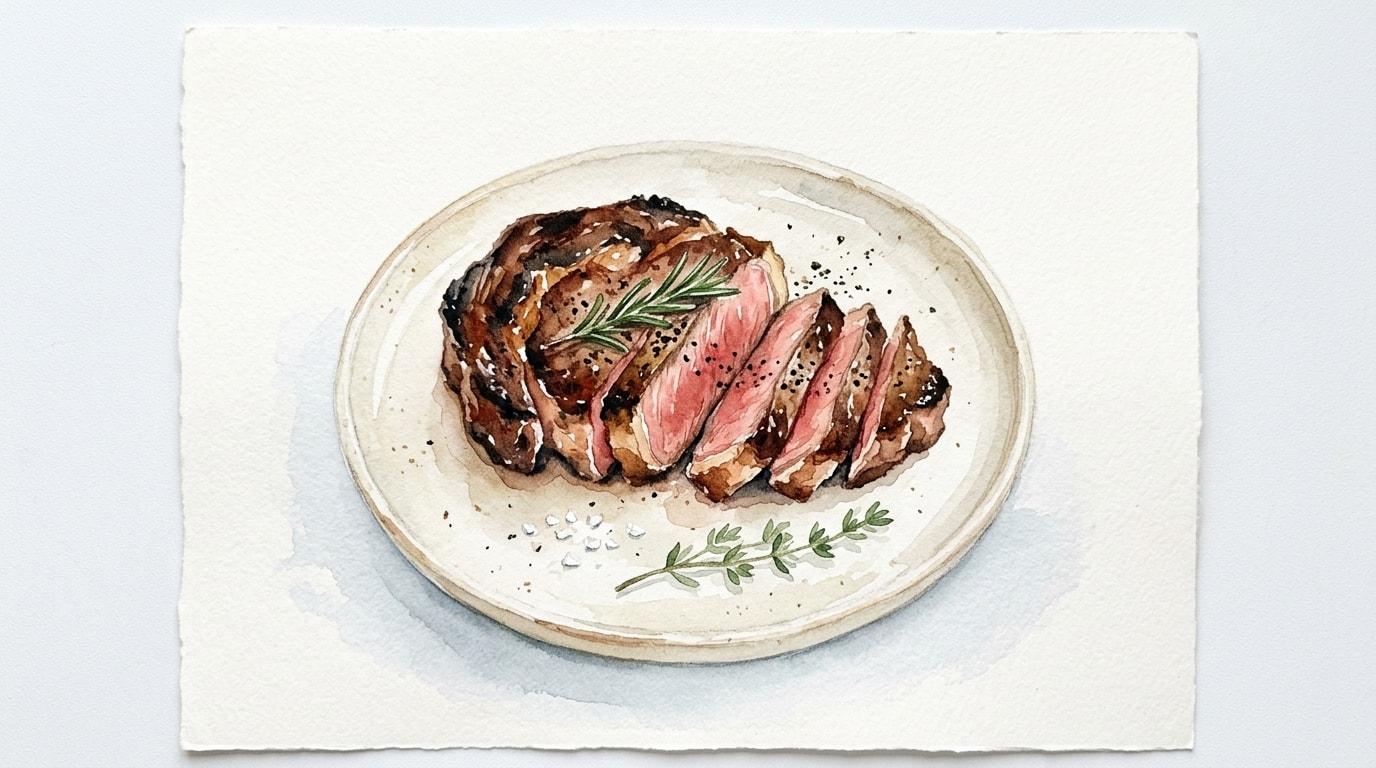
Transfer the steaks to a clean cutting board. Let them rest uncovered for 10 minutes to allow the juices to redistribute, then slice against the grain and serve immediately.
Chef's Notes
- For the ultimate flavor and an even better crust, season your steaks with the salt up to 24 hours in advance and leave them uncovered on the wire rack in the refrigerator. This dry brining process deeply seasons the meat and dehydrates the surface.
- Always rely on a high quality digital meat thermometer. Cooking by time alone is highly inaccurate due to natural variations in steak thickness, starting temperature, and oven calibration.
- When basting with butter, tilt the skillet slightly toward you. This allows the melting butter to pool in the bottom edge of the pan, making it much easier to scoop up quickly and continuously baste over the meat.
- A thick cut is absolutely crucial for the reverse sear method. Steaks thinner than 4 centimeters will overcook in the oven before they ever reach the searing stage.
Storage
Refrigerator: 3 days — Wrap tightly in foil or store in an airtight container.
Freezer: 1 month — Freeze wrapped tightly in plastic wrap and aluminum foil to prevent freezer burn.
Reheating: Slice thinly and gently warm in a skillet with a splash of beef broth over low heat, or enjoy cold to avoid overcooking.