Equipment
* optional
Ingredients
Meat
- 500 g pork jowl, skin-on, glands trimmed
Cure
- 15 g sea salt
- 10 g black pepper, coarsely ground
- 5 g brown sugar
- 2 garlic, crushed
- 1 fresh rosemary, bruised
Nutrition (per serving)
Method
Using a digital scale, weigh the pork jowl to confirm it is exactly 500g, adjusting the salt quantity to 3 percent of the weight if it differs. Trim away any remaining salivary glands or bloody spots from the flesh side.
In a small mixing bowl, thoroughly combine the sea salt, brown sugar, and exactly half of the coarsely ground black pepper.
Rub the salt and sugar mixture evenly over all surfaces of the pork jowl, massaging it into the crevices. Press the crushed garlic cloves and bruised fresh rosemary against the flesh side of the meat.
Place the seasoned jowl into a vacuum sealer bag and seal completely, or use a heavy-duty ziplock bag with all the air pressed out. Refrigerate for exactly 4 days, flipping the bag once daily to redistribute the brine that forms.
Remove the pork jowl from the bag and discard the excess liquid, garlic, and rosemary. Rinse the meat thoroughly under cold water to remove the surface cure, then pat completely dry with paper towels.
Rub the remaining coarse black pepper generously over the flesh side of the jowl, pressing firmly so that the pepper adheres to the dried surface.
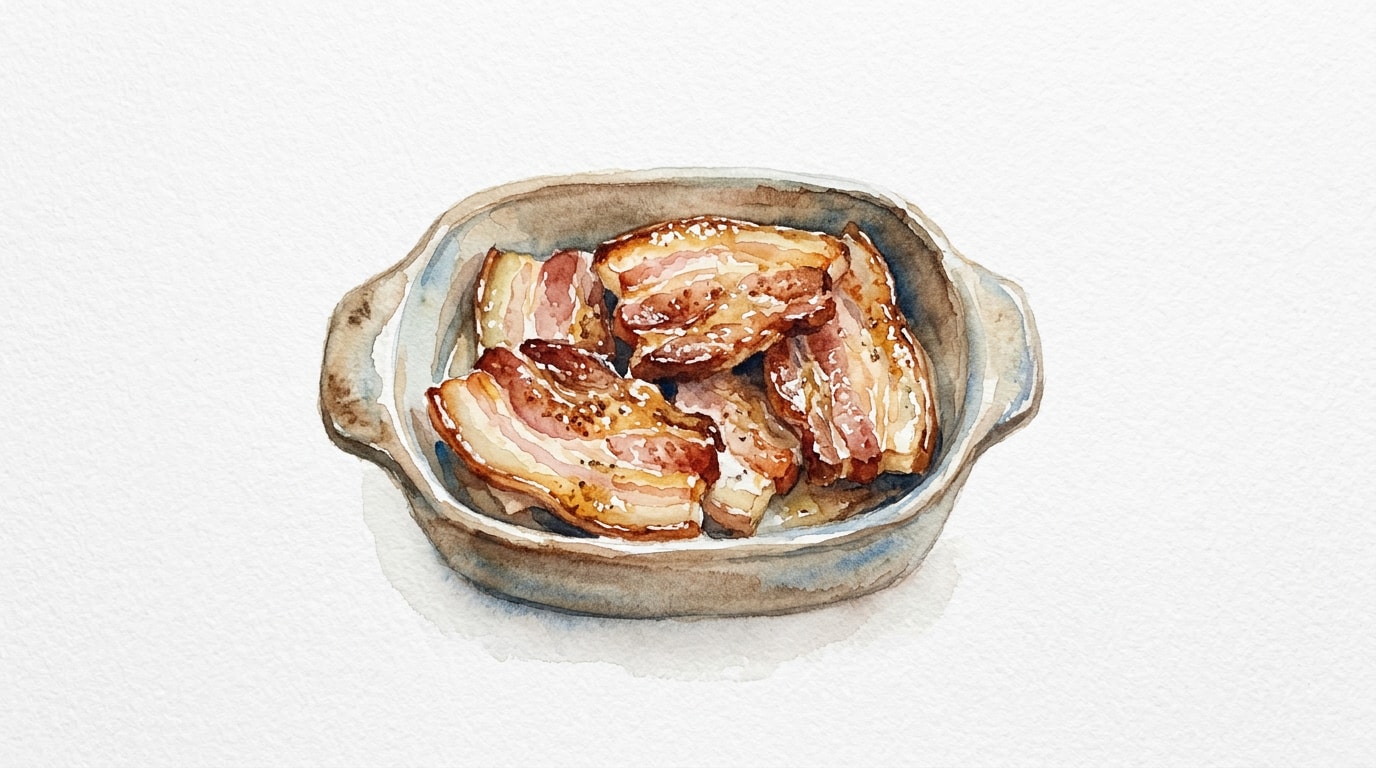
Preheat the oven to 90C or 195F. Place the jowl on a wire rack set over a rimmed baking sheet. Bake for 3 to 4 hours until the meat feels firm, the fat appears slightly translucent, and the internal temperature reaches a food-safe 74C or 165F.
Remove from the oven and allow to cool to room temperature. Wrap tightly in parchment paper and chill in the refrigerator overnight to allow the fat to firm up completely before slicing.
Chef's Notes
- Equilibrium curing is a foolproof charcuterie method. By weighing the salt to exactly 3 percent of the raw meat weight, you eliminate the risk of over-salting no matter how long the cure is applied.
- Baking instead of traditional air-hanging safely dehydrates the meat and slightly renders the fat, perfectly mimicking the dense, chewy texture of 30-day aged guanciale in just a few days.
- Inspect your pork jowl closely before starting. If your butcher has not already done so, it is vital to trim out the salivary glands, which have an unpleasant metallic flavor and spongy texture.
- Do not discard the drippings from the baking sheet. This rendered pork fat is liquid gold and makes an exceptional cooking fat for roasting potatoes or frying eggs.
Storage
Refrigerator: 3 weeks — Wrap tightly in parchment paper or vacuum seal.
Freezer: 6 months — Slice or cube before freezing for immediate cooking straight from the freezer.