Equipment
Ingredients
Rabbit and Seasoning
- 1200 g whole rabbit, cut into 8 portions, bone-in
- g kosher salt
- g black pepper
Aromatics and Base
- 30 ml olive oil
- 1 yellow onion, diced
- 2 carrot, sliced into thick rounds
- 4 garlic, minced
- 2 fresh rosemary, whole sprigs
Braising Liquids and Additions
- 150 ml dry white wine
- 800 g canned plum tomatoes, crushed by hand with juices
- 250 ml chicken broth
- 150 g pitted green olives, drained
Nutrition (per serving)
Method
Pat the rabbit pieces completely dry using paper towels. Season generously on all sides with kosher salt and freshly ground black pepper.
Heat the olive oil in a large Dutch oven over medium-high heat. Working in batches to avoid crowding the pan, brown the rabbit pieces on all sides until deeply golden. Transfer the seared rabbit to a plate and set aside.
Reduce the heat to medium. Add the diced onion and sliced carrots to the rendered fat in the pot. Cook until the onions are softened and lightly caramelized.
Stir in the minced garlic and cook until highly fragrant, stirring constantly to ensure the garlic does not scorch.
Pour the dry white wine into the pot to deglaze, using a wooden spoon to scrape up all the flavorful browned bits stuck to the bottom. Allow the wine to simmer until the liquid has reduced by half.
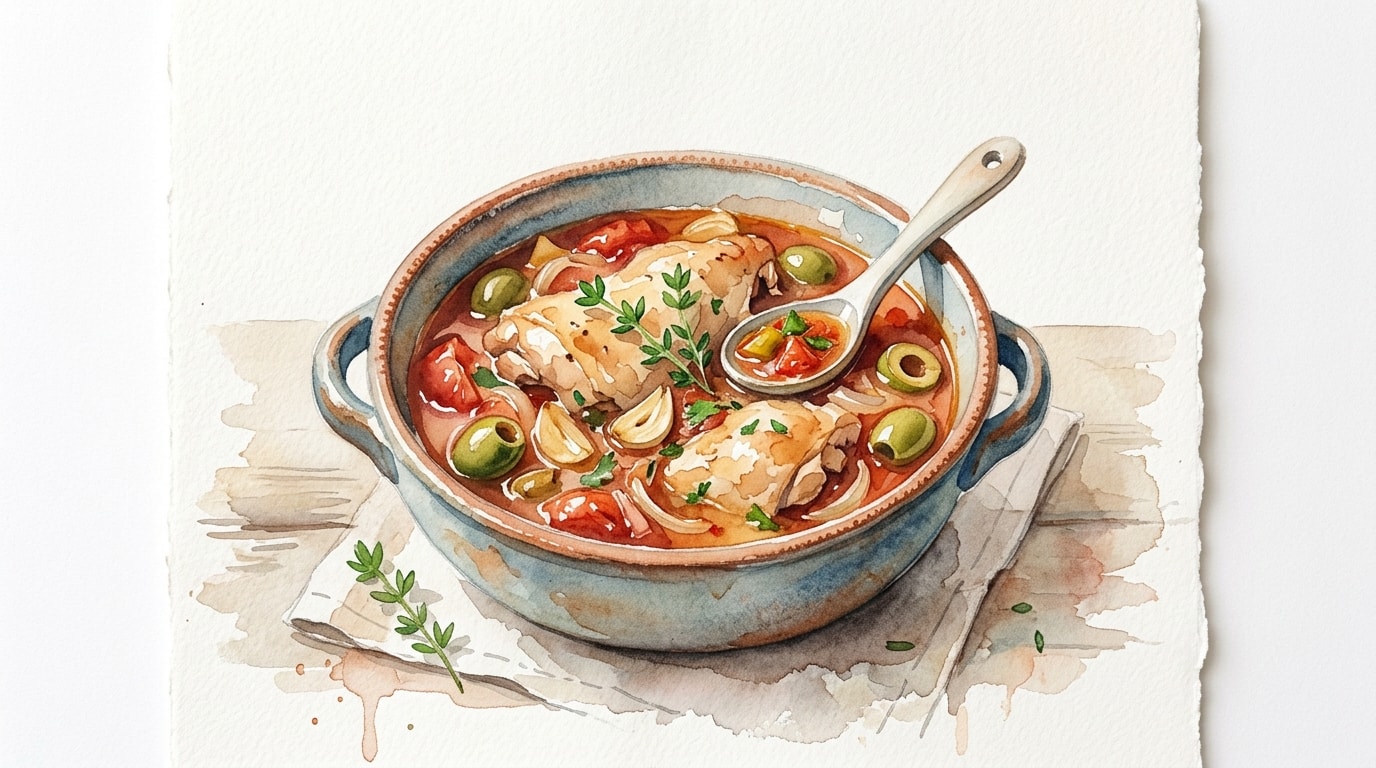
Add the hand-crushed plum tomatoes along with their juices, the chicken broth, and the fresh rosemary sprigs. Return the seared rabbit pieces and any accumulated resting juices to the pot. Bring the mixture to a gentle boil.
Cover the Dutch oven with a tight-fitting lid, reduce the heat to low, and let the stew simmer very gently. Ensure the internal temperature of the rabbit reaches at least 74°C/165°F for food safety, noting that it will require the full cooking time to actually become tender.
Stir in the pitted green olives. Re-cover the pot and continue to simmer gently until the rabbit meat is exceptionally tender and begins to easily pull away from the bone.
Remove the pot from the heat. Carefully retrieve and discard the spent rosemary sprigs. Taste the braising liquid and adjust the seasoning with additional salt or pepper if desired.
Allow the stew to rest off the heat, covered, to let the meat relax and the complex flavors settle before serving.
Chef's Notes
- Rabbit is a very lean meat; browning it carefully builds the foundational flavor of the stew, but be cautious not to use heat so high that it burns the pan fond.
- Crushing whole canned plum tomatoes by hand provides a superior, rustic texture compared to using pre-diced tomatoes. Diced tomatoes often contain calcium chloride, an additive that prevents them from breaking down properly during a long braise.
- Picholine or Castelvetrano olives are ideal for this dish. They offer a firm texture and a buttery, briny flavor profile that stands up well to long simmering without turning mushy.
- Be sure to wipe up any bone splinters or small fragments when portioning the raw rabbit, as they can easily get lost in the final stew.
- Like many braises, this stew tastes even better the next day after the flavors have had time to meld in the refrigerator, making it an excellent make-ahead meal.
Storage
Refrigerator: 4 days — Store in an airtight container. The flavors will deepen and improve after a day in the refrigerator.
Freezer: 3 months — Freeze in airtight, freezer-safe containers. Thaw overnight in the refrigerator before reheating.
Reheating: Gently reheat on the stovetop over medium-low heat until warmed through, adding a splash of chicken broth if the stew has thickened too much.