Equipment
Ingredients
Duck
- 2 duck breasts, skin-on
- 5 g kosher salt
- 2 g black pepper, freshly cracked
Calvados Apple Sauce
- 1 tart apple, peeled, cored, and finely diced
- 1 shallot, minced
- 60 ml calvados
- 120 ml chicken stock, unsalted or low-sodium
- 3 g fresh thyme, whole sprigs
- 30 g unsalted butter, cubed and kept very cold
Nutrition (per serving)
Method
Pat the duck breasts completely dry with paper towels. Using a sharp knife, gently score the fat in a tight crosshatch pattern, ensuring you slice only through the skin and fat without cutting into the flesh.
Season the duck breasts generously on both sides, rubbing the kosher salt and freshly cracked black pepper deep into the scored fat.
Place the duck breasts skin-side down in a cold cast iron skillet. Turn the heat to medium-low and cook undisturbed. As the pan slowly heats up, the fat will render out. Continue cooking until the skin is deeply golden and exceptionally crisp.
Flip the duck breasts to the flesh side and slightly increase the heat to medium. Cook until the internal temperature reaches 54 degrees Celsius (130 degrees Fahrenheit) for a perfect medium-rare.
Transfer the cooked duck to a cutting board to rest. Carefully pour off most of the rendered duck fat from the skillet, leaving exactly 15ml (about 1 tablespoon) in the pan for the sauce.
Return the skillet to medium heat. Add the diced tart apple and minced shallot to the reserved duck fat. Saute until the shallots are translucent and the apples have begun to soften and develop a golden caramelization.
Briefly remove the skillet from the heat to prevent flare-ups, and pour in the Calvados. Scrape the bottom of the pan with a wooden spoon to release the fond. Return to the heat and cook until the harsh alcohol scent dissipates.
Pour the chicken stock into the skillet and add the fresh thyme sprigs. Increase the heat to bring the mixture to a brisk simmer, and let it reduce by half.
Remove the skillet completely from the heat. Discard the thyme sprigs. Immediately drop in the cold, cubed butter and whisk aggressively until the butter is completely incorporated. The sauce should become glossy and velvet-like. Taste and adjust seasoning if necessary.
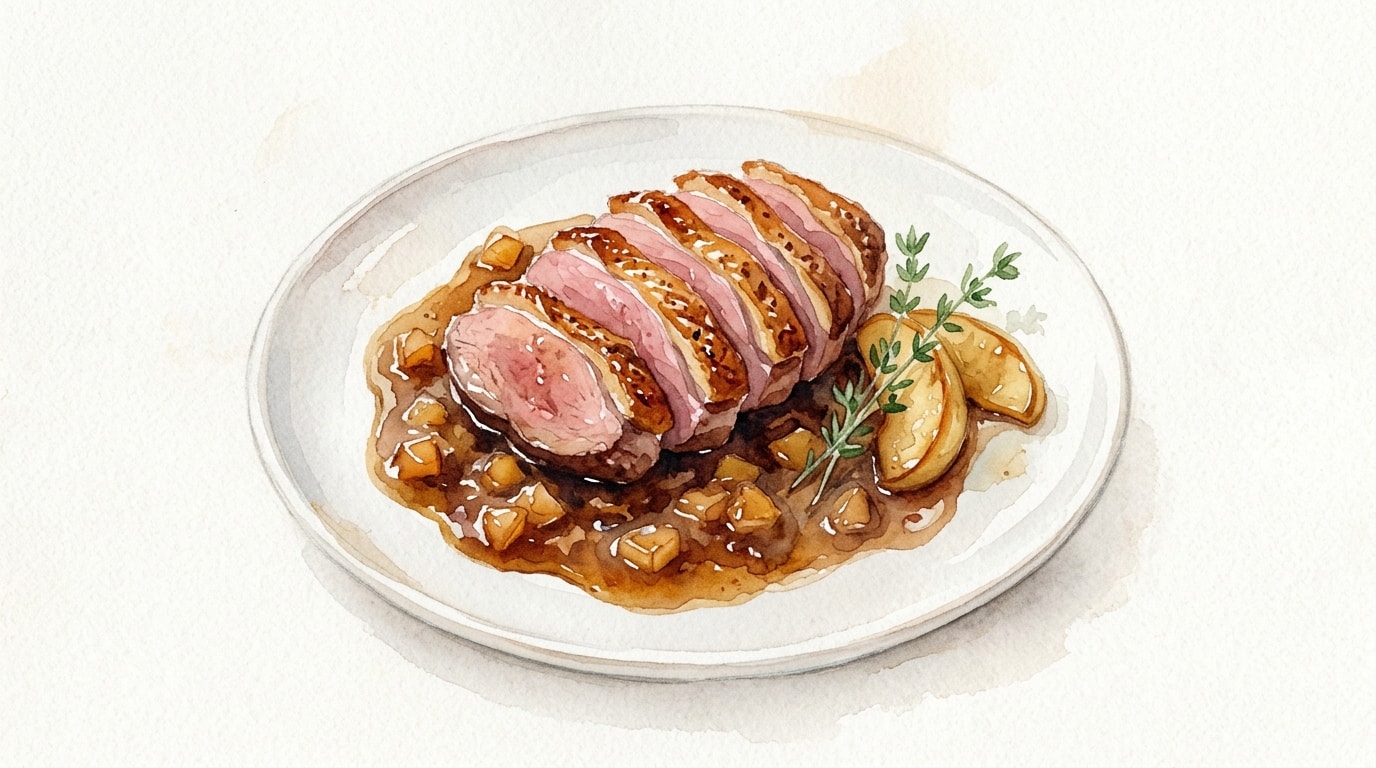
Slice the rested duck breasts into thick medallions. Fan them out on warmed serving plates and spoon the rich Calvados apple sauce generously over the meat, ensuring everyone gets plenty of the caramelized apples.
Chef's Notes
- Starting duck in a cold pan is the single most important technique here. It mimics the gentle rendering process of confit for the skin layer, resulting in a shatteringly crisp texture that hot-searing cannot achieve.
- Save the excess rendered duck fat in a sealed glass jar in the refrigerator. It is culinary gold, perfect for roasting potatoes or searing root vegetables later in the week.
- Monter au beurre is the classic French technique used in step 9. Adding very cold butter to a warm liquid off the heat suspends the butterfat in the liquid, thickening it beautifully without cornstarch or flour.
- If your apples are particularly sweet rather than tart, a few drops of apple cider vinegar added alongside the stock will balance the final sauce perfectly.
Storage
Refrigerator: 3 days — Store the duck and sauce in separate airtight containers. The skin will lose its crispness when refrigerated.