Equipment
Ingredients
Pasta and Vegetables
- 300 g orecchiette pasta, dry
- 250 g broccoli florets, cut into bite-sized pieces
- 240 g canned chickpeas, rinsed and drained
- 250 g cherry tomatoes, left whole
- 150 g red onion, diced
Aromatics and Seasonings
- 45 ml extra virgin olive oil
- 3 garlic, minced
- 1 g red pepper flakes
- 5 g kosher salt
- 2 g black pepper, freshly cracked
Nutrition (per serving)
Method
Bring a large pot of generously salted water to a rolling boil at 100°C/212°F.
Add the orecchiette to the boiling water and cook according to package instructions, typically about 9 minutes.
During the final 3 minutes of the pasta cooking time, drop the broccoli florets into the same boiling water.
While the pasta boils, heat the olive oil in a large skillet over medium heat. Add the diced red onion and cook until softened and translucent.
Stir the minced garlic and red pepper flakes into the skillet, cooking constantly just until fragrant.
Add the whole cherry tomatoes to the skillet. Let them cook undisturbed for a minute, then toss occasionally until their skins blister and burst, releasing their juices to form a light sauce.
Mix the drained chickpeas, salt, and black pepper into the tomato mixture, cooking briefly until heated through.
Carefully scoop out and reserve about 150ml of the starchy pasta cooking water. Drain the pasta and broccoli in a colander.
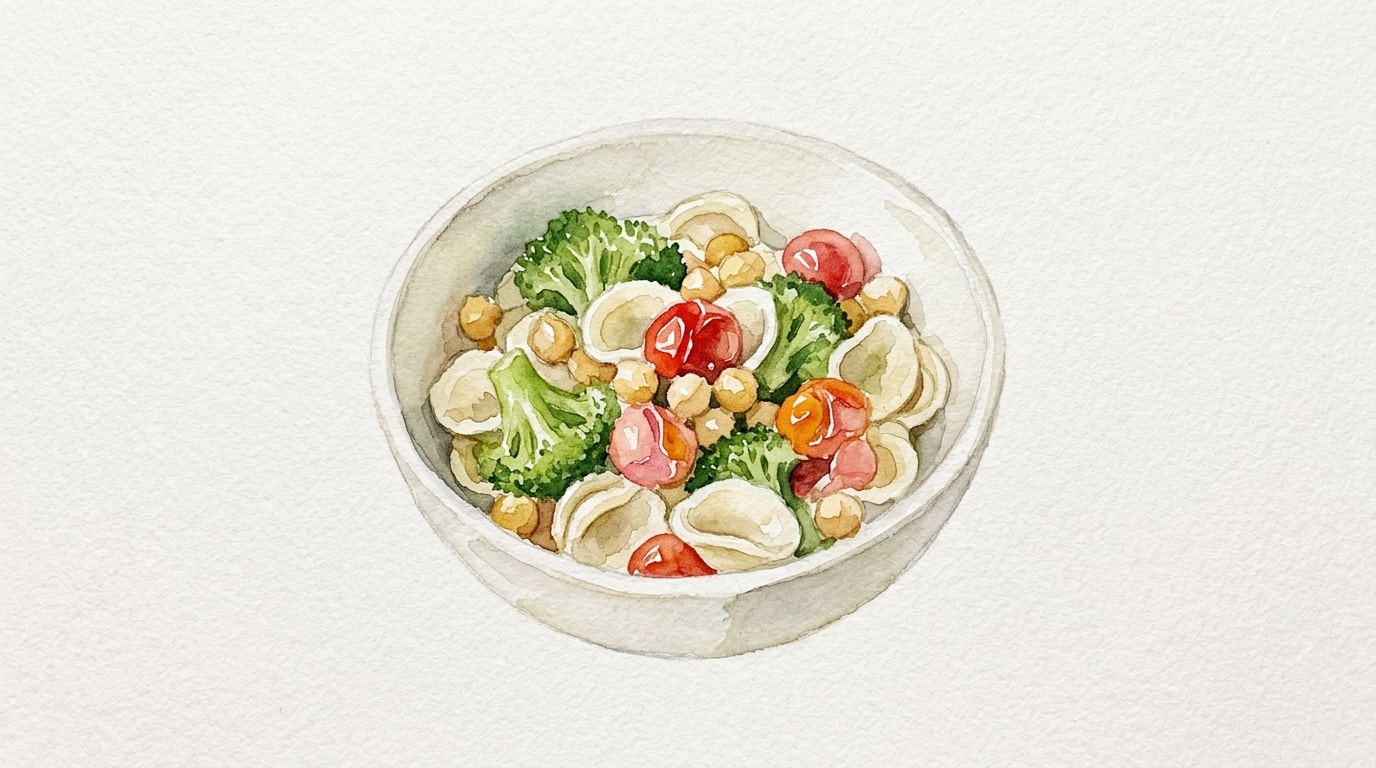
Transfer the drained pasta and broccoli to the skillet with the vegetable mixture. Add half of the reserved pasta water and toss vigorously until a light, cohesive sauce coats the pasta, adding more water if it seems dry.
Serve immediately in shallow bowls, garnished with a light drizzle of fresh extra virgin olive oil.
Chef's Notes
- Orecchiette is shaped like a small bowl with a slightly thicker edge, making it the perfect vehicle for scooping up the chickpeas and capturing the burst tomato juices.
- For deeper flavor, you can pat the drained chickpeas completely dry and pan-fry them in olive oil until crispy before adding the aromatics, though this adds active cooking time.
- The secret to any oil-based pasta sauce is the vigorous tossing at the end; the mechanical action forces the starchy pasta water and oil to emulsify into a creamy coating without using any dairy.
- Salting your pasta water is crucial. It should taste pleasantly salty like the sea, which seasons the pasta from the inside out as it hydrates.
Storage
Refrigerator: 3 days — Store in an airtight container. The pasta will absorb some of the oil and liquid as it sits.
Reheating: Reheat gently in a skillet over medium-low heat with a splash of water or vegetable broth to revive the sauce.