Equipment
Ingredients
Miso Poaching Liquid & Chicken
- 600 g boneless skinless chicken breast
- 1500 ml water
- 50 g white miso paste
- 20 g fresh ginger, sliced
- 20 g scallions, roughly chopped
- 60 ml sake
Miso-Sesame Dressing
- 60 ml soy sauce
- 60 ml rice vinegar
- 30 ml sesame oil
- 30 ml mirin
- 20 g white miso paste
Vegetables & Noodles
- 150 g cucumber, julienned
- 100 g carrots, julienned
- 100 g snow peas, trimmed and thinly sliced
- 300 g dried soba noodles
- 10 g toasted sesame seeds, for garnish
Nutrition (per serving)
Method
In a mixing bowl, whisk together the soy sauce, rice vinegar, sesame oil, mirin, and 20g of white miso paste until completely smooth.
Add the julienned cucumber, carrots, and sliced snow peas to the dressing. Toss thoroughly to coat, then set aside at room temperature to marinate.
In a large pot, combine the water, 50g of white miso paste, sliced ginger, chopped scallions, and sake. Bring to a gentle simmer over medium heat, stirring occasionally to dissolve the miso.
Carefully submerge the raw chicken breasts into the simmering broth. Reduce heat to low to maintain a bare poach, cover, and cook until the chicken reaches an internal temperature of 74°C/165°F.
Using tongs, remove the cooked chicken from the poaching liquid and transfer to a clean cutting board to rest.
Bring a separate medium pot of unsalted water to a rolling boil. Add the soba noodles and cook according to package instructions until tender but toothsome.
Drain the noodles in a colander and immediately rinse vigorously under cold running water, rubbing them gently to remove excess surface starch.
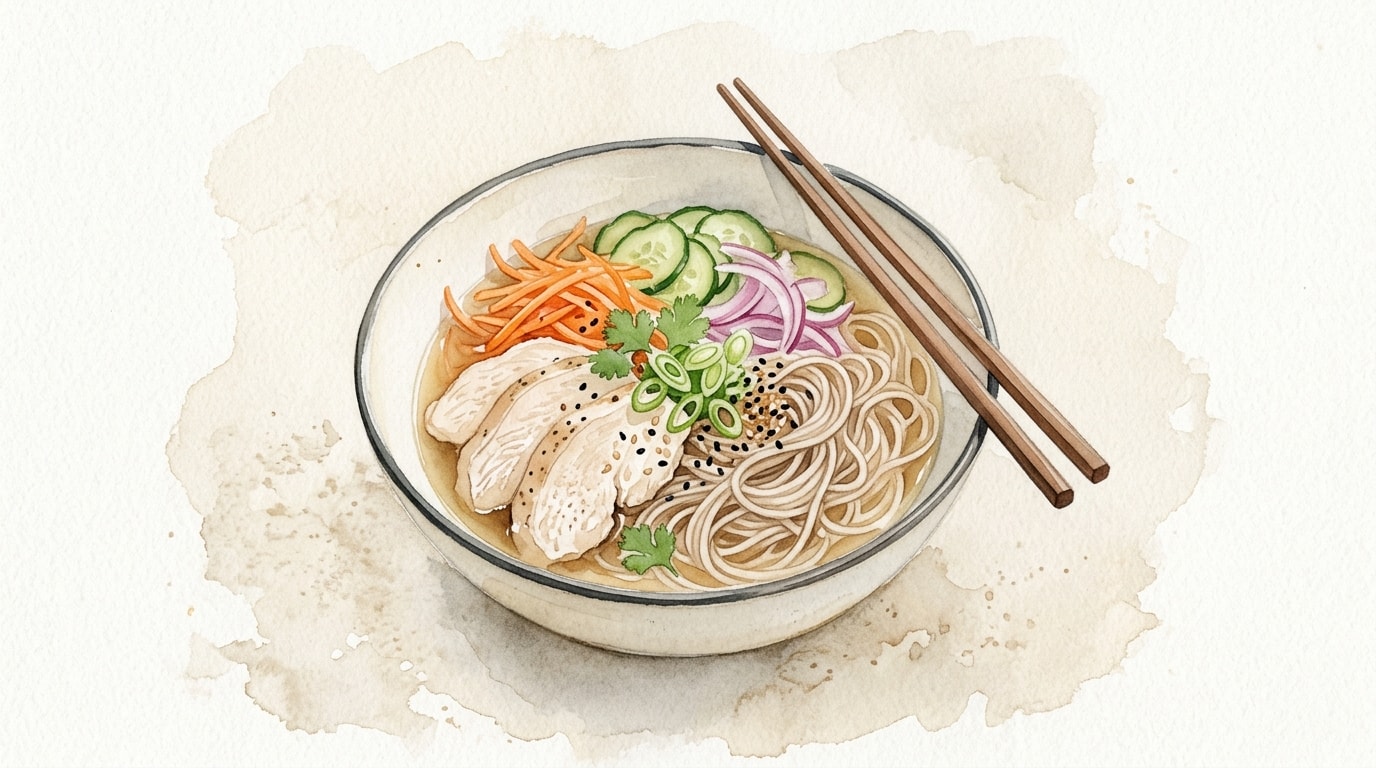
Slice the rested chicken breasts against the grain into thin medallions.
Add the thoroughly drained soba noodles to the bowl of marinated vegetables and toss well to coat in the dressing. Divide the mixture among serving bowls, fan the sliced chicken on top, and garnish with toasted sesame seeds.
Chef's Notes
- Poaching at a bare simmer ensures the chicken remains incredibly moist; boiling will seize the proteins, rapidly expelling moisture and causing toughness.
- Always rinse soba noodles under cold running water after boiling. Unlike Italian pasta, where starch is desired to bind sauces, soba requires starch removal to maintain its delicate, slippery texture.
- The leftover miso poaching liquid can be strained and served on the side as a light, nourishing sipping broth, garnished with a few extra fresh scallions.
- If preparing ahead of time, keep the noodles, dressing, and vegetables separate until just before serving. Soba left in dressing for too long will become overly soft and unpalatable.
Storage
Refrigerator: 3 days — Store noodles, vegetables, and chicken in separate airtight containers to prevent the noodles from becoming soggy.