Equipment
Ingredients
Lamb and Seasoning
- 4 lamb shanks, trimmed of excess surface fat
- kosher salt
- black pepper, freshly ground
- 30 ml olive oil
Aromatics
- 1 yellow onion, diced
- 2 carrots, diced
- 2 celery stalks, diced
- 4 garlic cloves, minced
- 3 fresh rosemary sprigs, whole
Liquids and Flavorings
- 30 g tomato paste
- 250 ml dry red wine
- 500 ml beef stock, low-sodium
- 150 g pitted green olives
Nutrition (per serving)
Method
Preheat the oven to 160C/320F and arrange a rack in the lower third of the oven.
Thoroughly pat the lamb shanks dry with paper towels. Season them generously on all sides with kosher salt and freshly ground black pepper.
Heat the olive oil in a large Dutch oven over medium-high heat. Sear the lamb shanks until deeply browned on all sides, working in batches if necessary to avoid crowding the pan. This will take about 10 minutes total. Remove the browned shanks and set them aside on a plate.
Reduce the stove heat to medium. Add the diced yellow onion, carrots, and celery to the residual lamb fat in the pot. Sauté until the vegetables are softened and the onions are translucent, about 5 minutes.
Stir the minced garlic, tomato paste, and whole fresh rosemary sprigs into the softened vegetables. Cook until the tomato paste darkens from bright red to a rusty brick color and becomes highly fragrant, about 2 minutes.
Pour the dry red wine into the pot to deglaze, using a wooden spoon to scrape up any browned flavor bits stuck to the bottom. Allow the wine to simmer vigorously and reduce by half, which should take about 5 minutes.
Return the resting lamb shanks, along with any juices collected on the plate, back to the Dutch oven. Pour in the beef stock. The liquid should come about halfway up the sides of the meat. Bring the mixture to a gentle boil, then cover with a tight-fitting lid and transfer to the preheated 160C/320F oven. Braise for 2 hours.
Carefully remove the pot from the oven. Remove the lid and stir in the pitted green olives. Return the uncovered pot to the oven for another 30 minutes. This allows the sauce to thicken and the lamb to finish cooking until it reaches an internal temperature of at least 90C/195F, ensuring the tough collagen has fully melted into gelatin.
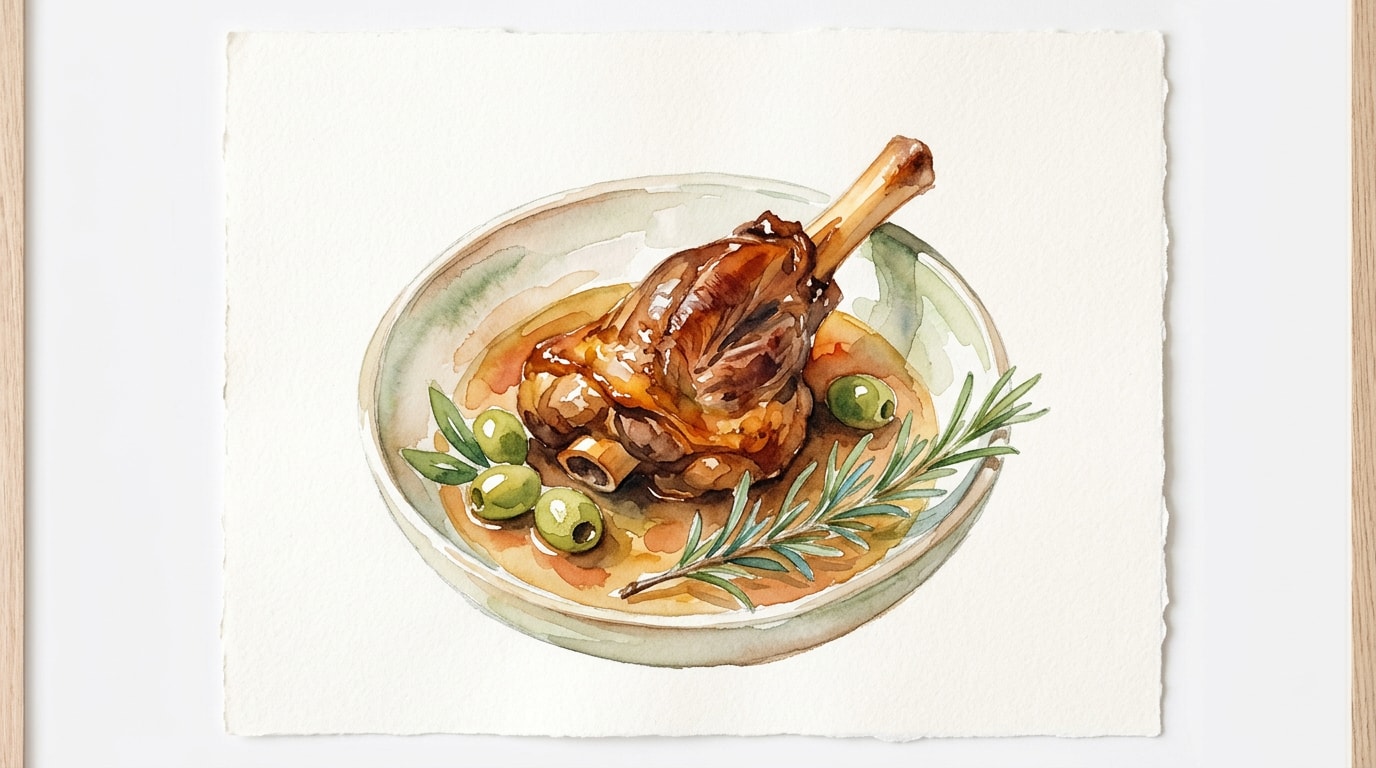
Transfer the tender lamb shanks to a serving platter. Use a ladle to skim and discard any excess fat pooled on the surface of the sauce. Let the meat rest for 10 minutes, then spoon the rich sauce and green olives generously over the shanks before serving.
Chef's Notes
- While braising requires several hours, making this seemingly tricky for a weeknight, this dish is an excellent make-ahead meal. Braises actually taste better the next day after resting in the refrigerator, meaning you can cook it on Sunday and reheat it quickly on a busy weeknight.
- Selecting the right olive makes a huge difference. Avoid heavily vinegar-brined olives; opt for Castelvetrano olives, which offer a mild, buttery, and meaty texture that harmonizes beautifully with rich lamb fat.
- Tough cuts like lamb shanks require low, slow heat. Rushing the process with higher heat will cause the muscle fibers to seize and squeeze out moisture, resulting in dry, stringy meat rather than tender perfection.
- Skimming the fat at the end is crucial. Lamb fat has a very pronounced, somewhat waxy mouthfeel when it cools slightly, so removing the excess ensures a glossy, clean-tasting sauce.
Storage
Refrigerator: 4 days — Store in an airtight container. The flavors deepen and improve after a day in the refrigerator.
Freezer: 3 months — Freeze the lamb shanks completely submerged in the braising liquid to prevent freezer burn.
Reheating: Thaw overnight in the refrigerator if frozen. Gently simmer in a covered pot over medium-low heat for 15 to 20 minutes until warmed completely through.