Equipment
* optional
Ingredients
For the Kimchi
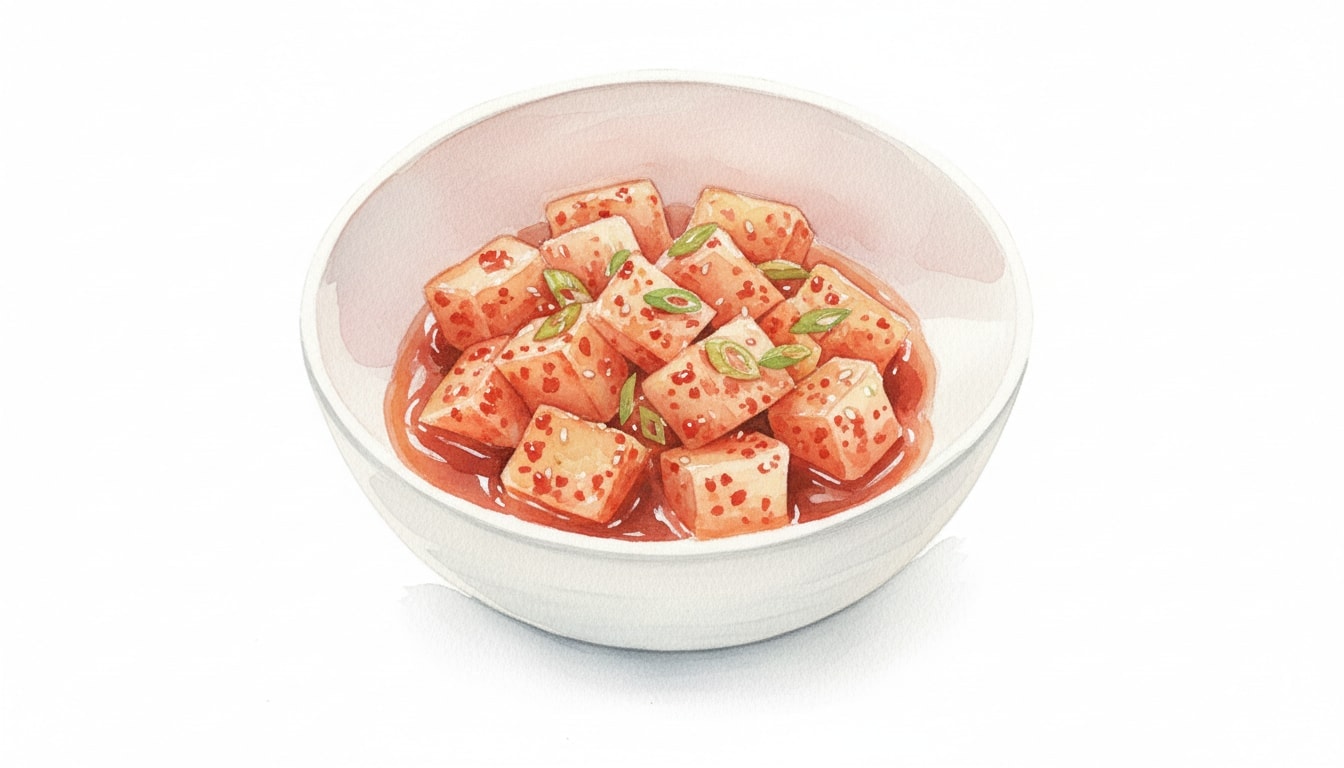
- 2270 g korean radish or daikon, peeled and cut into 2cm (¾-inch) dice
- 9 g sea salt
- 60 g granulated sugar
- 10 scallions, chopped
- 7 garlic, minced
- 4 g ginger, minced and peeled
- 85 g gochugaru, coarse
- 30 ml fish sauce
- 36 g sauejeot (salty fermented shrimp), chopped
Nutrition (per serving)
Method
In a large bowl, combine the diced radish, sea salt, and granulated sugar. Mix by hand, ensuring all radish pieces are evenly coated. Let it stand for 1 hour at room temperature, tossing the mixture every 20 minutes to ensure even distribution of the salt and sugar.
Place a strainer over another bowl. Drain the radishes, reserving approximately 120ml (½ cup) of the briny liquid for later use. Discard the remaining brine.
Return the drained radishes to the original bowl. Add the chopped scallions, minced garlic, minced ginger, gochugaru, fish sauce (or soup soy sauce), and chopped sauejeot (if using). Pour in the reserved brine. Mix everything thoroughly by hand until all ingredients are evenly distributed and the radish pieces are well coated. Consider wearing disposable gloves to protect your hands from the pepper flakes.
Transfer the mixture to one or more glass jars or airtight containers. Press down firmly on the kimchi with a spoon to pack it tightly and remove any air pockets. Ensure the kimchi remains submerged in the brine, pressing it down with a spoon if necessary.
The kimchi can be enjoyed immediately or allowed to ferment. For fermentation, store the containers at cool room temperature (18-21°C / 65-70°F) for 1 to 2 days, or until it develops a slightly sour taste and smell. After the first day, you will likely notice more liquid in the container, and the mixture may bubble when opened. Cover and refrigerate. The fermentation process will continue in the refrigerator, making the kimchi progressively more sour. It can be enjoyed at any stage of fermentation. Always press down the kimchi with a spoon when removing some to prevent exposure to air.
Chef's Notes
- Use good quality Korean radish (mu or daikon) for best results. The taste and texture are significantly better than other varieties.
- Adjust the amount of gochugaru to your spice preference.
- For the most authentic flavor, use Saeujeot (fermented salted shrimp), but the kimchi is still delicious without it (omit it for a vegetarian version).
Storage
Refrigerator: 3 months — Store in airtight containers in the refrigerator. Kimchi will continue to ferment, becoming more sour over time.
Reheating: Not applicable; serve cold.