Equipment
* optional
Ingredients
Pasta and Boiling Water
- 340 g capellini pasta
- 15 g kosher salt
- 120 ml pasta water, hot and starchy
Lemon Parmesan Sauce
- 80 ml extra virgin olive oil
- 1 lemon, zested
- 45 ml lemon juice, freshly squeezed
- 60 g parmesan cheese, finely grated
- 2 g black pepper, freshly cracked
- 2 g kosher salt
Garnish
- 10 g fresh basil, chiffonade
Nutrition (per serving)
Method
Bring a large pot of heavily salted water to a rolling boil at 100C/212F.
While the water heats, zest and juice the lemon. Finely grate the parmesan cheese.
In a large serving bowl, vigorously whisk together the extra virgin olive oil, lemon juice, lemon zest, most of the grated parmesan cheese, and black pepper until well combined.
Add the capellini to the boiling water. Stir immediately to prevent clumping and cook until al dente.
Just before draining, carefully scoop out and reserve about 120ml of the hot, starchy pasta water. Drain the pasta in a colander.
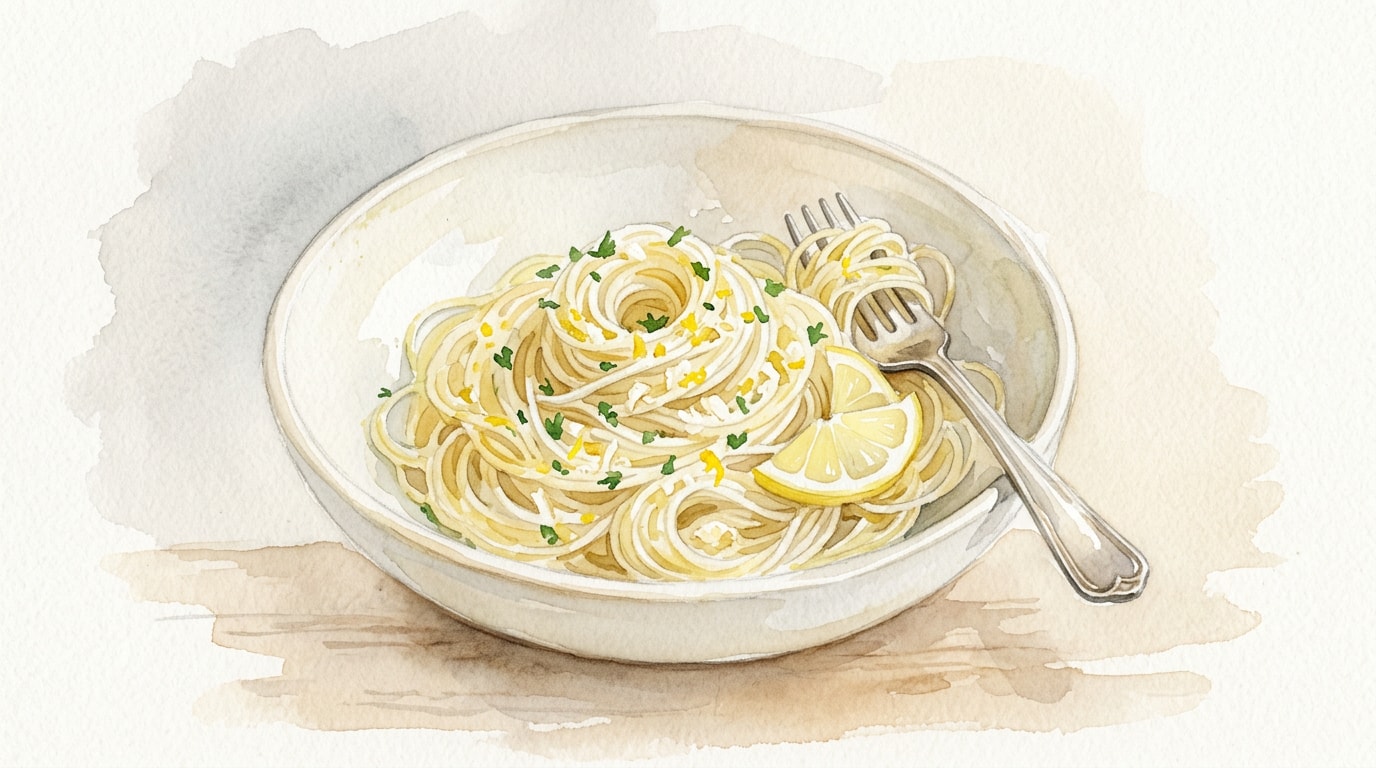
Immediately transfer the hot, drained pasta into the serving bowl with the lemon-oil mixture. Pour in 60ml of the reserved pasta water and toss vigorously with tongs until the oil and water emulsify into a creamy, glossy sauce that clings to the noodles. Add more pasta water if the dish seems dry.
Divide the pasta among warm bowls. Garnish with the remaining grated parmesan cheese, extra black pepper, and fresh basil if using. Serve immediately.
Chef's Notes
- The residual heat from the pasta is what melts the cheese and brings the sauce together. Ensure your serving bowl is at room temperature or slightly warmed, and never let the drained pasta sit in the colander.
- Always grate your own cheese from a block. Pre-grated cheeses contain anti-caking starches like cellulose that will cause your sauce to become gritty rather than silky.
- To maintain strict vegetarian compliance for the requested dietary tags, ensure you select a Parmesan-style hard cheese made with microbial or vegetable rennet, as authentic Parmigiano-Reggiano legally requires animal rennet.
- For a richer mouthfeel, you can substitute half of the olive oil with high-quality unsalted butter.
- The starch in the pasta water is the glue that binds the acidic lemon juice and the rich olive oil. Do not rinse your pasta, or you will wash away this crucial starch.
Storage
Refrigerator: 3 days — Store in an airtight container. The pasta will absorb the oil and lose its glossy texture when chilled.
Reheating: Reheat gently in a skillet over medium-low heat with a splash of water and a drizzle of fresh olive oil to revive the emulsion.