Equipment
Ingredients
Main Ingredients
- 250 g dried pinto beans
- 2000 ml water
- 10 g dried kombu
- 3 garlic, smashed
- 10 g sea salt
Nutrition (per serving)
Method
Place the dried pinto beans in a colander and rinse thoroughly under cold water. Transfer the beans to a large bowl, cover with 1000ml of cold water, and let them rest overnight at room temperature to fully hydrate.
Drain the soaked beans using the colander and discard the soaking liquid. Rinse the beans briefly under cold water.
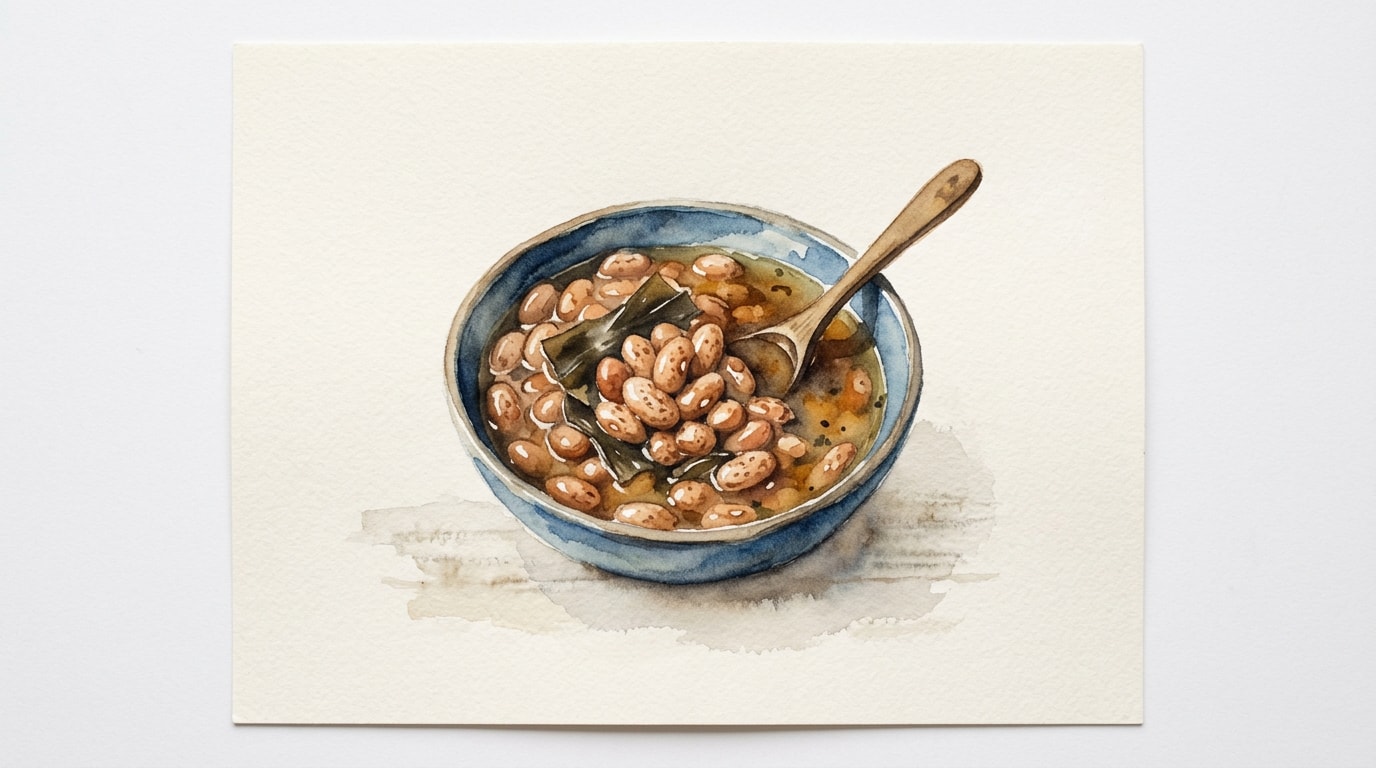
Transfer the hydrated beans to the Dutch oven. Add the remaining 1000ml of fresh water, the dried kombu strip, and the smashed garlic cloves. Place the pot over medium-high heat and bring the liquid to a rapid boil at 100°C/212°F.
Reduce the heat to low, cover the Dutch oven partially with a lid, and maintain a gentle simmer. Cook for 1 hour and 40 minutes, periodically skimming and discarding any foam that rises to the surface.
During the final 20 minutes of cooking, stir the sea salt gently into the broth. Remove the Dutch oven from the heat. Discard the kombu and garlic pieces if desired, and let the beans rest in their seasoned broth for a few minutes before serving.
Chef's Notes
- Kombu contains natural glutamic acid, which dramatically enhances the savory flavors of the pinto beans without the need for meat, stock, or excessive sodium.
- The amino acids present in kombu help break down the complex oligosaccharides in the beans, significantly improving their overall digestibility and reducing gastrointestinal distress.
- Never add salt until the beans are fully tender. Early salting interacts with the structural pectin in the bean skins and can prevent them from softening completely.
- Save the deeply flavored cooking liquid after storing. This bean broth functions as a phenomenal base for vegan soups, gravies, or braising liquids.
Storage
Refrigerator: 5 days — Store in an airtight container completely submerged in the cooking broth
Freezer: 3 months — Freeze in the broth to protect the creamy texture and prevent freezer burn
Reheating: Warm gently over medium heat, adding a splash of fresh water if the broth has reduced too much