Equipment
Ingredients
Pasta Dough
- 200 g tipo 00 flour, sifted
- 2 whole eggs, room temperature
- 2 egg yolks, room temperature
- 5 ml extra virgin olive oil
- 3 g fine sea salt
Dusting
- 50 g semolina flour
Nutrition (per serving)
Method
Measure the tipo 00 flour and mound it on a clean work surface. Use the bottom of a measuring cup or your fingers to create a wide, deep well in the center of the flour.
Crack the whole eggs and add the egg yolks, olive oil, and sea salt directly into the well. Using a fork, gently beat the liquid ingredients until smooth, being careful not to break the flour walls.
Gradually incorporate the inner walls of the flour well into the egg mixture using your fork. Once the mixture becomes a thick paste, use a bench scraper to fold the remaining flour over the center and mix until a shaggy dough forms.
Knead the dough vigorously by hand for 8 to 10 minutes. Push the dough away with the heel of your hand, fold it over itself, and rotate a quarter turn. Continue until the dough is completely smooth, elastic, and slightly tacky but not sticky.
Form the kneaded dough into a tight ball. Wrap it tightly in plastic wrap to prevent a skin from forming. Let it rest at room temperature to allow the gluten network to relax and the moisture to evenly hydrate the flour.
Unwrap the rested dough and cut it into four equal pieces. Keep three pieces covered. Flatten the working piece slightly and pass it through the widest setting of your pasta machine. Fold the dough in thirds like a letter, rotate 90 degrees, and pass it through the widest setting again. Repeat this folding and rolling step three times to build structure.
Continue passing the dough sheet through the pasta machine, reducing the thickness by one setting each time, until you reach a thickness of about 1.5mm to 2mm. The sheet should be slightly translucent. Dust both sides lightly with semolina flour.
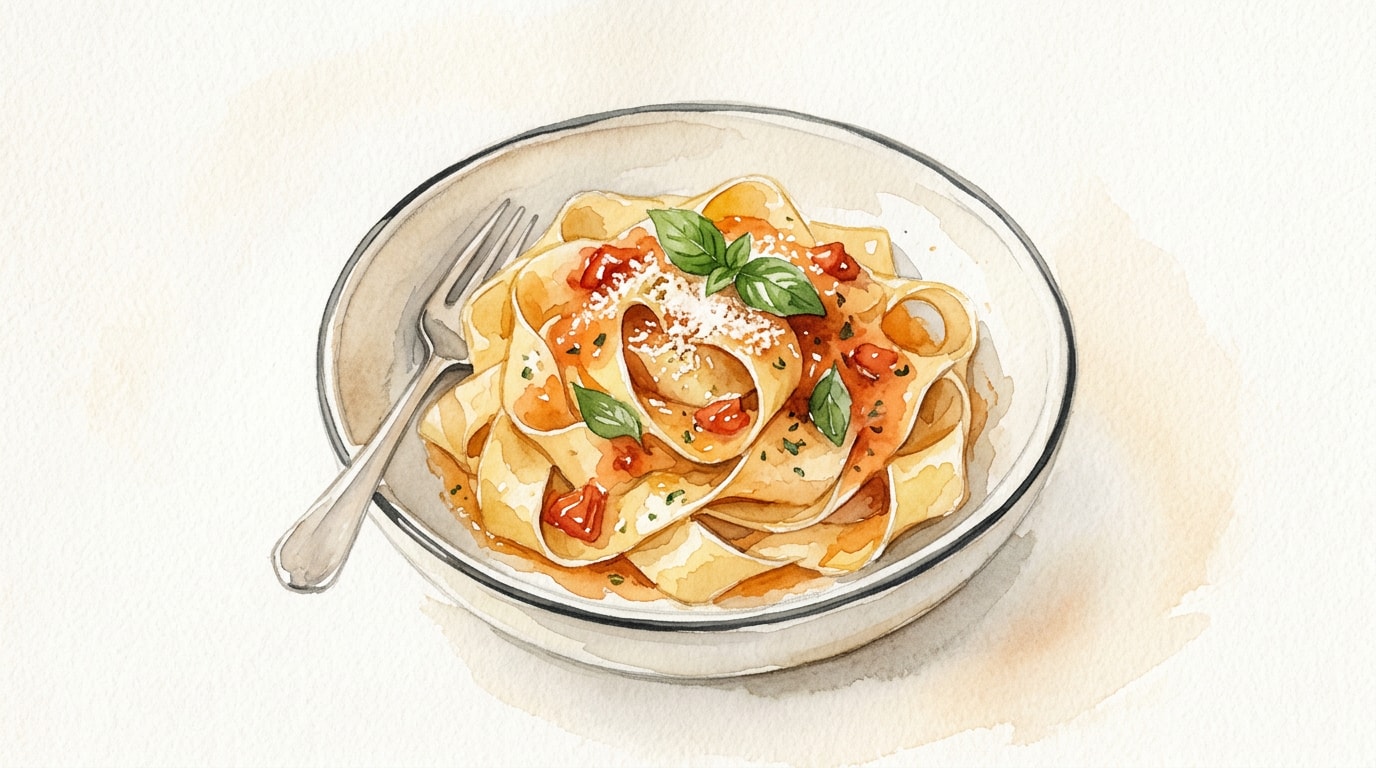
Trim the ends of the dough sheet to make them square. Gently fold the sheet loosely over itself several times to form a flat cylinder. Using a sharp chef's knife, slice the folded dough crosswise into ribbons approximately 2.5 centimeters wide.
Unfurl the cut pappardelle ribbons immediately and toss them gently with a generous amount of semolina flour. Form into loose nests and place on a baking sheet. Leave at room temperature to dry slightly before cooking, or dry completely overnight for pantry storage.
To cook fresh pasta immediately, bring a large pot of generously salted water to a rolling boil at 100°C/212°F. Drop the pasta into the water and boil until al dente, stirring occasionally to prevent sticking. Drain and immediately toss with your prepared sauce.
Chef's Notes
- Using a deliberate mix of whole eggs and extra yolks provides the perfect balance of hydration from the whites and fat from the yolks, yielding a remarkably silky texture and rich golden hue.
- Do not skip or shorten the resting phase. Attempting to roll out tense, unrelaxed gluten will cause the dough to snap back and tear, entirely ruining the texture and making the process frustrating.
- Semolina flour acts like tiny ball bearings on your work surface, keeping the pasta ribbons from sticking together without absorbing into the dough and altering the hydration level like standard flour would.
- If drying the pasta for long-term pantry storage, hang the ribbons on a pasta drying rack or arrange them in single, un-nested layers on mesh screens in a cool, well-ventilated area for 12 to 24 hours until completely brittle.
Storage
Refrigerator: 2 days — Dust heavily with semolina and store in an airtight container.
Freezer: 1 month — Freeze in individual portion nests. Cook directly from frozen, adding 1 to 2 minutes to boiling time.