Equipment
* optional
Ingredients
Pasta Dough
- 300 g tipo 00 flour
- 3 eggs, room temperature
- 2 g fine sea salt
Dusting
- 50 g semolina flour
Nutrition (per serving)
Method
Mound the tipo 00 flour on a clean work surface. Use your fingers to create a wide, deep well in the center of the flour, ensuring the walls are intact so the eggs will not escape.
Crack the room-temperature eggs into the well and add the fine sea salt. Use a fork to gently beat the eggs, slowly gradually pulling in small amounts of flour from the inner walls of the well until a thick paste forms.
Once the wet mixture is thick enough that it will not run off the board, use a bench scraper to fold the remaining flour over the center. Bring the dough together with your hands into a rough, shaggy ball.
Knead the dough vigorously for 10 minutes. Push the dough away with the heel of your hand, fold it in half, give it a quarter turn, and repeat. Continue until the dough is perfectly smooth, elastic, and snaps back slightly when poked.
Wrap the dough tightly in plastic wrap to prevent a skin from forming. Let it rest at room temperature for at least 30 minutes to allow the flour to fully hydrate and the gluten to relax.
Unwrap the dough and cut it into four equal pieces. Keep three pieces wrapped. Flatten the working piece slightly and roll it through a pasta machine starting on the widest setting. Fold it in thirds like a letter and pass it through the widest setting again, then proceed to roll it through progressively thinner settings until it is about 1.5 millimeters thick.
Lay the pasta sheet on a lightly floured surface. Use a fluted pastry wheel to trim the edges and cut the sheet into uniform rectangles, roughly 3 centimeters wide by 5 centimeters long.
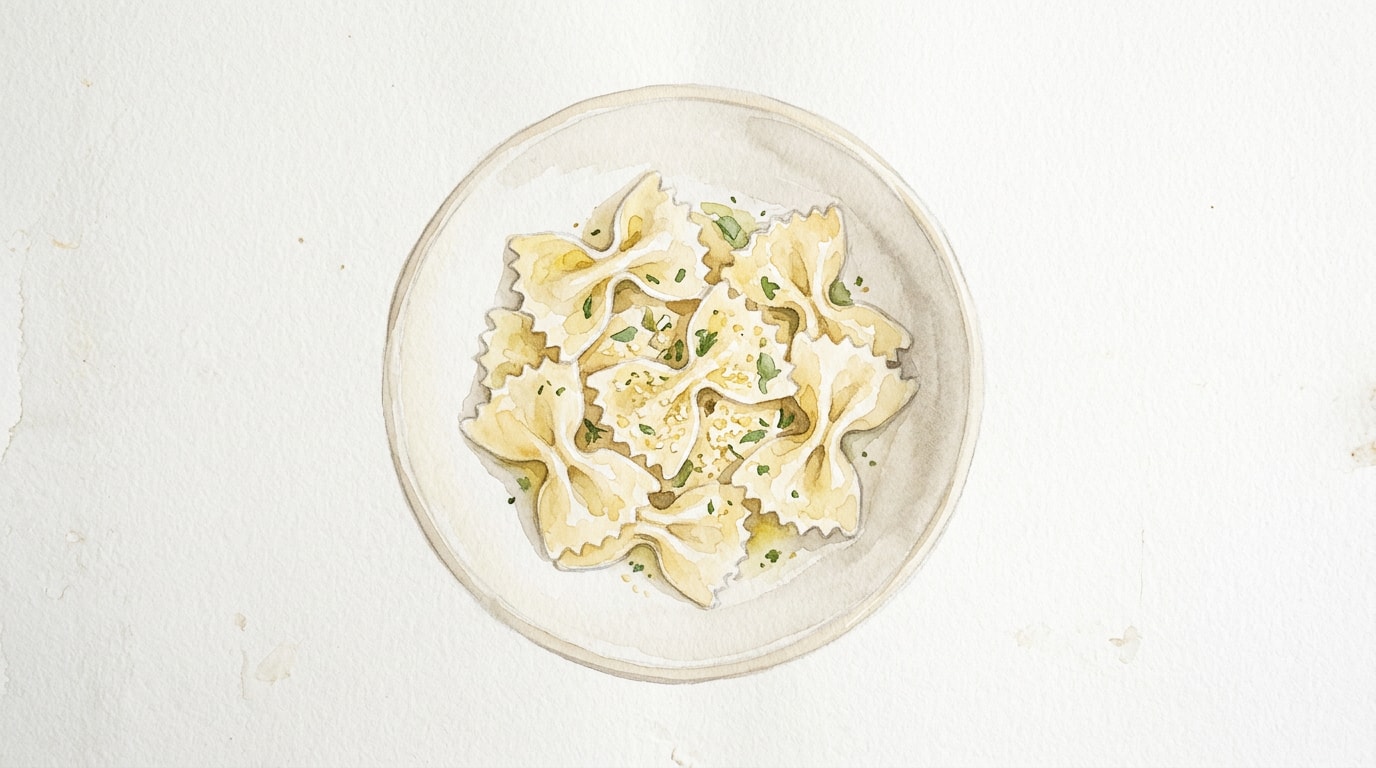
To shape the farfalle, place your index finger gently in the center of a rectangle. Use your thumb and middle finger to pinch the two long sides together forcefully in the middle, catching your index finger slightly to create deep folds, then withdraw the finger while completing the pinch. The shape should resemble a bow tie or butterfly.
Transfer the shaped farfalle to a baking sheet generously dusted with semolina flour. Repeat with the remaining dough. Let the pasta dry at room temperature for 30 minutes before boiling in heavily salted water.
Chef's Notes
- For the most consistent pasta dough across different seasons and humidities, always weigh your eggs. The golden rule of Italian fresh pasta is 1 part egg to 2 parts flour by weight.
- When pinching the farfalle, ensure you create deep pleats in the center rather than just squashing it flat. This thick, dense center provides the signature al dente textural contrast against the thin wings when cooked.
- Do not skip the 30-minute drying phase after shaping. This brief air-drying sets the shape and prevents the farfalle from sticking together or unraveling in the boiling water.
- If using a rolling pin instead of a machine (mattarello style), use a very long wooden pin and keep the dough constantly moving, dusting lightly with flour to achieve an even, translucent sheet.
Storage
Refrigerator: 2 days — Store in an airtight container dusted generously with semolina to prevent sticking.
Freezer: 1 month — Freeze in a single layer on a baking sheet before transferring to a freezer-safe bag. Cook directly from frozen, adding 1-2 minutes to boiling time.