Equipment
Ingredients
Levain (Starter)
- 50 g active sourdough starter, fed and active
- 50 g dark rye flour
- 50 ml water, room temperature
Main Dough
- 250 g dark rye flour
- 200 g whole wheat flour
- 350 ml water, warm
- 12 g fine sea salt
- 8 g caraway seeds, whole
Nutrition (per serving)
Method
In a mixing bowl, combine the active sourdough starter, 50g of dark rye flour, and 50ml of water to create the levain. Stir until no dry spots remain. Cover loosely and let rest at warm room temperature for 4 to 6 hours until doubled, bubbly, and fragrant.
To the active levain in the mixing bowl, add the 350ml of warm water and stir to disperse. Add the remaining 250g dark rye flour, 200g whole wheat flour, fine sea salt, and optional caraway seeds. Mix thoroughly with wet hands or a wooden spoon until a sticky, cohesive shaggy dough forms. Rye dough will feel clay-like rather than elastic.
Cover the mixing bowl with a damp cloth and let the dough rest for 30 minutes. After resting, perform a set of gentle folds by lifting the edges of the dough and pulling them into the center. Because of the high rye content, the dough will tear easily; do not force it. Cover and rest for another 30 minutes, then perform one more gentle fold.
Cover the bowl tightly and leave it undisturbed in a warm spot for the bulk fermentation. Allow it to rise for 4 to 5 hours. The dough should become noticeably puffy, domed on top, and increase in volume by about 50 percent.
Turn the dough out onto a surface generously dusted with rye flour. With floured hands, gently pat the dough into a round shape, pulling the edges toward the center to build tension. Flip the dough seam-side down and gently rotate it to form a tight boule. Dust the top with more rye flour.
Transfer the shaped boule, seam-side up, into a generously floured banneton. Place the banneton in a large plastic bag or cover tightly, and place it in the refrigerator for a cold retard proof of 12 to 16 hours overnight.
Place a Dutch oven with its lid into the oven and preheat to 250°C/480°F. Allow the Dutch oven to heat for at least 45 minutes to ensure it is thoroughly saturated with heat.
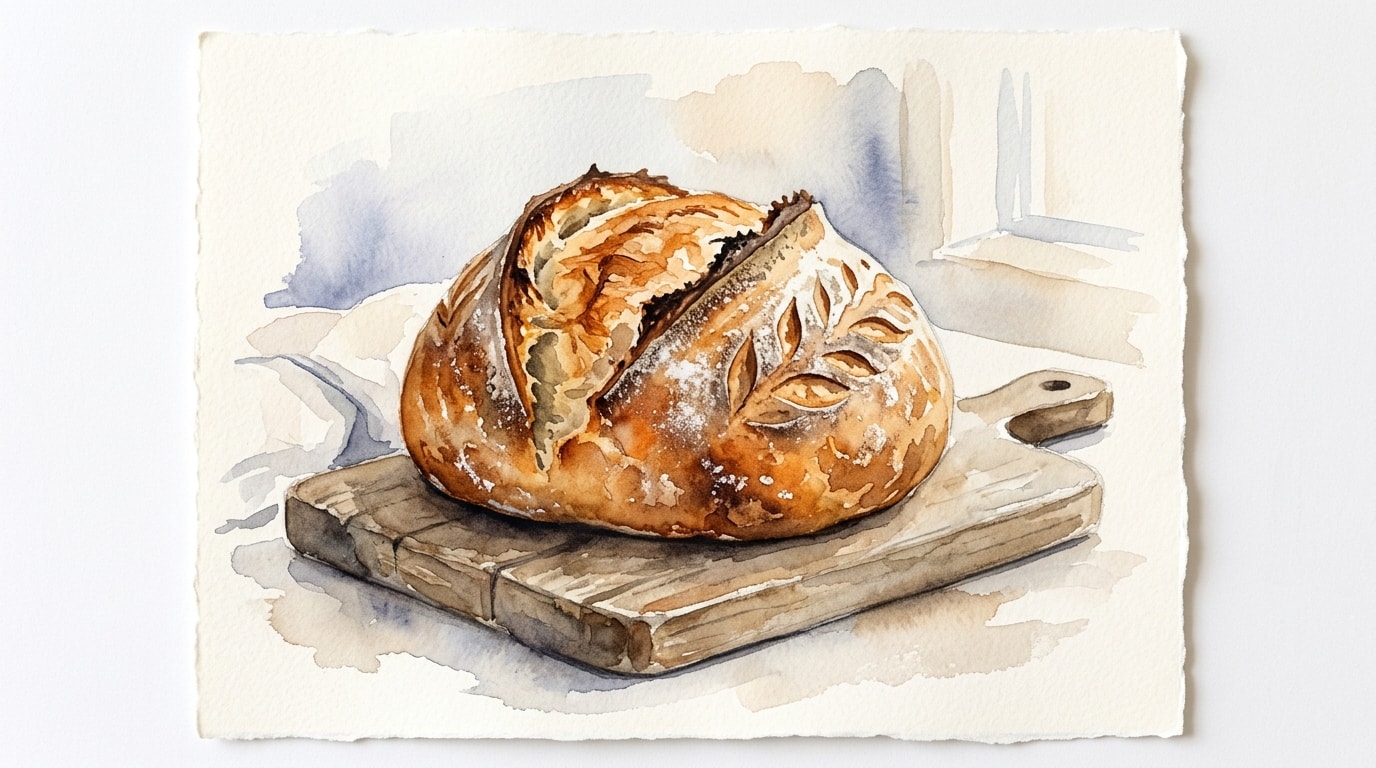
Remove the dough from the refrigerator and invert the banneton onto a sheet of parchment paper. Using a lame or sharp knife, score the top of the dough with a deep slash or a cross pattern to guide the oven spring.
Carefully transfer the dough on the parchment paper into the preheated Dutch oven. Cover immediately with the hot lid and bake for 25 minutes. The trapped steam will help the crust expand and develop a shiny finish.
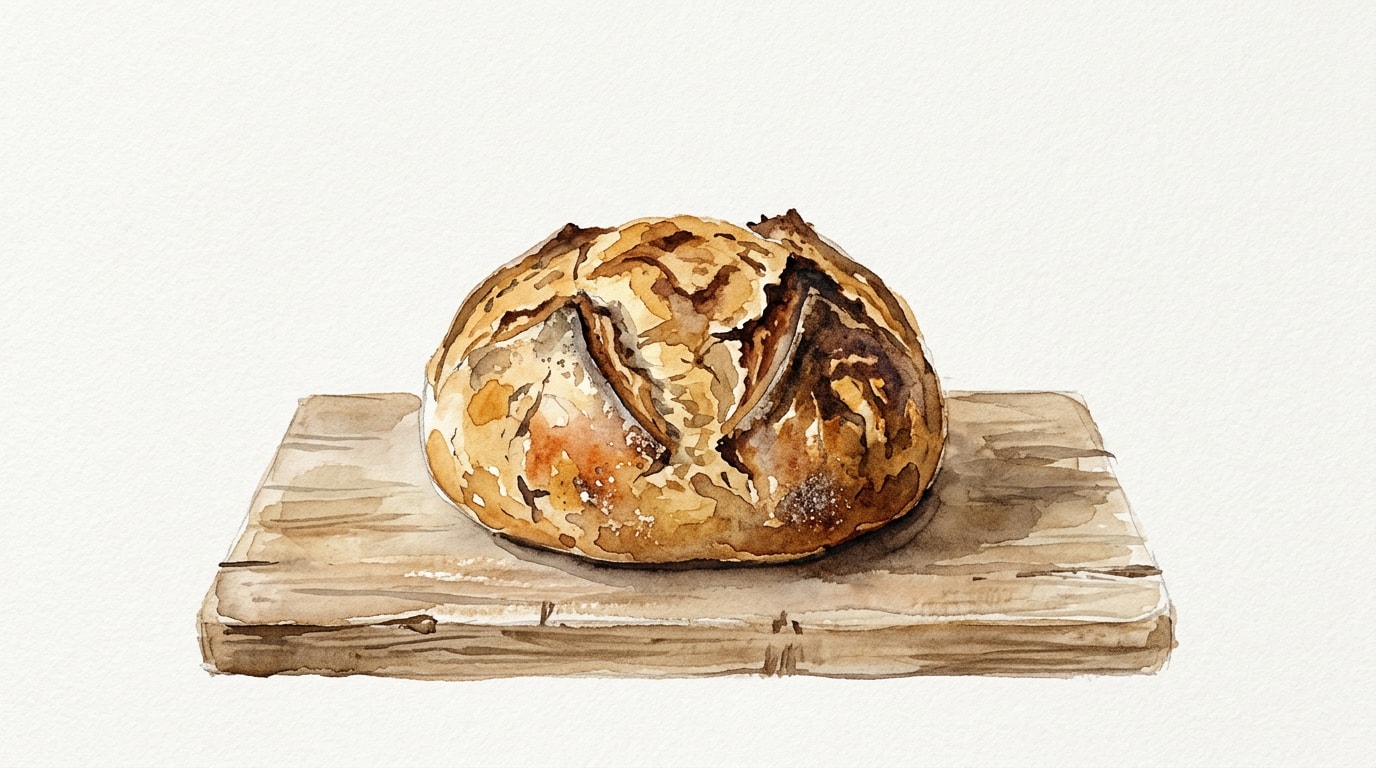
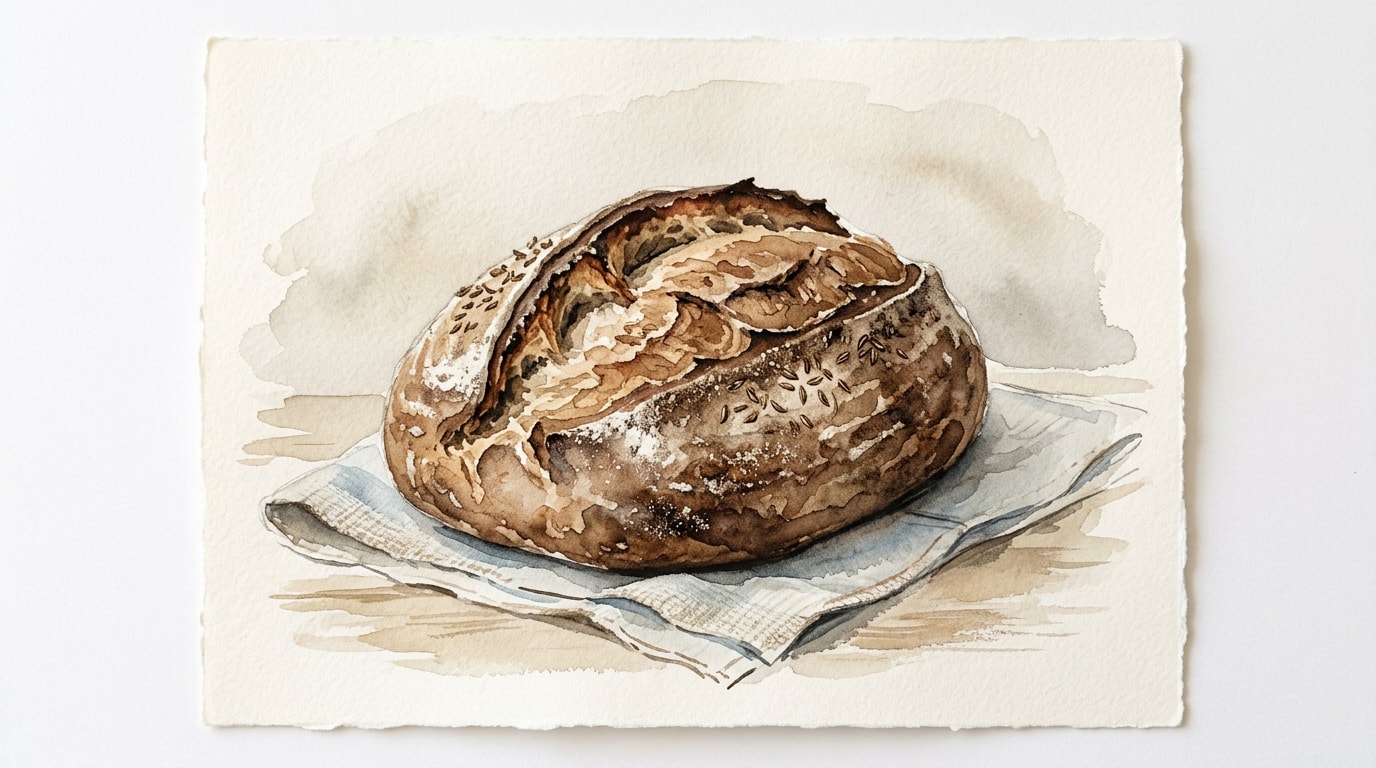
Remove the lid from the Dutch oven and lower the oven temperature to 230°C/445°F. Continue to bake uncovered for 20 to 25 minutes until the crust is a deep, dark brown.
Remove the loaf from the Dutch oven and transfer it to a wire cooling rack. Allow the bread to cool completely and rest for at least 12, preferably 24 hours, before slicing. This rest period is crucial for rye bread to set its crumb and prevent a gummy texture.
Chef's Notes
- Rye flour absorbs significantly more water than standard wheat flour. The dough will feel sticky and lack the typical elastic stretch of wheat doughs; this is completely normal.
- Do not skip the 12 to 24 hour resting period before slicing. Cutting into a warm rye loaf will instantly turn the crumb into a permanently gummy paste.
- Scoring rye dough requires a swift, confident motion. The blade may drag slightly due to the sticky nature of the dough, so dipping the lame in cold water prior to scoring can help.
Storage
Freezer: 3 months — Slice the loaf completely before freezing. Slices can be toasted directly from frozen.
Reheating: Toast individual slices on medium-high until the crust is revived and the center is warm.