Equipment
* optional
Ingredients
Dry Ingredients
- 250 g all-purpose flour
- 5 g fine sea salt
Fats and Liquids
- 225 g unsalted butter, very cold, cut into 1.5cm cubes
- 120 ml ice water
- 5 ml lemon juice
Nutrition (per serving)
Method
Combine the all-purpose flour and fine sea salt in a large mixing bowl. Whisk briefly to distribute the salt evenly.
Add the very cold, cubed butter to the flour mixture. Toss the butter pieces until they are fully coated in flour. Using your fingertips, quickly press each cube of butter flat, leaving large, distinct shards of butter intact. Do not overmix.
Combine the ice water and lemon juice. Drizzle the liquid over the flour and butter mixture. Toss gently with a spatula or your hands until a shaggy, crumbly dough begins to form.
Turn the shaggy dough out onto a clean work surface. Press it firmly together with your hands to form a rough, thick rectangle.
Using a rolling pin, roll the dough out into a rectangle approximately 15 by 30 centimeters. Fold the top third down to the center, then fold the bottom third up over the top, exactly like folding a business letter. This is your first turn.
Wrap the dough tightly in plastic wrap and chill in the refrigerator for 30 minutes to relax the gluten and firm the butter.
Unwrap the dough and place it on a lightly floured work surface with the folded edge on your left, like the spine of a book. Roll out again into a 15 by 30 centimeter rectangle and perform another letter fold. This is your second turn.
Wrap and chill the dough for another 30 minutes. Repeat the rolling and folding process two more times, chilling in between if the butter softens, to complete a total of four turns.
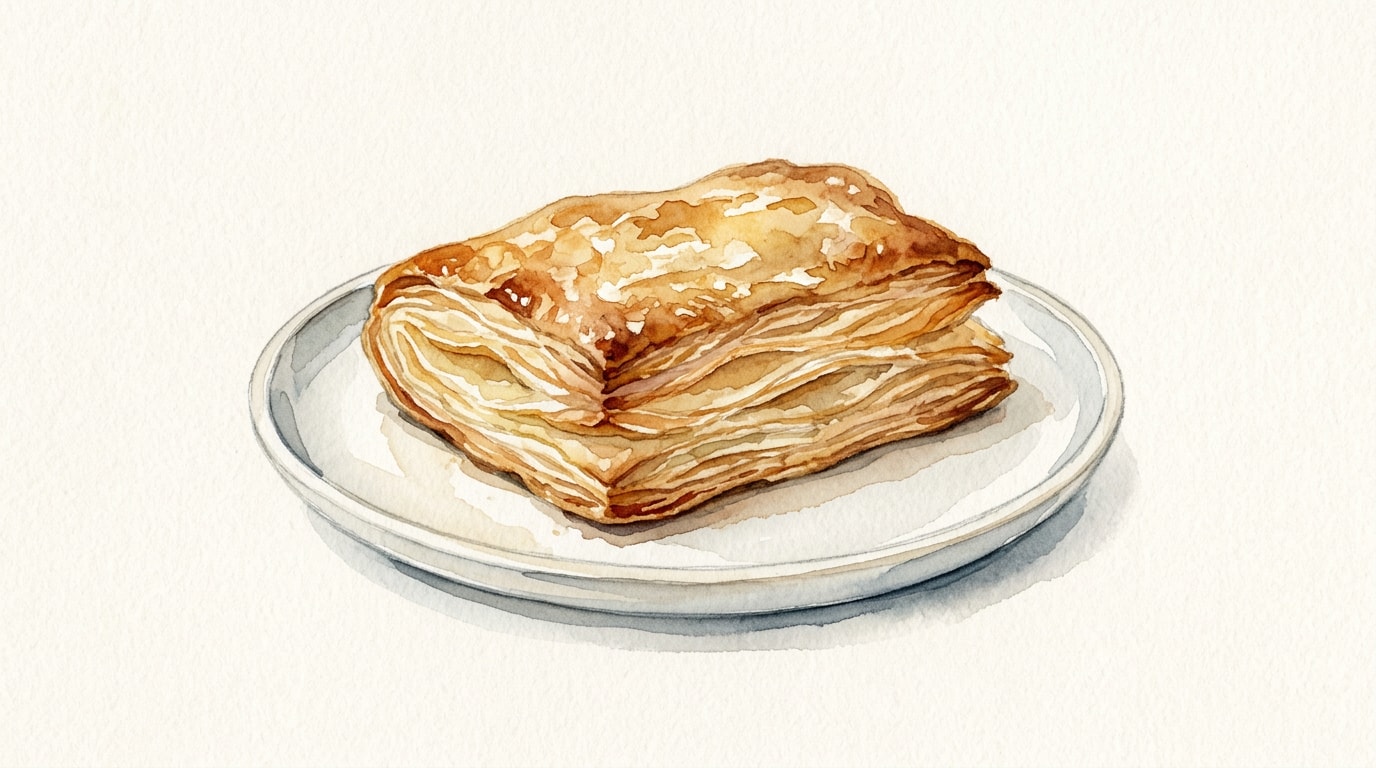
Wrap the finished dough in plastic wrap and chill for at least 60 minutes before rolling out for your final sweet or savory recipe. When baking your final product, a high oven temperature of 200C or 400F is typical for achieving maximum lift and flakiness.
Chef's Notes
- The secret to ultimate flakiness is visible shards of butter in your final dough block. These shards create steam pockets during baking, which separate the layers of dough.
- Using a small amount of acid like lemon juice or white vinegar inhibits gluten development, resulting in a more tender pastry that is easier to roll out.
- When cutting the final rolled dough for your recipes, use a very sharp knife or pastry cutter and press straight down. Dragging the blade will seal the edges together and prevent the dough from rising.
Storage
Refrigerator: 3 days — Keep tightly wrapped in plastic wrap to prevent drying out and oxidizing.
Freezer: 3 months — Thaw overnight in the refrigerator before rolling out.