Equipment
Ingredients
Broths
- 200 g sichuan spicy hot pot base, solid or paste
- 3000 ml chicken broth, low sodium, divided use
- 30 g ginger, sliced
- 4 scallion
- 15 g dried goji berries
Premium Meats
- 400 g lamb shoulder, partially frozen for slicing
- 400 g pork belly, partially frozen for slicing
Seafood Selection
- 500 g littleneck clams, scrubbed and purged
- 2 lobster tail, meat removed and cut into bite-sized pieces
- 300 g sea scallops, side muscle removed
- 350 g large shrimp, peeled and deveined, tail-on
- 300 g squid, cleaned and scored in a crosshatch pattern
- 400 g white fish fillet, sliced 5mm thick
Vegetables & Tofu
- 300 g daikon radish, peeled and sliced into 5mm half-moons
- 300 g lotus root, peeled and sliced 5mm thick
- 400 g firm tofu, drained and cut into 2cm cubes
- 200 g shiitake mushrooms, stems removed, caps scored
- 500 g napa cabbage, leaves separated and washed
Dipping Sauce Bar
- 150 ml soy sauce
- 100 g chinese sesame paste
- 100 ml chinkiang black vinegar
- 50 g garlic, finely minced
- 50 g fresh cilantro, chopped
- 50 ml toasted sesame oil
Nutrition (per serving)
Method
Place the lamb shoulder and pork belly in the freezer for 45 to 60 minutes. This partial freezing hardens the meat just enough to allow you to slice it paper-thin. Once firm, use a very sharp knife to cut the meats as thinly as possible against the grain. Arrange beautifully on a platter and keep refrigerated until serving.
Prepare the seafood platter. Ensure clams are thoroughly purged of sand. Slice the white fish, cut the lobster tail meat into bite-sized chunks, and score the inner side of the squid tubes in a crosshatch pattern before slicing into bite-sized pieces. Arrange all seafood over crushed ice on a serving platter and refrigerate.
Prepare the vegetables and tofu. Peel and cut the daikon radish and lotus root into 5mm thick slices. Cut the firm tofu into bite-sized cubes. Score the shiitake mushrooms with a cross on top for visual appeal, and separate the Napa cabbage leaves. Arrange these ingredients on large serving plates.
Set up the dipping sauce station. Place soy sauce, sesame paste, black vinegar, sesame oil, minced garlic, and chopped cilantro into separate small bowls with serving spoons. Allow guests to mix their own customized dipping sauces in individual bowls.
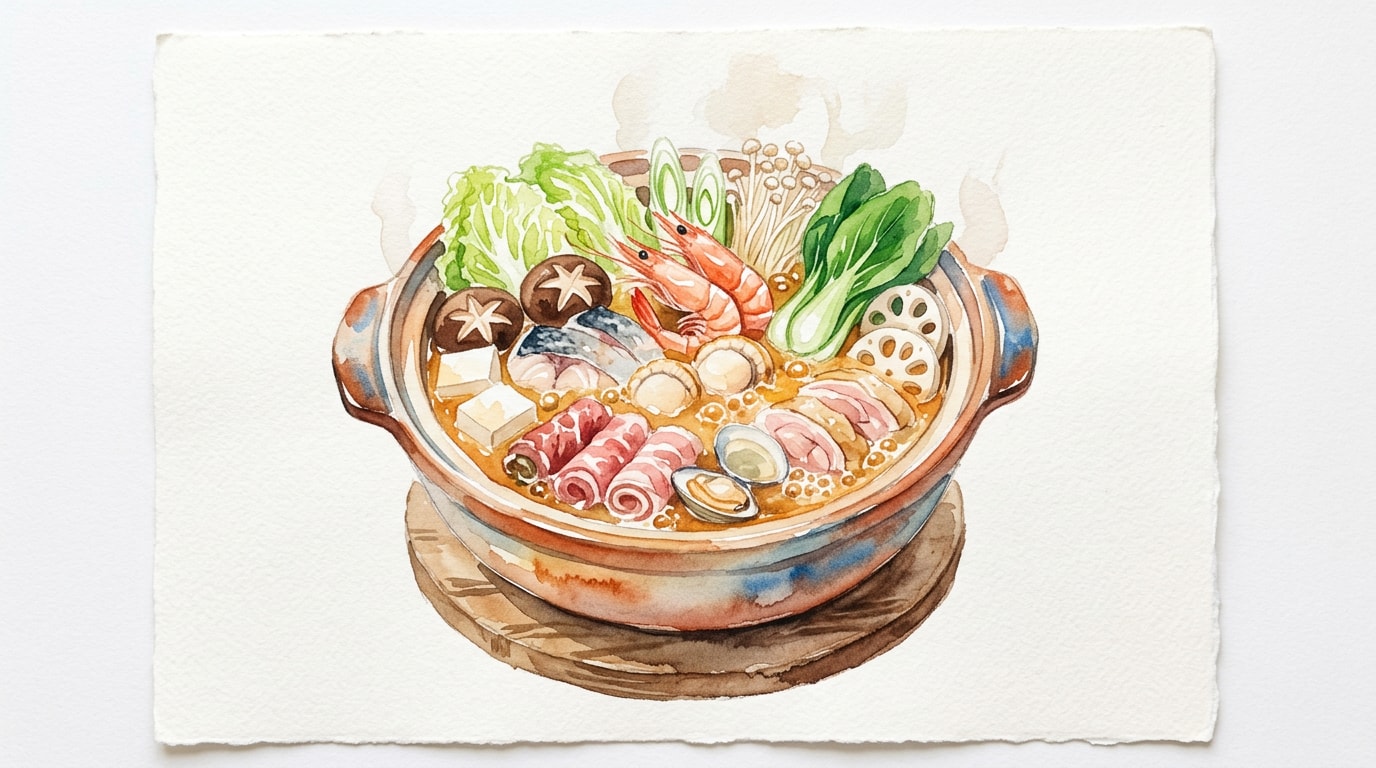
Prepare the broths in the divided pot. In one half, combine 1500ml of chicken broth with the spicy Sichuan base. In the other half, add the remaining 1500ml chicken broth, sliced ginger, scallion segments, and goji berries for a mild clear broth. Place the pot on the portable induction burner in the center of the table and bring to a rolling boil at 100°C/212°F.
Begin the hot pot experience. Instruct guests to use communal cooking chopsticks or mesh skimmers to cook their food. Dense vegetables like daikon and lotus root require 3-5 minutes. Thinly sliced meats take 15-30 seconds. Ensure all pork and poultry reach an internal temperature of 74°C/165°F. Seafood should be removed as soon as it turns opaque. Dip cooked items into personalized sauces before eating.
Chef's Notes
- Temperature management is key to a successful hot pot. Maintain a gentle, rolling boil. If you add too many cold ingredients at once, the temperature will drop, temporarily turning the cooking process into a soggy soak.
- Order of operations matters to broth flavor: start by cooking items that enhance the broth like clams, mushrooms, and daikon. Save starchy items like noodles or heavy quantities of taro for the very end, as they will thicken and cloud the broth.
- To achieve professional-looking squid pieces, score the inside (not the outside skin side) of the cleaned squid tube in a tight grid pattern without cutting all the way through, then slice into 3cm squares. They will curl into beautiful pinecone shapes when blanched.
- The dipping sauce is just as important as the broth. A classic northern-style sauce relies heavily on sesame paste thinned with a little water or broth, mixed with garlic, cilantro, and vinegar to cut the richness of the meat.
Storage
Refrigerator: 2 days — Store raw meats, raw seafood, and vegetables in separate airtight containers. Do not store leftover dipping sauces mixed with raw juices.
Reheating: Reheat leftover broth on the stove to a rolling boil before adding leftover raw ingredients to cook fresh.