Equipment
Ingredients
Bones and Meat
- 1500 g veal knuckle bones, cut into pieces
- 1000 g veal marrow bones
Vegetables
- 400 g carrots, unpeeled, cut into large chunks
- 400 g yellow onions, unpeeled, cut into large chunks
- 200 g celery, cut into large chunks
- 250 g fresh tomatoes, quartered
- 50 g tomato paste
Aromatics and Liquid
- 5000 ml cold water
- 1 garlic, halved horizontally
- 3 bay leaves, dried
- 5 g black peppercorns, whole
- 10 g fresh thyme, whole sprigs
Nutrition (per serving)
Method
Preheat the oven to 220C (430F). Ensure your workspace is clear. Handle raw veal bones safely, washing hands, utensils, and surfaces immediately after contact to prevent cross-contamination.
Arrange the veal knuckle and marrow bones in a single layer in the heavy roasting pan. Roast in the preheated oven until deeply browned, about 45 minutes.
Add the carrots, onions, and celery to the roasting pan with the bones. Toss slightly to coat in the rendered fat. Roast for an additional 20 minutes.
Stir the tomato paste and fresh quartered tomatoes into the roasting pan, coating the bones and vegetables. Return to the oven for 10 minutes.
Transfer the roasted bones and vegetables to the large stockpot using a skimmer. Discard any excess clear fat from the roasting pan, but keep the dark browned bits attached to the bottom.
Place the roasting pan over medium heat on the stove. Pour in a small splash of cold water and scrape up all the caramelized browned bits from the bottom. Pour this highly flavored liquid into the stockpot.
Cover the bones and vegetables in the stockpot with the cold water. Bring the liquid slowly to just below a boil over medium heat.
As the liquid approaches a boil, lower the heat to maintain a gentle simmer. Carefully skim off the grey foam and impurities that rise to the surface using a ladle. Do not stir the broth.
Add the garlic head, bay leaves, black peppercorns, and fresh thyme to the pot. Maintain a bare simmer, uncovered, for 10 to 12 hours. Top up with small amounts of hot water only if the bones become exposed.
Turn off the heat. Carefully ladle the hot broth through a fine mesh strainer lined with a double layer of cheesecloth into a clean, heat-proof container. Do not press on the solids. Discard the spent solids.
Cool the broth rapidly by placing the container in an ice water bath. Once cooled to room temperature, cover and refrigerate overnight until the fat forms a solid white cap on the surface.
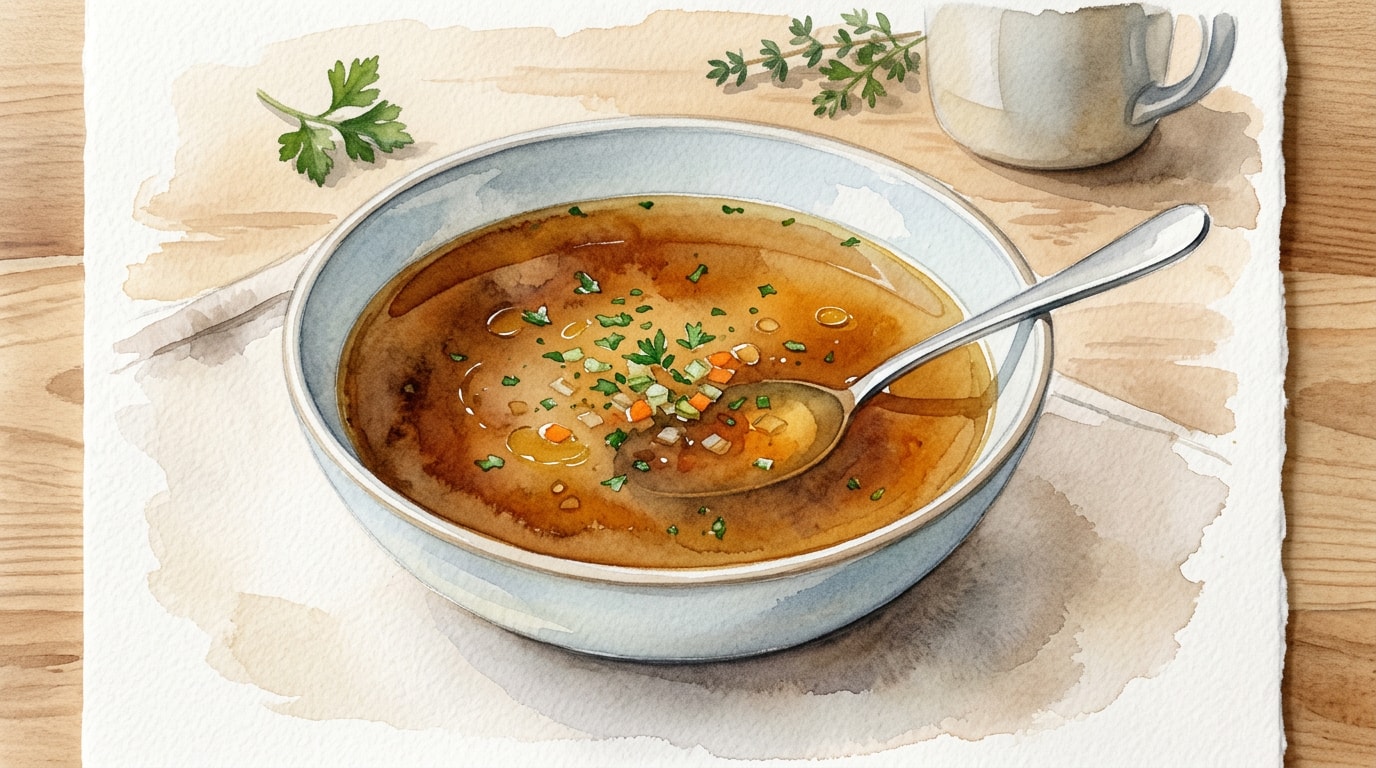
Carefully lift off and discard the solidified fat cap before using the broth. The remaining cold broth should have the bouncy texture of firm gelatin.
Chef's Notes
- Always start stocks and broths with cold water. Cold water draws out the proteins from the bones slowly, allowing them to coagulate and rise to the surface for easy skimming, resulting in a clearer broth.
- Do not press the vegetables or bones against the strainer when extracting the final liquid. Pressing forces tiny particles through the cheesecloth, turning an otherwise pristine liquid cloudy.
- The dark color of this style of broth comes primarily from the Maillard reaction achieved during the initial roasting of the bones and the caramelization of the tomato paste. Do not rush the roasting steps.
- For the ultimate clear finish, avoid stirring the broth at any point during the 12-hour simmer. Let the convective currents of the heat gently circulate the liquid naturally.
Storage
Refrigerator: 1 week — Store in an airtight container with the fat cap left intact until ready to use to extend shelf life.
Freezer: 6 months — Freeze in usable portion sizes, such as ice cube trays or half-liter containers.
Reheating: Warm gently over medium heat until fully liquefied and simmering.