Equipment
Ingredients
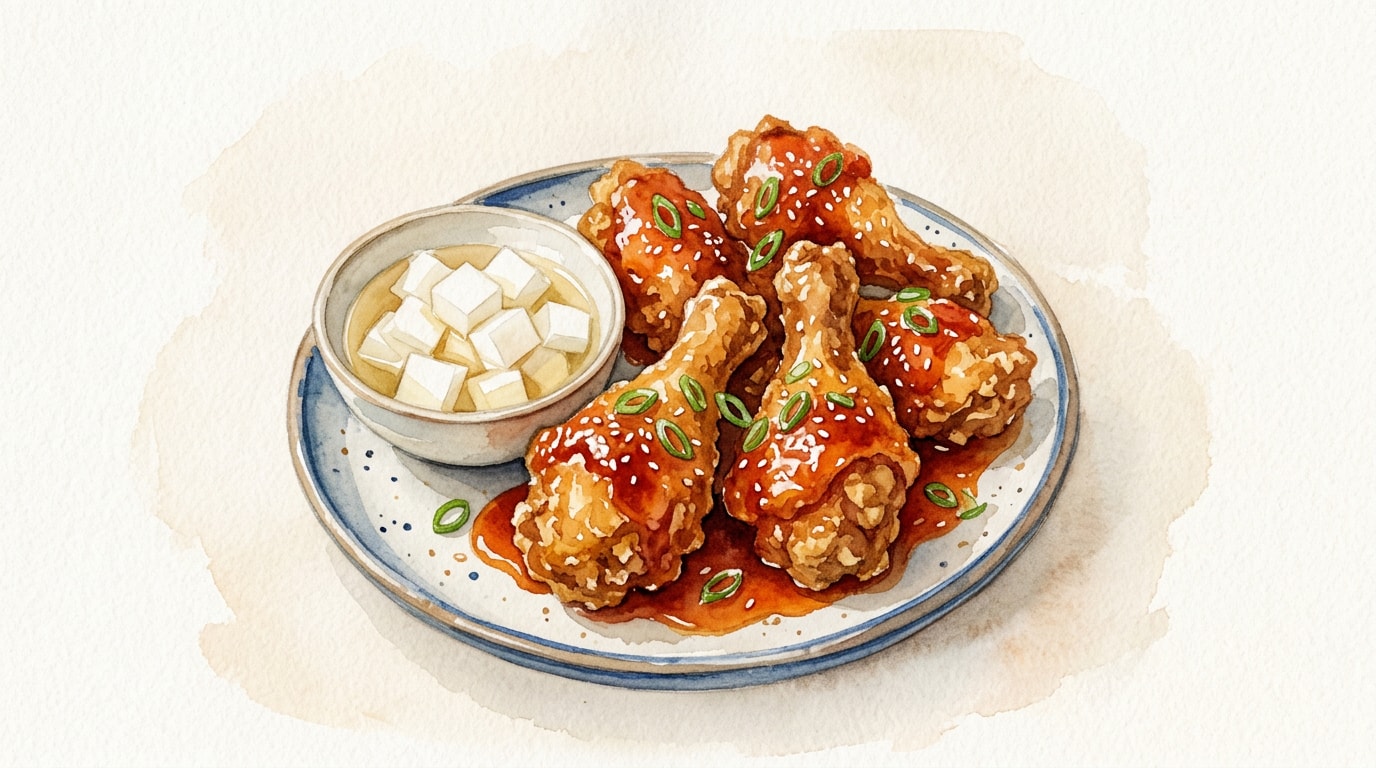
Pickled Radish (Chicken-mu)
- 400 g korean radish, peeled and cut into 1.5cm cubes
- 200 ml water
- 200 ml white vinegar
- 150 g white sugar
- 10 g sea salt
Chicken and Marinade
- 800 g boneless skinless chicken thighs, cut into bite-sized pieces
- 30 ml rice wine
- 5 g fine sea salt
- 2 g black pepper, freshly ground
- 10 g garlic, finely minced
- 5 g ginger, grated
Coating and Frying
- 150 g potato starch
- 4 g baking powder
- 1500 ml canola oil
Yangnyeom Sauce
- 60 g gochujang
- 10 g gochugaru
- 30 ml soy sauce
- 60 ml corn syrup
- 20 g brown sugar
- 15 ml rice vinegar
- 15 g garlic, minced
- 30 ml water
- 10 ml sesame oil
Garnish
- 5 g toasted sesame seeds
- 10 g scallions, finely sliced
Nutrition (per serving)
Method
Combine water, white vinegar, white sugar, and sea salt in a small saucepan. Bring to a boil over medium heat, stirring until the sugar and salt are completely dissolved. Pour the hot liquid over the diced Korean radish in a heatproof container. Let cool to room temperature, then cover and refrigerate for at least 2 hours, ideally overnight.
Place the chicken pieces in a mixing bowl. Add rice wine, sea salt, black pepper, minced garlic, and grated ginger. Massage the marinade thoroughly into the meat. Cover and let sit at room temperature for 30 minutes to absorb the flavors.
In a clean saucepan, whisk together the gochujang, gochugaru, soy sauce, corn syrup, brown sugar, rice vinegar, minced garlic, and water. Simmer gently over medium-low heat until the sauce bubbles and slightly thickens. Remove from heat and stir in the sesame oil. Set aside to keep warm.
Whisk the potato starch and baking powder together in a wide bowl. Working in batches, toss the marinated chicken pieces into the starch mixture. Press the starch firmly into the chicken to create a thick, dry crust. Tap off any excess.
Pour the canola oil into a Dutch oven or heavy pot to a depth of at least 5cm. Heat the oil to 160C/320F. Carefully lower the coated chicken pieces into the oil, frying in batches to avoid overcrowding. Fry each batch for 7 minutes, stirring occasionally to prevent sticking.
Using a spider skimmer or slotted spoon, transfer the fried chicken to a wire rack set over a baking sheet. Let the chicken rest for 5 to 10 minutes. This resting phase allows the crust to release internal steam, which is the secret to ultimate crunch.
Increase the oil temperature to 180C/350F. Return the rested chicken to the hot oil for the second fry. Fry for 3 to 4 minutes until the crust turns a deep golden brown and sounds hollow when tapped.
Drain the chicken briefly on the wire rack. While still piping hot, transfer the chicken to a large mixing bowl. Pour the warm yangnyeom sauce over the chicken and toss vigorously to coat every piece evenly in the sticky glaze.
Transfer the sauced chicken to a serving platter. Garnish generously with toasted sesame seeds and sliced scallions. Serve immediately alongside the chilled pickled radish.
Chef's Notes
- Potato starch (gamjagaroo) is superior to cornstarch for Korean fried chicken; it produces a shatteringly crisp, glass-like crust that stays crunchy even after being drenched in sauce.
- The resting period between the first and second fry is non-negotiable. Steam trapped under the crust migrates outward during the rest, and the second fry evaporates this moisture completely.
- Do not add the sesame oil while the sauce is actively boiling. Heat destroys the delicate roasted compounds in the oil, leaving only a bitter residue. Stir it in off the heat.
- Always toss the fried chicken in the sauce while the meat is still hot. The heat slightly reduces the viscosity of the syrup, allowing for an even, thin glaze rather than thick, clumpy patches.
Storage
Refrigerator: 3 days — Store the chicken and pickled radish in separate airtight containers. Radish will keep for up to 2 weeks.
Reheating: Reheat leftover chicken in an air fryer or oven at 180C (350F) for 6 to 8 minutes until hot and re-crisped.