Equipment
Ingredients
Roasted Butternut Squash
- 500 g butternut squash, peeled, seeded, and diced into 1.5cm cubes
- 15 ml olive oil
- 3 g salt
- 1 g black pepper, freshly ground
Risotto Base
- 1200 ml low-sodium vegetable broth, warmed
- 45 g unsalted butter
- 15 ml olive oil
- 150 g yellow onion, finely diced
- 10 g garlic, minced
- 300 g arborio rice
- 120 ml dry white wine
- 10 g fresh sage leaves, whole leaves
- 60 g vegetarian parmesan cheese, freshly grated
- 2 g salt
- 1 g black pepper
Nutrition (per serving)
Method
Preheat the oven to 200°C/400°F. Line a baking sheet with parchment paper.
Place the diced butternut squash on the prepared baking sheet. Drizzle with olive oil, sprinkle with salt and black pepper, and toss until the squash is evenly coated. Spread into a single layer.
Roast the squash in the preheated oven for 25 to 30 minutes, tossing halfway through, until the pieces are tender and have caramelized, golden-brown edges. Remove from the oven and set aside.
While the squash is roasting, pour the vegetable broth into a medium saucepan and bring to a gentle simmer over low heat. Keep it warm throughout the cooking process.
In a heavy-bottomed pot, heat fifteen grams of butter and fifteen milliliters of olive oil over medium heat. Add the fresh sage leaves and fry for 1 to 2 minutes until crispy. Using a slotted spoon, remove the sage leaves and transfer them to a paper towel to drain.
Lower the heat to medium-low. Add the finely diced onion to the sage-infused fat in the pot. Sauté for 4 to 5 minutes until the onion is completely softened and translucent, but not browned. Stir in the minced garlic and cook for 1 additional minute until fragrant.
Add the arborio rice to the pot, stirring constantly with a wooden spoon for 2 to 3 minutes to toast the grains. The rice is ready when the edges of the grains become translucent and the centers remain opaque white.
Pour the dry white wine into the pot to deglaze it, scraping up any browned bits from the bottom. Stir constantly until the wine has almost completely evaporated and been absorbed by the rice.
Begin adding the warm vegetable broth one ladleful (about 120ml) at a time. Stir frequently and gently, waiting until the rice has absorbed almost all the liquid before adding the next ladle. Continue this process for 18 to 22 minutes. The risotto is done when the rice is tender but still retains a slight, chewy bite in the center (al dente), and is suspended in a creamy, flowing liquid.
Remove the pot completely from the heat. Add the roasted butternut squash, the remaining thirty grams of butter, and the grated vegetarian parmesan cheese. Stir vigorously for 1 minute to emulsify the fats with the starchy liquid, creating a rich, glossy sauce. This technique is known as mantecatura.
Cover the pot tightly with a lid and let the risotto rest undisturbed for 2 minutes. This brief rest allows the starches to relax and the flavors to fully meld together. After resting, remove the lid and taste, adjusting the seasoning with salt and pepper if necessary.
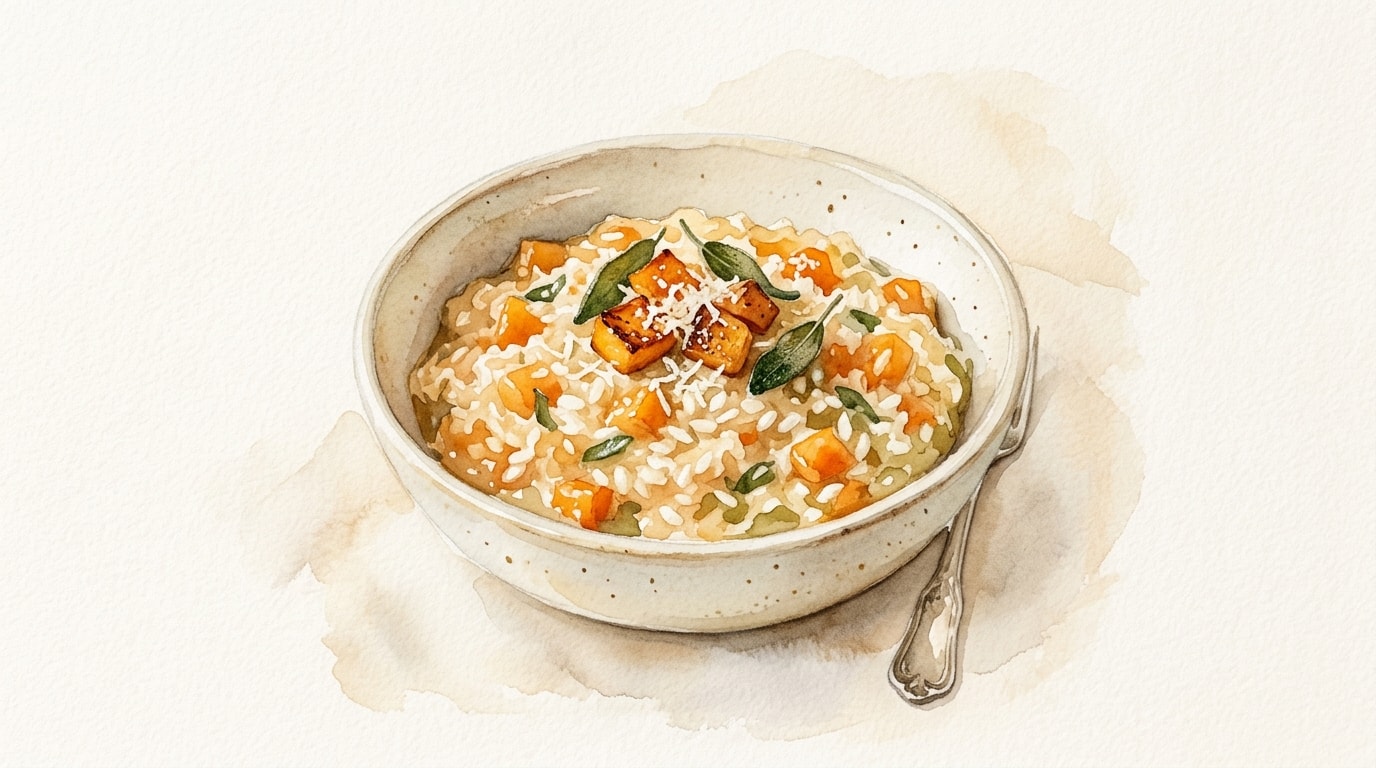
Spoon the hot risotto into warmed shallow bowls, encouraging it to spread out naturally. Garnish each serving with the reserved crispy sage leaves and a light dusting of extra grated parmesan cheese.
Chef's Notes
- Always ensure your broth is warm when making risotto. Introducing cold liquid into the hot pan drops the temperature, shocking the grain and locking the starches inside, which prevents the dish from becoming creamy.
- Constant agitation is the secret to a velvety risotto. The mechanical action of rubbing the rice grains against one another strips away the exterior amylopectin starches, suspending them in the liquid to create the signature sauce.
- The final off-heat step, called 'mantecatura', is critical. Vigorously beating cold butter and cheese into the hot, starchy base creates a stable, glossy emulsion. Never do this over an active flame, or the cheese will split and become stringy.
- Frying sage in the cooking fat before sweating the onions builds a deep, aromatic foundation. The herb releases its essential oils into the butter and oil, carrying that earthy flavor through every bite of the final dish.
Storage
Refrigerator: 3 days — Store in an airtight container. Reheat gently on the stove with a splash of broth.
Reheating: Warm in a saucepan over medium-low heat, stirring frequently. Add a splash of water or vegetable broth to loosen the starches and restore the creamy texture.