Equipment
* optional
Ingredients
Bones and Liquid
- 1000 g chicken wings, whole or separated
- 3000 ml water, cold
- 15 ml apple cider vinegar
Aromatics
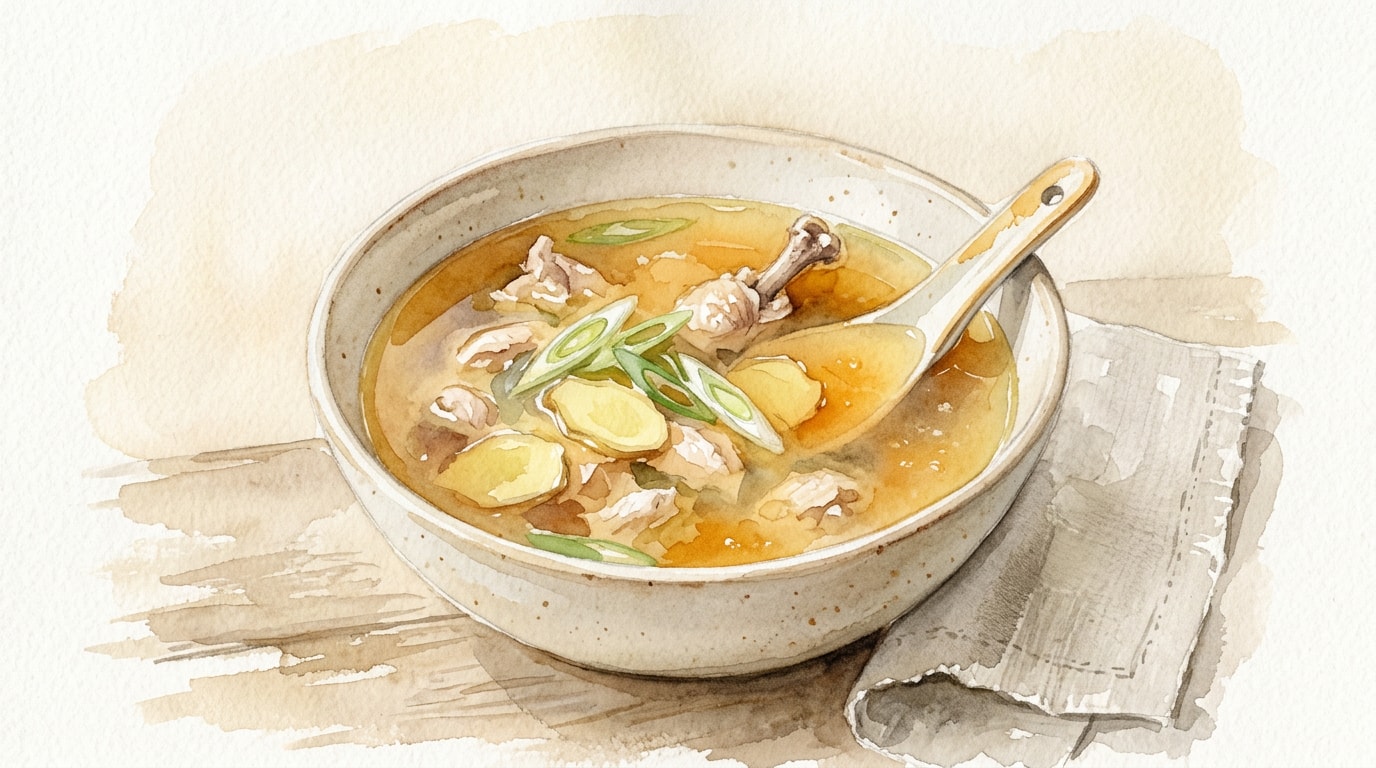
- 50 g fresh ginger, thickly sliced and smashed
- 1 yellow onion, halved, skin on
- 150 g carrots, roughly chopped
- 100 g celery, roughly chopped
- 4 garlic, cloves smashed, skins removed
- 3 g black peppercorns, whole
- kosher salt
Nutrition (per serving)
Method
Place the chicken wings in a large stockpot and cover with the cold water. Bring the mixture to a boil over medium-high heat.
As the water begins to boil, carefully skim off the foam, grey matter, and impurities that rise to the surface using a skimmer or a large metal spoon, and discard them.
Using a chef's knife and cutting board, prep your vegetables. Add the smashed fresh ginger, halved onion, chopped carrots, chopped celery, smashed garlic cloves, black peppercorns, and apple cider vinegar to the pot.
Reduce the heat to low, cover the pot partially, and let the broth simmer gently for 4 hours. Keep the temperature around 85 to 90 degrees Celsius (185 to 195 degrees Fahrenheit), ensuring only a few tiny bubbles break the surface.
Remove the stockpot from the heat. Carefully pour the broth through a fine mesh strainer optionally lined with cheesecloth into a large heat-proof container. Discard the spent solid ingredients.
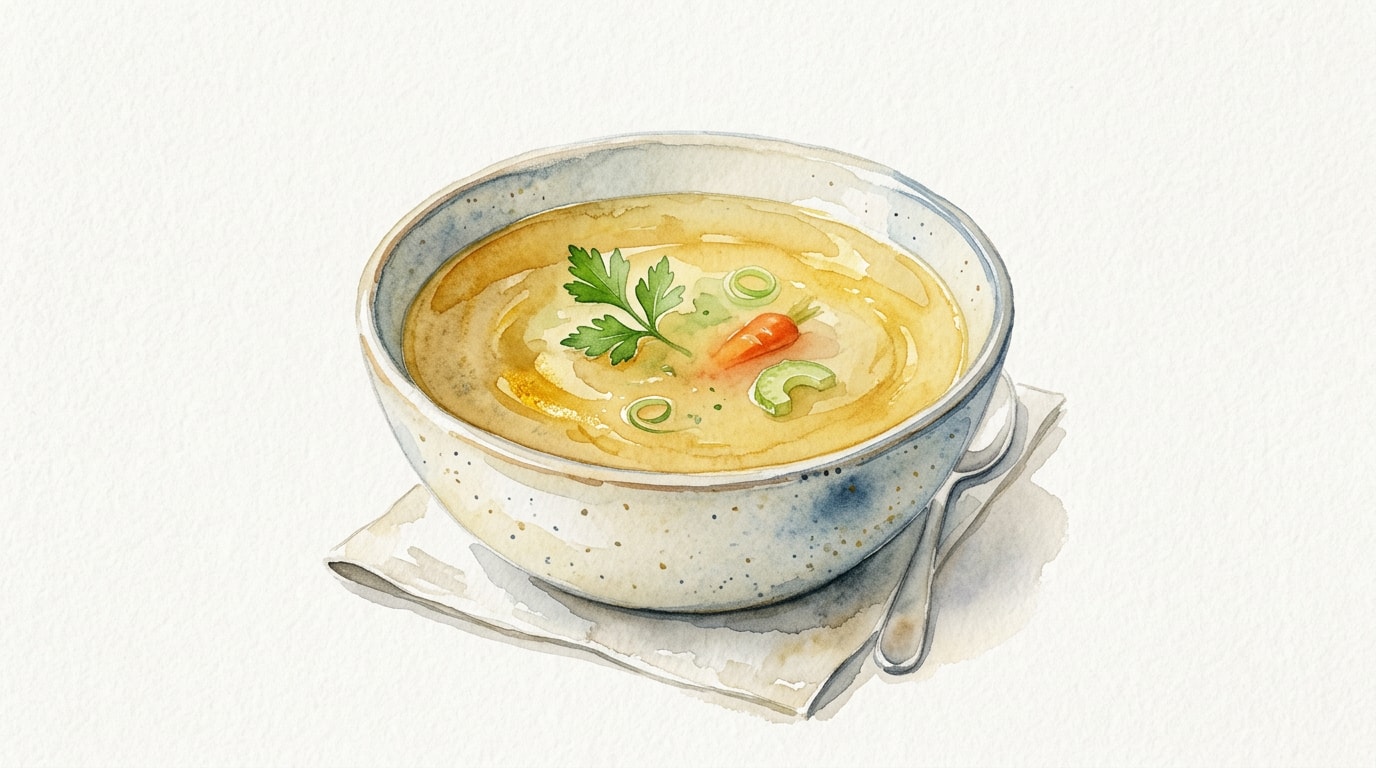
Allow the strained broth to cool rapidly to room temperature. Once cooled, season with salt to taste and transfer it to the refrigerator. The broth will set into a gelatinous texture when completely chilled.
Chef's Notes
- Using chicken wings provides an optimal meat-to-bone ratio with an abundance of connective tissue, yielding a perfectly gelatinous broth without the need to source specialty parts like chicken feet.
- Apple cider vinegar slightly lowers the pH of the water, which helps chemically break down the connective tissues and extract more minerals and collagen from the bones.
- For the absolute clearest broth, always start with cold water. Cold water allows blood and proteins to coagulate and rise to the surface slowly, making them much easier to skim off before they cook into the liquid.
- Do not salt the broth fully during the early cooking process. As the broth reduces over hours of simmering, the salt flavor will concentrate significantly.
Storage
Refrigerator: 5 days — The fat cap will solidify on top; keep it intact to preserve freshness, then remove or stir in before reheating.
Freezer: 6 months — Leave at least 3 centimeters of expansion room at the top of your freezer-safe containers.
Reheating: Bring to a gentle simmer on the stovetop before serving. Do not microwave in sealed containers.