Equipment
Ingredients
Vegetables and Protein
- 200 g carrots, peeled and sliced into 2cm coins
- 300 g sweet potato, peeled and cubed
- 200 g zucchini, halved and thickly sliced
- 150 g red onion, cut into wedges
- 240 g canned chickpeas, rinsed and drained
- 2 garlic, minced
Spices and Oils
- 45 ml olive oil
- 10 g ras el hanout
- 5 g salt
- 30 g harissa paste
Couscous
- 250 g dry couscous, standard or fine
- 300 ml vegetable broth
Garnish
- 15 g fresh parsley, roughly chopped
Nutrition (per serving)
Method
Preheat the oven to 200 degrees Celsius or 400 degrees Fahrenheit.
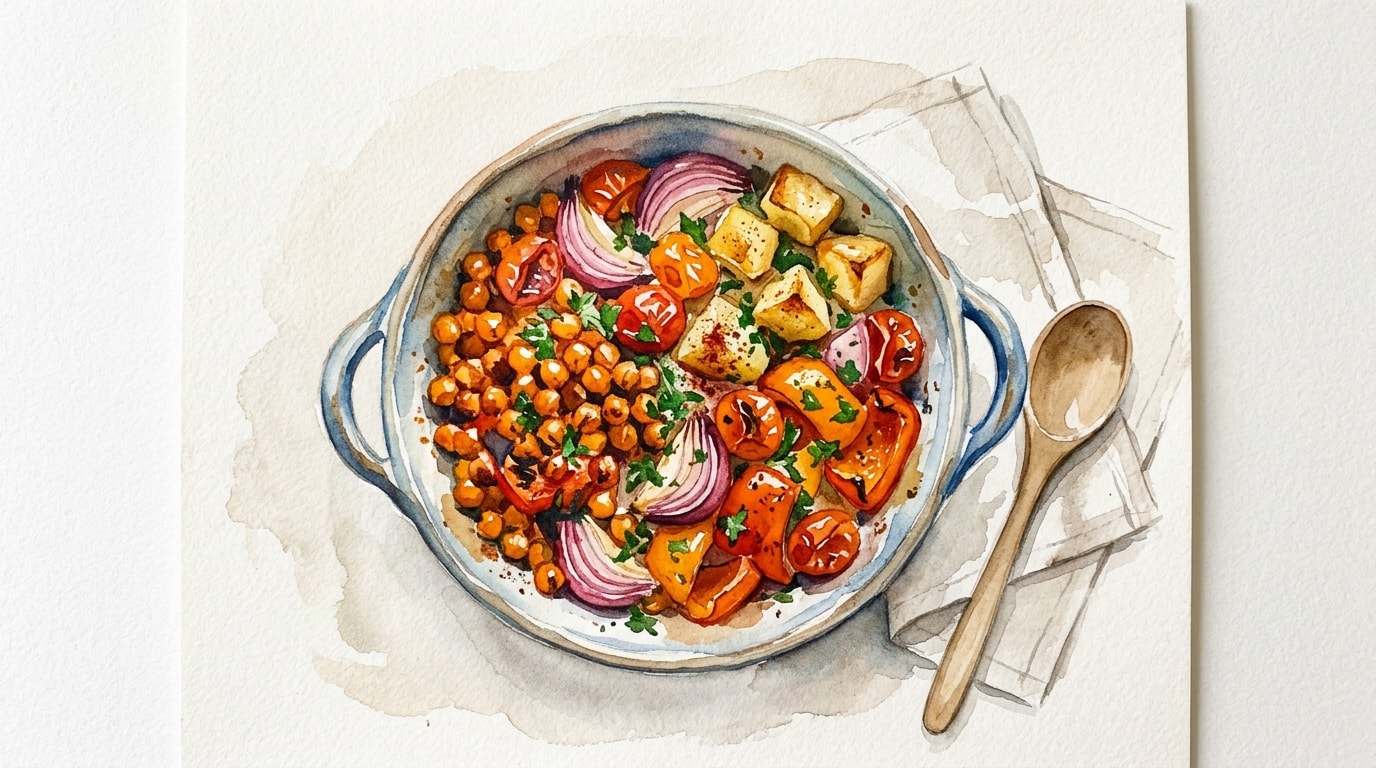
In a large mixing bowl, combine the carrots, sweet potato, red onion wedges, and chickpeas.
Drizzle the mixed vegetables and chickpeas with 30ml of olive oil, then add the ras el hanout, minced garlic, and salt. Toss thoroughly to coat.
Spread the seasoned vegetables and chickpeas evenly onto a baking sheet. Roast in the preheated oven at 200 degrees Celsius or 400 degrees Fahrenheit for 20 minutes.
Remove the baking sheet from the oven briefly, add the zucchini slices, toss everything gently, and return to the oven for another 15 minutes until all vegetables are tender and slightly caramelized.
While the vegetables finish roasting, pour the vegetable broth into a saucepan and bring to a boil over high heat.
Remove the boiling broth from the heat. Stir in the dry couscous and the remaining 15ml of olive oil, then immediately cover the saucepan with a tight-fitting lid.
Let the couscous steep undisturbed off the heat for 5 minutes.
Remove the lid from the saucepan and gently fluff the couscous with a fork to separate the individual grains.
In a small bowl, whisk the harissa paste with a tablespoon of warm water to loosen it into a drizzle-able sauce.
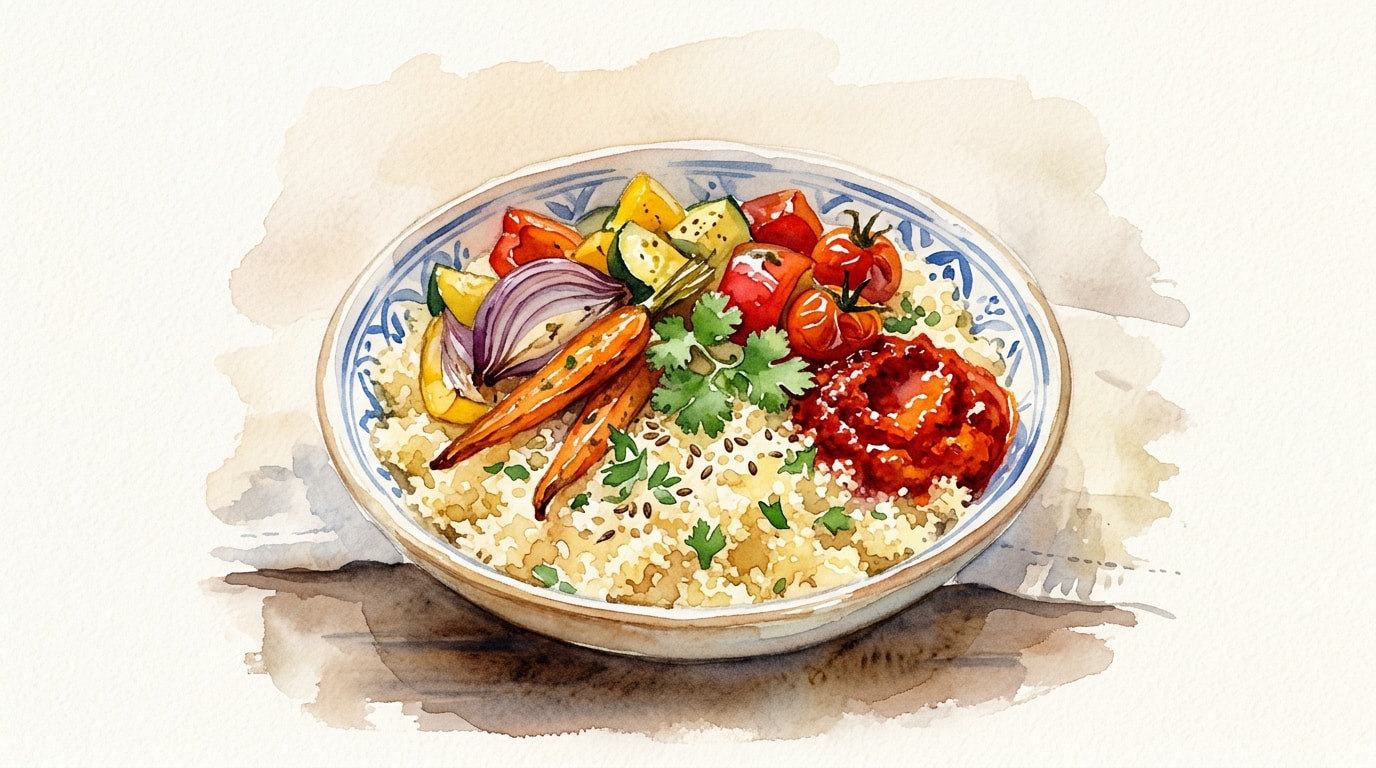
Spread the fluffed couscous onto a large serving platter or divide among individual bowls. Top generously with the roasted vegetables and chickpeas.
Drizzle the loosened harissa sauce over the top and scatter the freshly chopped parsley evenly across the dish.
Chef's Notes
- To build even more flavor, try toasting the dry couscous in a dry skillet for 2-3 minutes until fragrant before adding the boiling broth.
- Zucchini is added later in the roasting process because it contains more water and cooks much faster than dense root vegetables like sweet potato and carrots.
- Ras el hanout is a complex Moroccan spice blend. If you do not have it, a quick substitute can be made by mixing cumin, coriander, cinnamon, ginger, and a pinch of cayenne.
- Do not over-mix the couscous when fluffing. The mechanical action of a spoon will crush the semolina spheres, creating a dense paste.
Storage
Refrigerator: 4 days — Store harissa dressing separately if possible to maintain optimal texture.
Freezer: 1 month — Zucchini may become mushy upon thawing. Best frozen without zucchini.
Reheating: Microwave on medium power until warm, or heat in a skillet with a splash of water.