Equipment
Ingredients
Rice
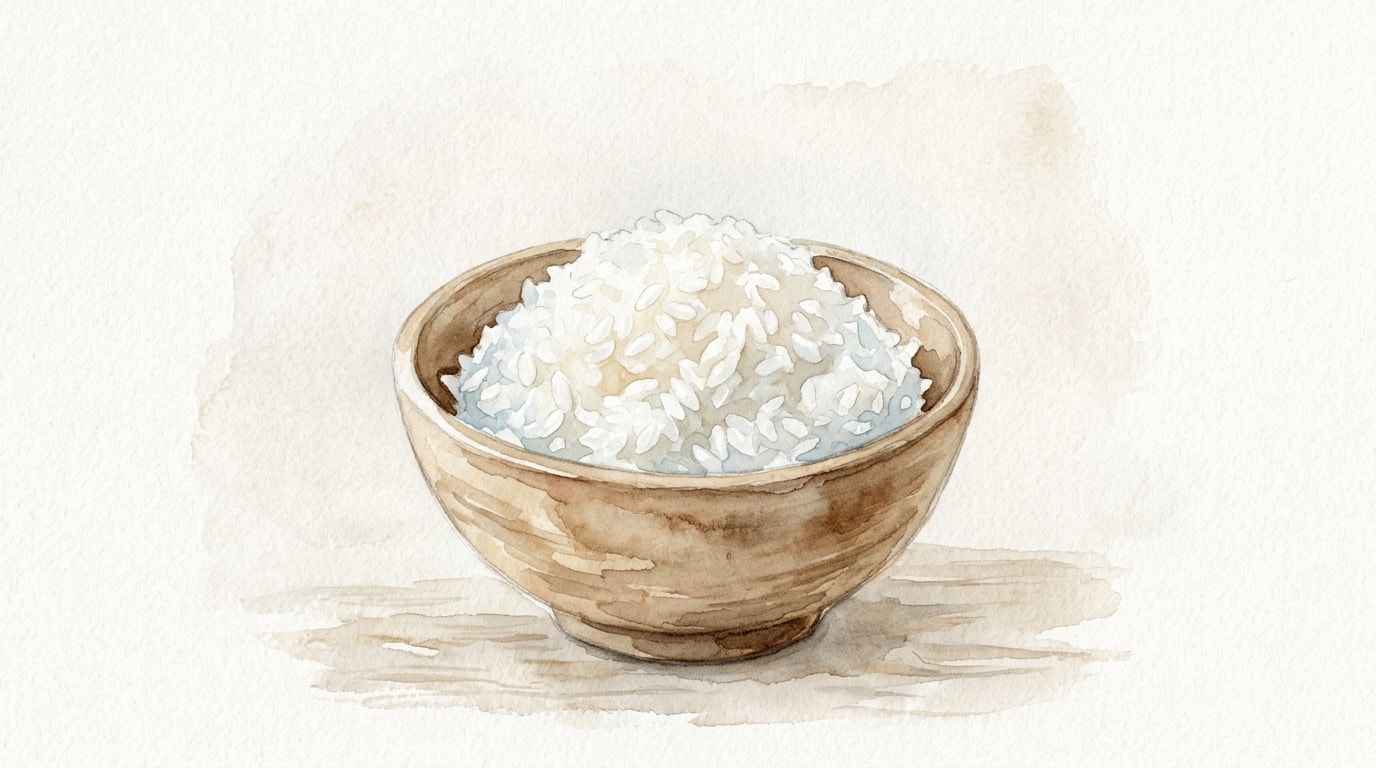
- 300 g short-grain japanese sushi rice
- 330 ml filtered water, cold
- 5 g kombu (dried kelp)
Sushi Vinegar (Awase-zu)
- 45 ml unseasoned rice vinegar
- 30 g granulated sugar
- 8 g sea salt
Nutrition (per serving)
Method
Place the rice in a large bowl and cover with cold water. Swirl gently with your fingers to release the starch, then immediately drain the milky water. Repeat this washing process 3 to 4 times until the water runs mostly clear. Transfer the rice to a fine mesh strainer and let it drain completely for 10 minutes.
Transfer the drained rice to the heavy-bottomed pot. Add exactly 330ml of filtered cold water and place the piece of kombu on top. Let the rice soak at room temperature for 30 minutes. This ensures even cooking to the core of the grain.
Place the pot on the stove over medium-high heat and bring to a gentle boil. Just before the water reaches a full boil, remove and discard the kombu. Reduce the heat to the lowest setting, cover with a tight-fitting lid, and simmer for 12 to 15 minutes. Do not lift the lid during this time.
Remove the pot from the heat. Keeping the lid firmly on, let the rice steam and rest for 10 minutes. This completes the cooking process and allows moisture to redistribute evenly.
While the rice is resting, combine the rice vinegar, sugar, and sea salt in a small saucepan. Heat gently over low heat, stirring constantly until the sugar and salt have completely dissolved. Do not let the mixture boil. Remove from heat and let cool slightly.
Transfer the hot, freshly cooked rice into a large wooden hangiri or a wide, non-metallic bowl. Spread it out evenly. Do not scrape the bottom of the pot if any rice is stuck or browned, as this will affect the texture of your sushi.
Pour the vinegar mixture evenly over the hot rice. Using the shamoji, gently fold the rice using a slicing motion at a 45-degree angle to separate the grains without mashing them. While folding, use a hand fan to rapidly cool the rice. Continue folding and fanning until the rice reaches body temperature (around 37C/98F) and takes on a glossy, shiny appearance.
Chef's Notes
- Washing the rice is critical. The first wash should be done as quickly as possible, as dry rice acts like a sponge and will absorb the starchy, dirty water if left in it too long.
- The rapid cooling process (fanning while mixing) is what gives sushi rice its signature glossy finish. It stops the cooking process immediately and prevents the rice from getting soggy in its own steam.
- A wooden hangiri is traditional because the unvarnished wood absorbs excess moisture from the hot rice, ensuring the perfect balance of stickiness and distinct grains.
- Never firmly press or smash the rice when shaping your sushi. Wet your hands with a mixture of water and a splash of rice vinegar (tezu) to prevent sticking, and handle the rice delicately.
Storage
Refrigerator: 1 day — Refrigeration ruins the texture of sushi rice, making it hard. Best kept at cool room temperature covered with a damp cloth for up to 6 hours. If refrigerated, microwave briefly with a damp paper towel to soften.
Freezer: 1 month — Portion and wrap tightly in plastic wrap while still warm, then place in an airtight container.
Reheating: Microwave frozen rice in its plastic wrap for 1-2 minutes until steamed and soft.