Equipment
Ingredients
Yeast Activation
- 320 ml water, warm, ideally 38-40C
- 7 g active dry yeast
- 10 g granulated sugar
Dough
- 500 g bread flour
- 10 g fine sea salt
- 30 ml olive oil
Nutrition (per serving)
Method
In a large mixing bowl, combine the warm water, active dry yeast, and granulated sugar. Stir gently and let sit for 10 minutes until the mixture becomes foamy and smells aromatic.
Add the bread flour, fine sea salt, and olive oil to the yeast mixture. Stir with a wooden spoon or your hands until a shaggy dough begins to form and all dry flour is hydrated.
Turn the dough out onto a lightly floured surface. Knead steadily for 8 to 10 minutes until the dough becomes smooth, elastic, and slightly tacky but not excessively sticky.
Lightly oil a clean, large bowl. Place the dough inside, turning it once to coat the top with oil. Cover with a damp clean kitchen towel and let rise in a warm, draft-free spot for 1 hour, or until doubled in size.
Gently punch down the dough to release large air pockets. Turn it onto a lightly floured surface, press it into a rough 20x30 cm rectangle, and roll it tightly from the short end to form a log. Pinch the seam closed.
Lightly grease a 23x13 cm loaf pan. Place the shaped dough log seam-side down into the pan. Cover loosely with the towel and let rise for another 45 minutes, or until the dough crowns about 2.5 cm above the rim of the pan.
Preheat your oven to 200C (390F). Ensure an oven rack is placed in the center position.
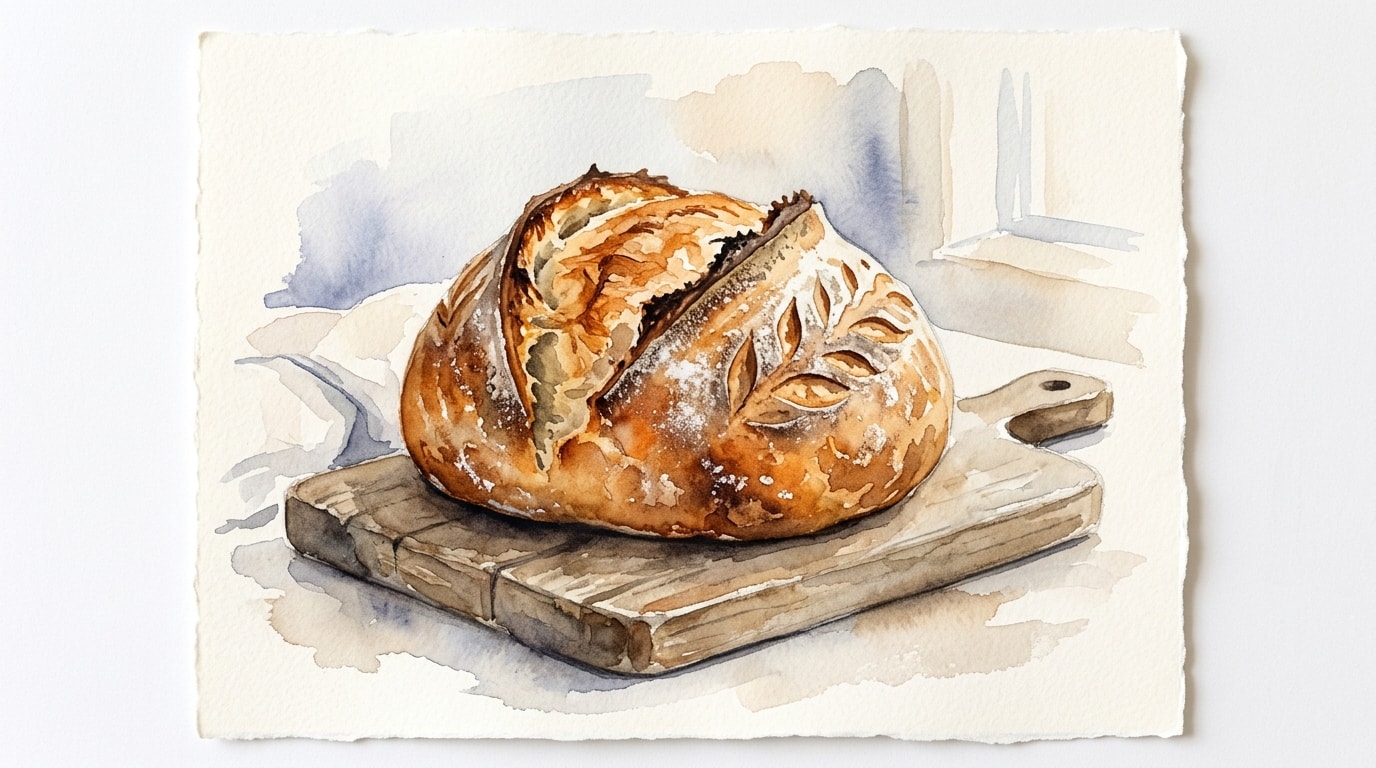
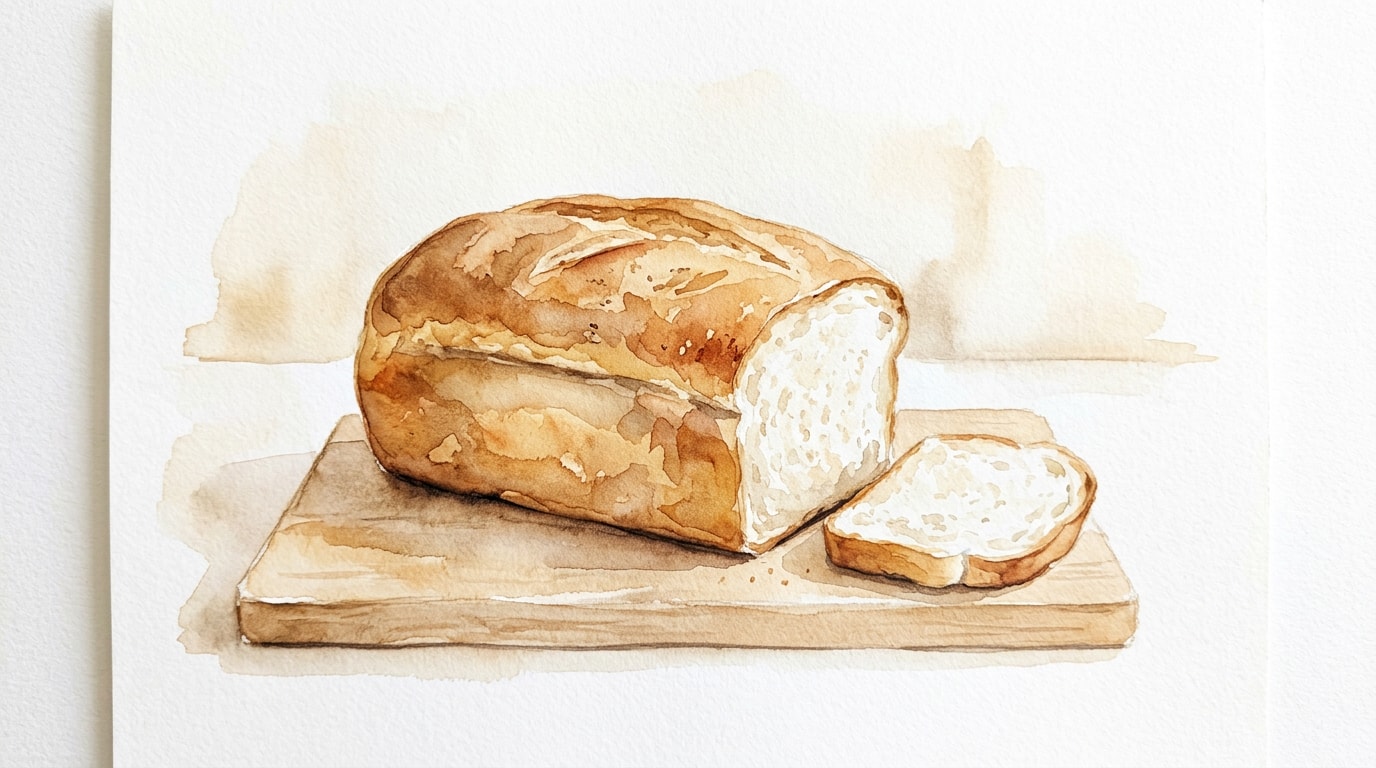
Bake the loaf in the preheated oven for 30 to 35 minutes. The crust should be deep golden brown.
Immediately turn the bread out of the pan onto a wire cooling rack. Allow the loaf to cool completely for at least 1 hour before slicing.
Chef's Notes
- Weighing your flour on a digital scale is the single most important step for consistent bread hydration. Scooping flour with volume cups compresses it, leading to a dry and dense dough.
- The windowpane test is the chef standard for assessing gluten development: pull a small ping-pong sized piece of dough and stretch it between your fingers. If it forms a translucent membrane without tearing, the kneading is complete.
- Baking bread is fundamentally about temperature control. If your kitchen is cold during winter, create a proofing chamber by placing the bowl in an off oven with just the oven light switched on.
Storage
Refrigerator: 1 week — Refrigeration accelerates staling due to starch retrogradation. It is highly recommended to freeze rather than refrigerate.
Freezer: 3 months — Slice the bread completely before freezing so you can toast individual slices on demand.
Reheating: Toast slices directly from frozen. Whole loaves can be refreshed in a 180C/350F oven for 10 minutes.