Equipment
Ingredients
Dough Base
- 390 ml warm water, around 35C
- 4 g active dry yeast
- 600 g bread flour
- 12 g fine sea salt
- 30 ml extra virgin olive oil
Grilling and Handling
- 60 ml extra virgin olive oil
- 30 g cornmeal
Nutrition (per serving)
Method
Combine the warm water and active dry yeast in a large mixing bowl. Let the mixture sit for about 5 minutes until it becomes foamy and aromatic.
Add the bread flour, fine sea salt, and 30ml of olive oil to the yeast mixture. Mix thoroughly with your hands or a wooden spoon until a shaggy, cohesive dough begins to form.
Turn the dough out onto a clean work surface. Knead vigorously for 8 to 10 minutes until the dough transforms from sticky to smooth, elastic, and slightly tacky. If using a stand mixer, mix on medium-low for 5 to 7 minutes.
Form the dough into a large ball. Lightly coat the mixing bowl with a few drops of oil, return the dough to the bowl, and cover tightly. Let it proof at room temperature for 1 hour.
Punch down the dough to release excess gas. Divide evenly into 4 portions, approximately 260g each. Form each into a tight, round ball. Place in lightly oiled individual containers, cover, and transfer to the refrigerator for a 24-hour cold fermentation.
Remove the dough balls from the refrigerator 1 hour before you plan to grill. This allows the gluten to relax, making the dough much easier to stretch without tearing.
Prepare your barbecue grill for two-zone cooking. Set one side to high heat, aiming for an ambient temperature around 260C or 500F, and leave the other side off or on very low.
Dust an inverted baking sheet generously with cornmeal. Gently stretch one relaxed dough ball with your hands into a 25cm to 30cm oval or circle. Keep the center slightly thicker than you would for an oven-baked pizza to ensure it survives the grill grates.
Using a pastry brush, coat the entire top surface of the stretched dough generously with olive oil. This prevents the dough from sticking when inverted onto the grill.
Carefully pick up the dough by the edges and lay it directly onto the hot side of the grill grates, oiled side down. Immediately brush the top side facing you with more olive oil. Close the lid and grill for 1 to 2 minutes.
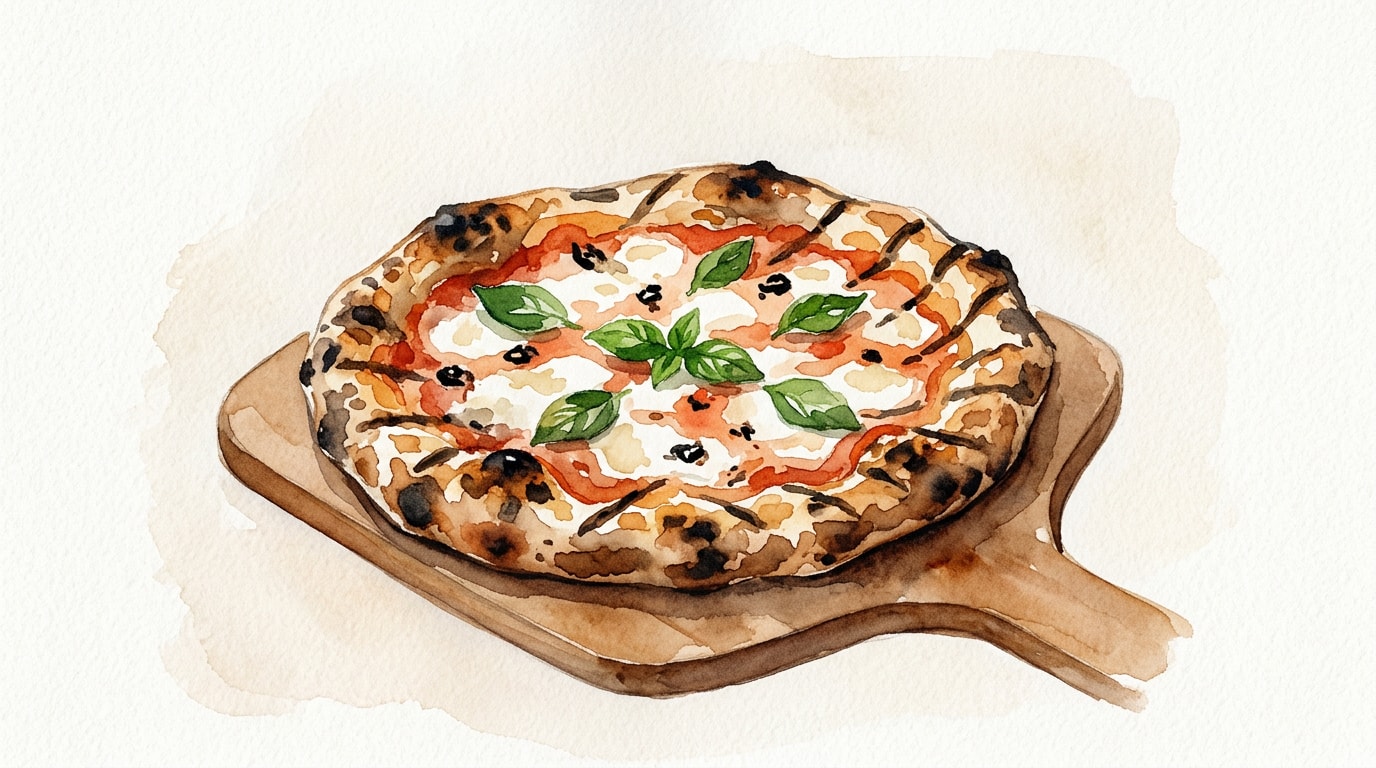
Use tongs to flip the crust over, transferring it to the cooler side of the grill. Quickly add your desired toppings to the freshly grilled, blistered side. Close the lid and let cook for an additional 2 to 3 minutes until toppings are heated and the bottom is crisp.
Chef's Notes
- Mise en place is absolutely critical for grilled pizza. Once the dough hits the fire, you have seconds to act. Have all your toppings prepared, cooked, and organized by the grill before you stretch your first dough ball.
- Because the grill heats the pizza entirely from the bottom, raw toppings like thick vegetables or raw sausage will not cook through. Pre-cook all meat and hearty vegetable toppings indoors beforehand.
- Do not be afraid of char. The slight bitterness of blistered dough pairs beautifully with sweet tomato sauce and rich cheeses. A great grilled pizza should look slightly rustic and asymmetric.
- When applying toppings on the grill, use a light hand. Overloading the pizza will make it difficult to transfer off the grill and will result in a soggy center.
- Adding oil directly into this dough recipe increases its elasticity and lowers the hydration feel, making it much easier to transfer from a baking sheet directly to hot grates without tearing.
Storage
Refrigerator: 3 days — Store dough balls in lightly oiled, airtight containers to prevent a skin from forming.
Freezer: 3 months — Freeze after dividing into balls. Coat lightly with oil and wrap tightly in plastic. Thaw overnight in the refrigerator before using.
Reheating: Reheat leftover cooked pizza in a skillet over medium-low heat with a lid to recrisp the bottom and melt the cheese.