Equipment
* optional
Ingredients
Bones and Meat
- 1500 g beef marrow bones, cut into 5cm pieces
- 1000 g beef shank, bone-in, cut into thick pieces
Mirepoix and Aromatics
- 300 g yellow onion, halved, unpeeled
- 250 g carrot, coarsely chopped
- 150 g celery, coarsely chopped
- 50 g garlic, halved horizontally
- 30 g tomato paste
Bouquet Garni and Liquid
- 4000 ml cold water
- 10 g fresh thyme, whole sprigs
- 15 g fresh flat-leaf parsley, stems only
- 3 bay leaf
- 5 g black peppercorns, whole
Nutrition (per serving)
Method
Preheat the oven to 230°C (450°F). Arrange the raw beef marrow bones and beef shank in a single layer in a large roasting pan. Wash hands and all surfaces that touched the raw meat thoroughly with hot, soapy water.
Roast the bones and meat in the preheated oven for 45 minutes, turning them halfway through, until they develop a deep mahogany brown crust.
Transfer the browned bones and meat to a large stockpot. Add the halved yellow onions, chopped carrots, celery, and garlic to the empty roasting pan. Return the pan to the oven and roast the vegetables for 15 minutes until lightly charred.
Remove the roasting pan from the oven and carefully place it over medium heat on the stove. Add the tomato paste and stir constantly for 2 minutes to caramelize it. Pour in 500ml of the cold water, using a wooden spoon to vigorously scrape up all the browned bits stuck to the bottom of the pan.
Pour the deglazed liquid and all the roasted vegetables into the large stockpot with the bones. Add the thyme sprigs, parsley stems, bay leaves, black peppercorns, and the remaining 3500ml of cold water to ensure all ingredients are fully submerged.
Place the large stockpot over medium-high heat and bring the liquid just to a gentle boil. As soon as bubbles break the surface, immediately reduce the heat. Use a skimmer to remove any gray foam or impurities. The meat will easily exceed the safe internal temperature of 74°C (165°F) during this and the following long simmer, ensuring complete food safety.
Reduce the heat to the lowest possible setting. Maintain a bare, gentle simmer, uncovered, for 5 to 6 hours. Periodically skim the surface to remove excess fat and foam, ensuring a clean and clear final broth.
Remove the large stockpot from the heat and allow it to rest for 15 minutes so the solids settle. Carefully use a ladle to transfer the broth through a fine mesh strainer lined with cheesecloth into a clean heatproof container. Discard the spent bones and vegetables.
Cool the strained broth rapidly by placing the heatproof container in a large bowl filled with ice water. Stir occasionally until the broth reaches room temperature. Cover tightly and refrigerate overnight.
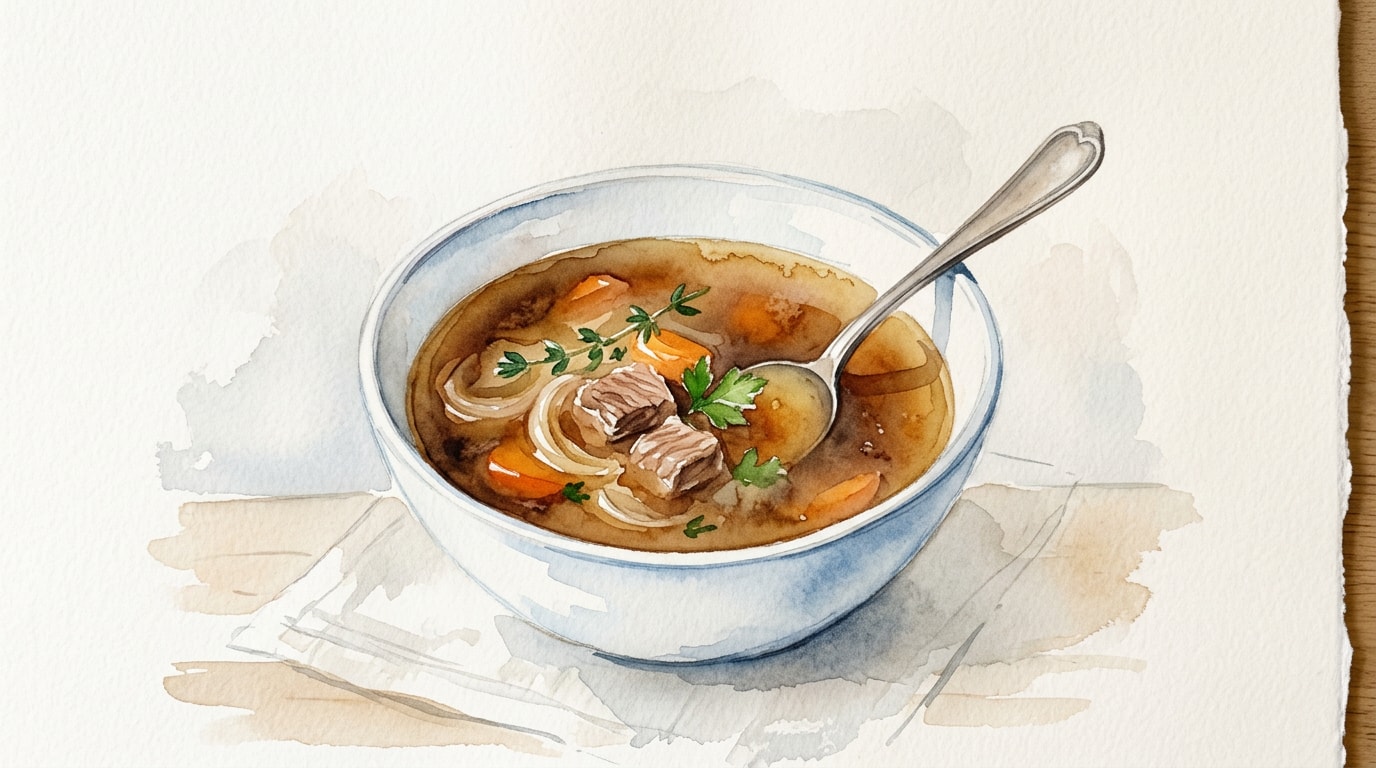
The next day, use a spoon to lift off and discard the solidified layer of white fat from the surface of the chilled broth. The broth is now ready to be heated and served or used in other recipes.
Chef's Notes
- Starting with cold water is essential for a clear broth; it helps extract proteins slowly so they coagulate into large, easily skimmable clusters rather than clouding the liquid.
- Do not salt the broth during the cooking process. As the liquid reduces, salt concentrates. Season only when you are ready to use the finished broth in a specific dish.
- The unpeeled onion halves add a rich, golden color to the finished broth, a classic French technique known as using an oignon brule if charred first.
- Save the cooked marrow from the bones. Spread it on toasted baguette with a pinch of flaky sea salt for a traditional chef's treat.
Storage
Refrigerator: 5 days — Leave the solidified fat cap intact on top of the liquid until ready to use; this acts as a protective seal to preserve freshness.
Freezer: 6 months — Store in airtight quart containers or freeze in ice cube trays for easy portioning into sauces.
Reheating: Warm gently in a saucepan over medium heat until steaming. Do not bring to a rolling boil if you want to maintain perfect clarity.