Equipment
* optional
Ingredients
Dry Ingredients
- 300 g all-purpose flour
- 5 g fine sea salt
Fats and Liquids
- 150 g pork lard, cubed and thoroughly chilled
- 80 ml ice water, ice cold
- 5 ml apple cider vinegar
Nutrition (per serving)
Method
In a large mixing bowl, whisk together the all-purpose flour and fine sea salt until evenly distributed.
Add the cold, cubed lard to the flour mixture. Using a pastry blender, cut the fat into the dry ingredients until the mixture resembles coarse meal, ensuring some distinct pea-sized chunks of lard remain intact.
Combine the ice water and apple cider vinegar in a measuring jug. Drizzle 60ml of the cold liquid over the flour mixture. Toss gently with a fork to combine. Add the remaining liquid a teaspoon at a time only if the dough is too dry to hold together when squeezed.
Turn the crumbly mixture out onto a clean work surface. Gently gather and press the dough together, dividing it into two equal portions. Press each portion firmly into a flat, round disc.
Wrap each dough disc tightly in plastic wrap. Chill in the refrigerator for a minimum of 1 hour to allow the gluten to relax and the fat to re-solidify.
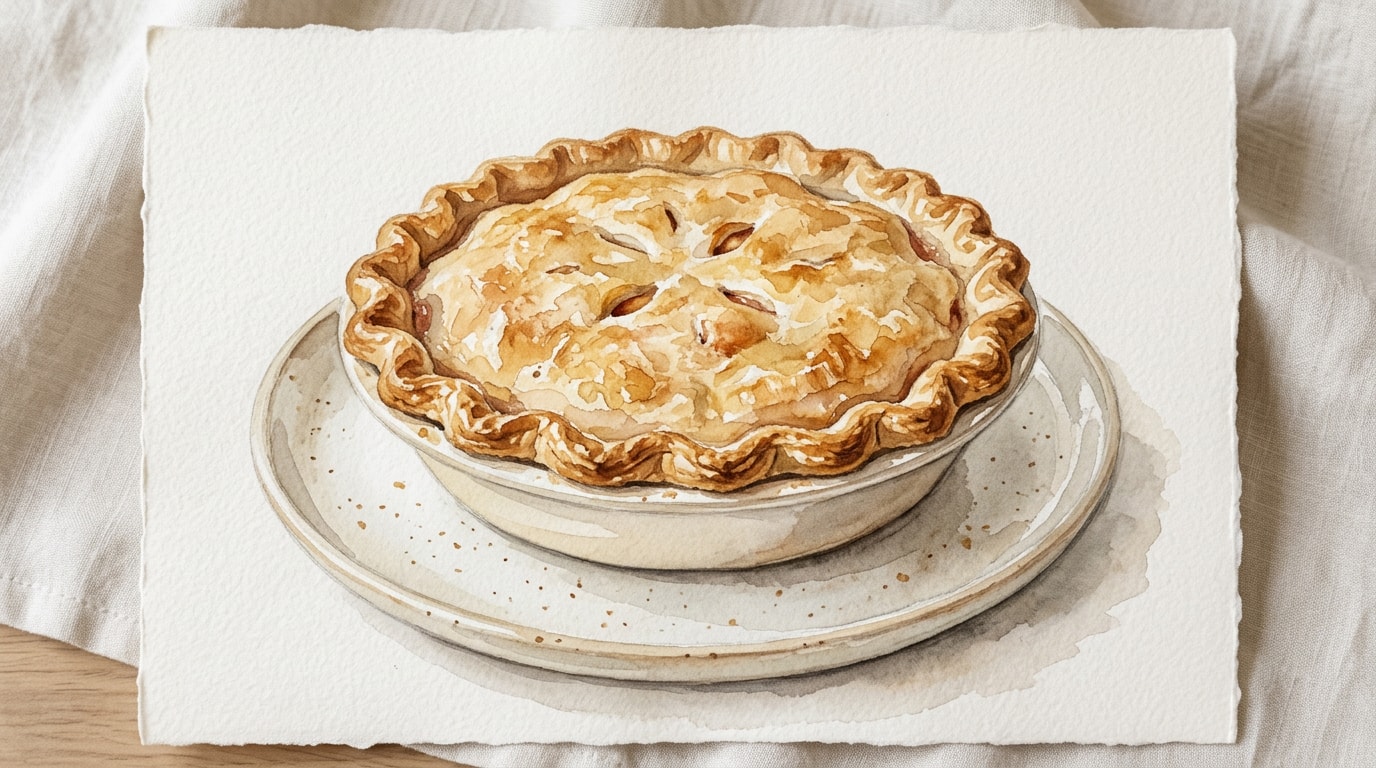
When ready to bake, transfer the chilled dough to a lightly floured surface. Roll out evenly from the center to the edges to achieve a 3mm thickness. Carefully drape it into your pie dish, trimming and crimping the edges.
If your recipe requires a fully blind-baked crust: line the shaped dough with parchment paper and fill with pie weights. Bake in a preheated oven at 200°C/400°F for 15 minutes. Carefully remove the weights and parchment, then bake for an additional 10 minutes or until the bottom is fully cooked and golden brown.
Chef's Notes
- For the absolute best flavor and highest structural integrity, seek out rendered leaf lard rather than standard tub lard. Leaf lard is sourced from around the kidneys and has a completely neutral flavor suitable for sweet fruit pies.
- Temperature control is your greatest asset in pastry making. If your kitchen is exceptionally warm, place your mixing bowl and flour in the freezer for fifteen minutes before beginning.
- Visible streaks or chunks of fat in your final shaped dough discs are exactly what you want. These pockets of pure fat will melt rapidly in the hot oven, creating steam that lifts the flour into separated, flaky layers.
- When adding water, do so incrementally. Flour absorbs moisture differently depending on the ambient humidity of your kitchen, the brand, and the age of the flour, so you may not need the entire amount.
Storage
Refrigerator: 3 days — Wrap tightly in plastic wrap to prevent oxidation and drying out.
Freezer: 3 months — Thaw overnight in the refrigerator before attempting to roll.