Equipment
Ingredients
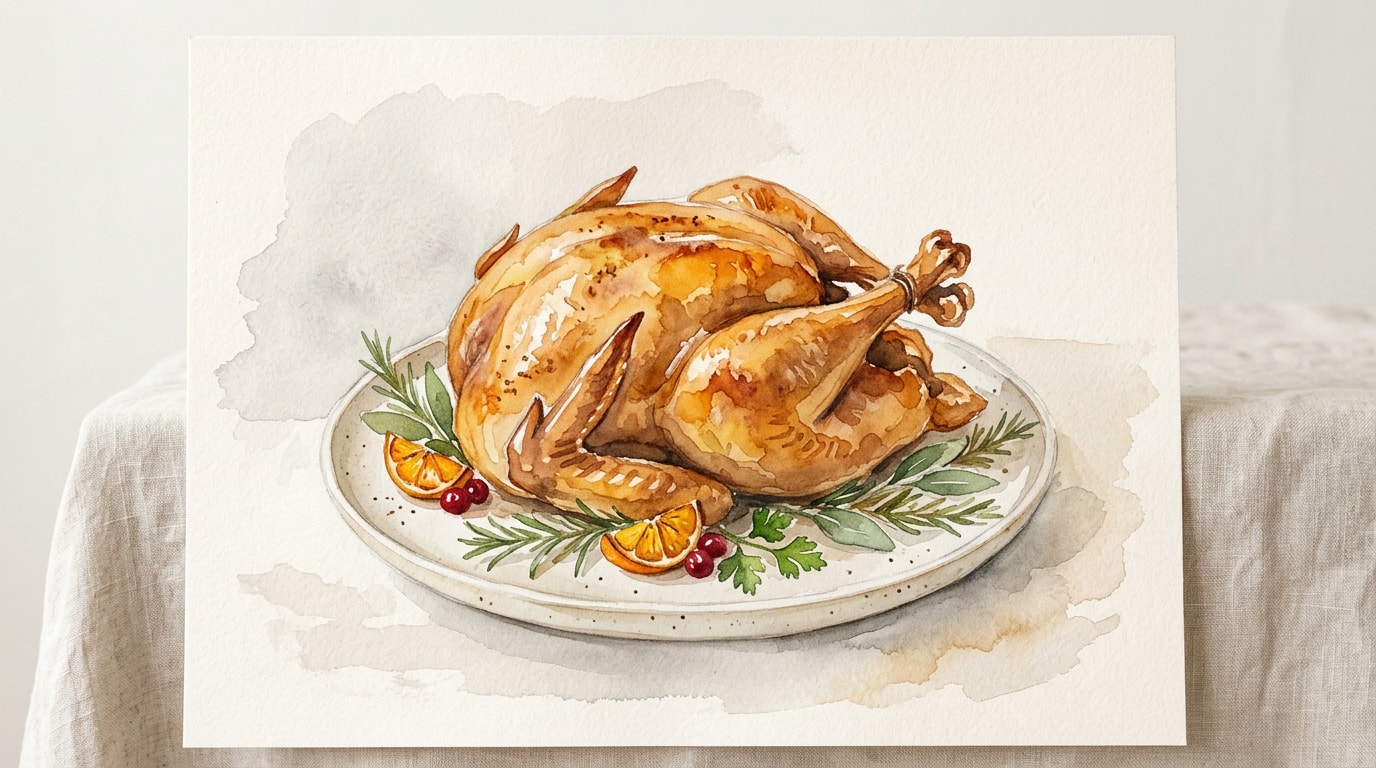
The Turkey
- 5500 g whole turkey, thawed, giblets and neck removed
Wet Brine
- 4000 ml water, divided into 1000ml hot and 3000ml cold
- 300 g kosher salt
- 150 g light brown sugar, packed
- 10 g whole black peppercorns
- 30 g garlic, smashed
- 2 g bay leaves, dried
Aromatics & Herb Butter
- 150 g unsalted butter, softened to room temperature
- 5 g fresh rosemary, finely chopped
- 5 g fresh thyme, finely chopped
- 300 g yellow onion, quartered
- 150 g lemon, quartered
Nutrition (per serving)
Method
Combine 1000ml of water, kosher salt, brown sugar, black peppercorns, smashed garlic, and bay leaves in a large pot. Bring to a gentle boil, stirring frequently until the salt and sugar are completely dissolved.
Remove the concentrated brine from the heat. Pour it into your food-safe brining container and stir in the remaining 3000ml of cold water to bring the temperature down safely.
Carefully submerge the whole turkey in the completely cooled brine. Cover the container and refrigerate for 12 to 18 hours.
Remove the turkey from the brine and discard the liquid. Rinse the bird very lightly inside and out, then pat it meticulously dry with paper towels. Place the turkey on a wire rack set over a baking sheet and return to the refrigerator uncovered for at least 2 hours to dry the skin.
Preheat your oven to 230°C/450°F. Ensure the oven racks are adjusted so the roasting pan will sit in the lower third of the oven.
In a small bowl, vigorously mix the softened unsalted butter with the chopped fresh rosemary and thyme until a uniform herb paste forms.
Stuff the main cavity of the dried turkey with the quartered onion and lemon. Using kitchen twine, tie the legs together securely to promote even cooking.
Gently slide your fingers under the skin of the turkey breast to loosen it from the meat. Massage half of the herb butter directly onto the meat under the skin. Rub the remaining herb butter evenly over the entire exterior of the bird.
Place the prepared turkey breast-side up on a rack set inside a large roasting pan. Roast at 230°C/450°F for exactly 30 minutes to blister and set the skin.
Without opening the oven door unnecessarily, reduce the oven temperature to 175°C/350°F. Continue roasting for an estimated 2 to 2.5 hours.
Test for doneness by inserting a reliable meat thermometer into the thickest part of the thigh, avoiding the bone. The turkey is safe and fully cooked when it reaches an internal temperature of 74°C/165°F.
Carefully transfer the turkey to a large carving board. Tent loosely with aluminum foil and let it rest undisturbed for 30 to 45 minutes before carving.
Chef's Notes
- The 2-hour uncovered resting period in the refrigerator is non-negotiable for crispy skin. Moisture is the enemy of browning, and the fridge acts as a dehydrator to cure the exterior.
- Applying the herb butter underneath the skin rather than just on top serves two purposes: it protects the delicate herbs from scorching in the high oven heat, and it basements the lean breast meat directly with fat.
- Do not stuff the turkey with bread stuffing if you want an evenly cooked bird. A densely packed cavity acts as an insulator, drastically slowing down the cooking time and risking overcooked breasts.
- Always measure the temperature in at least three places: the deepest part of the thigh, the thickest part of the breast, and the wing joint. Look for the lowest number.
Storage
Refrigerator: 4 days — Store carved meat off the bone in airtight containers. Save the carcass for stock.
Freezer: 3 months — Freeze meat submerged in gravy or tightly vacuum-sealed to prevent freezer burn.
Reheating: Gently reheat sliced meat in a covered dish with a splash of broth or gravy at 150 Celsius to prevent drying out.