Equipment
* optional
Ingredients
Meat
- 1000 g pork shoulder, diced into 2.5cm cubes
Seasonings and Liquid
- 60 ml dry red wine, ice cold
- 18 g kosher salt
- 8 g caraway seeds, lightly toasted and slightly crushed
- 15 g fresh parsley, finely chopped
- 4 garlic, minced
- 4 g black pepper, freshly ground
Casings
- 1 natural hog casings
Nutrition (per serving)
Method
Rinse the hog casings thoroughly under cold water. Soak them in a bowl of warm water for at least 30 minutes to soften. Flush the inside of the casings with running water to remove excess salt and check for tears.
Place the diced pork shoulder on a baking sheet and transfer to the freezer for 30 minutes until the edges are stiff but not frozen solid. Chill all grinder parts and the mixing bowl.
Working quickly, pass the semi-frozen pork shoulder through the meat grinder fitted with a medium die into the chilled mixing bowl. If the meat begins to turn mushy, return it to the freezer for 10 minutes.
Add the salt, lightly crushed caraway seeds, minced garlic, chopped parsley, black pepper, and ice-cold red wine to the ground pork. Knead the mixture vigorously with your hands for 3 to 5 minutes until it becomes highly tacky and sticks to your palm when inverted.
Load the meat mixture into the sausage stuffer. Thread the soaked casing onto the stuffing horn, leaving a small tail. Gently crank the stuffer to fill the casing evenly, taking care not to overstuff. Twist into 15cm links, alternating the twisting direction for each link.
Use a sterilized needle or sausage pricker to pierce any visible air bubbles in the links. Place the sausages on a wire rack set over a baking sheet and refrigerate uncovered overnight. This dries the casing for a better snap and allows flavors to meld.
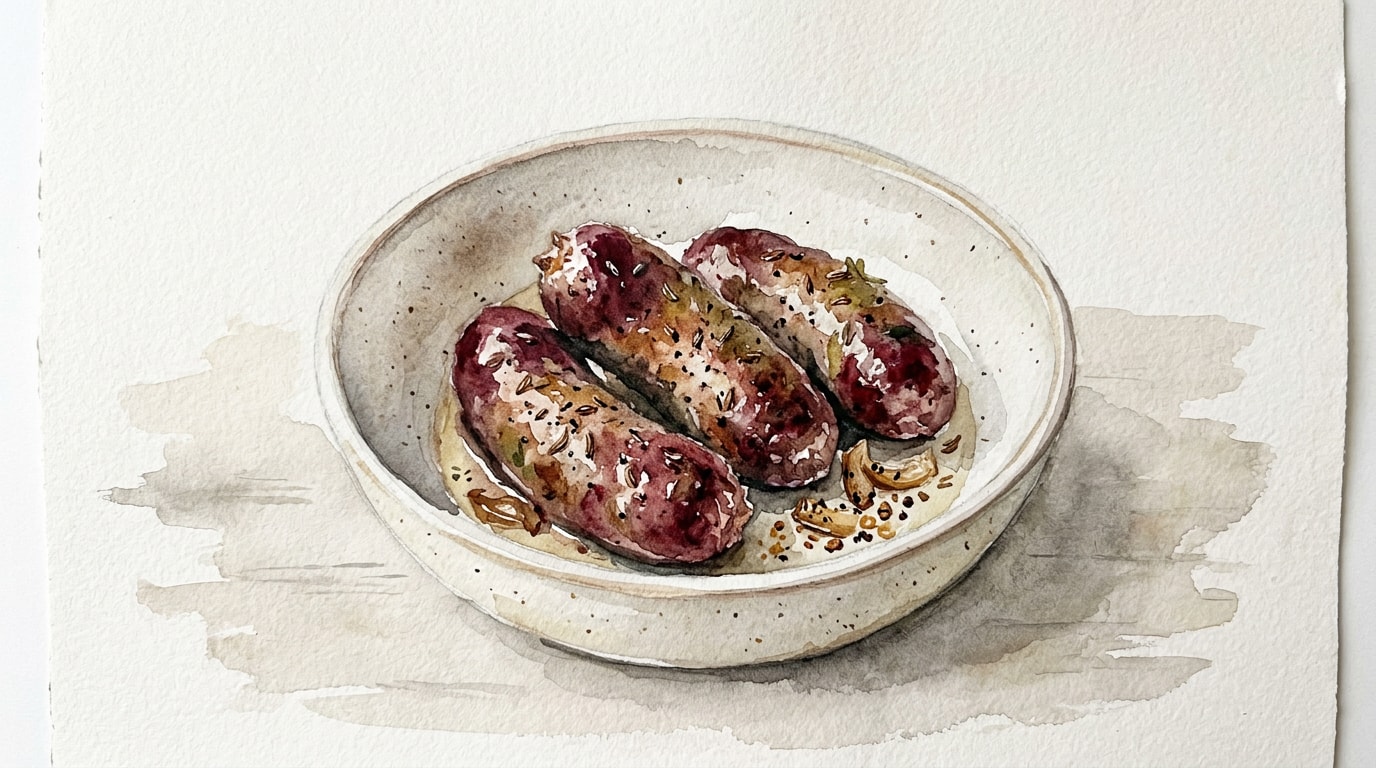
Heat a skillet over medium heat with a light coating of oil. Cook the sausages, turning occasionally, until deeply browned on all sides and the internal temperature reaches 71 degrees C (160 degrees F). Allow to rest for 5 minutes before serving.
Chef's Notes
- Temperature control is the absolute most important rule in charcuterie. Fat smear ruins texture. If your hands get too cold during the mixing phase, use a stand mixer with a paddle attachment on low speed.
- Developing the primary bind (myosin extraction) is non-negotiable. The salt denatures the meat proteins, allowing them to link together. Without this vigorous mixing step, you will end up with meatloaf in a tube rather than a snappy sausage.
- While dry red wine is specified, choose one with robust flavor but low tannins, such as a Pinot Noir or a lighter Merlot. High tannin wines can introduce an astringent quality when reduced inside the casing.
- Do not skip the overnight drying phase. A wet casing will steam rather than sear in the pan, completely eliminating the characteristic crisp snap of a proper sausage.
Storage
Refrigerator: 3 days — Store in an airtight container in the coldest part of the fridge.
Freezer: 3 months — Wrap tightly in plastic wrap and store in a freezer bag to prevent freezer burn.
Reheating: Thaw completely in the refrigerator before gently pan-frying or simmering until warmed through.