Equipment
Ingredients
Meat & Fat
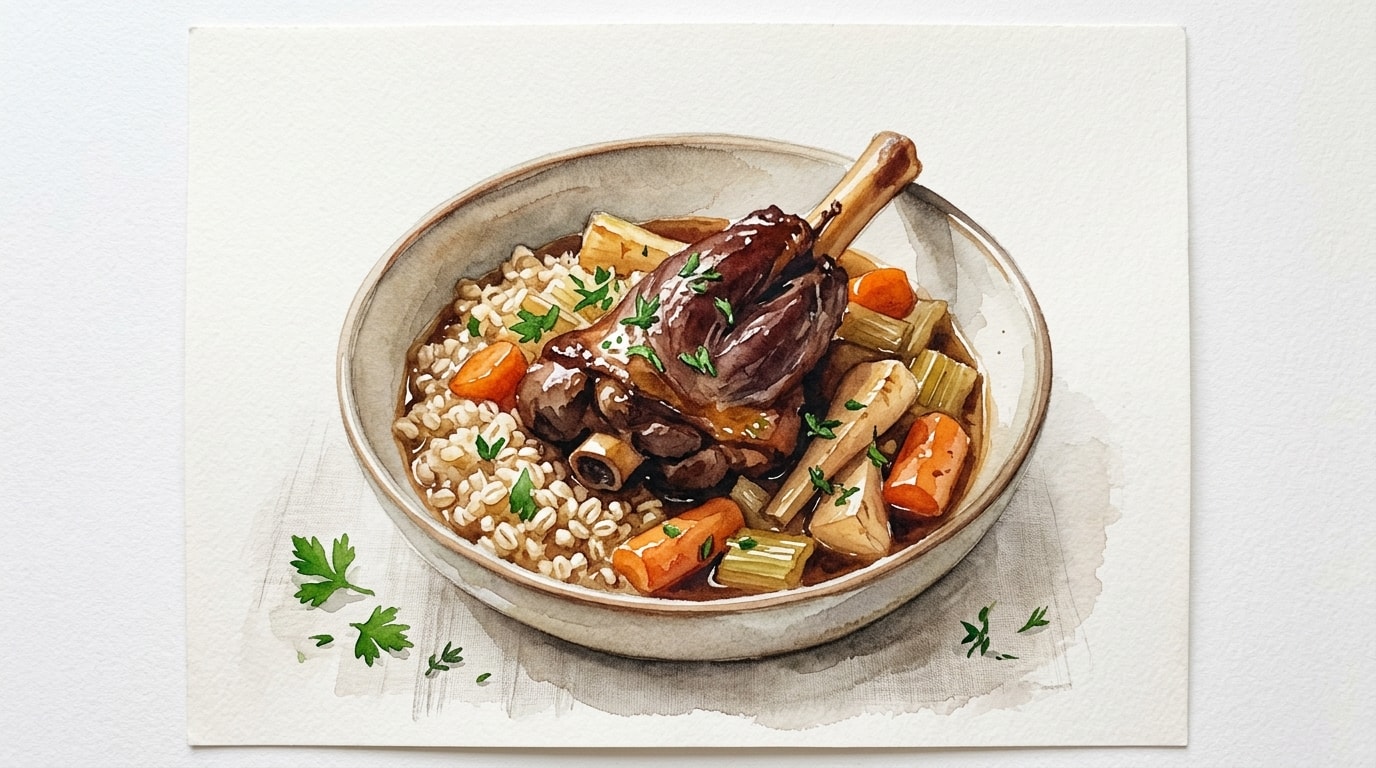
- 4 lamb shanks, bone-in, trimmed of excess surface fat
- 30 ml olive oil
Vegetables & Aromatics
- 1 yellow onion, diced
- 250 g carrots, peeled and cut into 2cm chunks
- 100 g celery, cut into 1cm slices
- 200 g parsnips, peeled and cut into 2cm chunks
- 4 garlic, minced
Liquids & Grains
- 30 g tomato paste
- 150 ml dry red wine
- 1000 ml beef stock, low-sodium preferred
- 150 g pearl barley, rinsed
Herbs & Seasonings
- 2 fresh rosemary, whole sprigs
- 4 fresh thyme, whole sprigs
- 2 bay leaves, dried
- kosher salt
- black pepper, freshly cracked
Nutrition (per serving)
Method
Preheat the oven to 160°C/320°F. Arrange an oven rack in the lower middle position to accommodate the Dutch oven.
Heat the olive oil in a large Dutch oven over medium-high heat. Generously season the lamb shanks with salt and pepper. Sear the shanks until deeply browned on all sides, working in batches if necessary so as not to crowd the pot. Transfer the browned shanks to a plate and set aside.
Reduce the heat to medium. Add the diced onion, carrots, celery, and parsnips to the rendered lamb fat in the pot. Sauté until the onions are translucent and the vegetables begin to soften.
Stir the minced garlic and tomato paste into the vegetables. Cook, stirring constantly, until the tomato paste darkens to a brick-red color and becomes highly fragrant.
Pour the red wine into the pot to deglaze. Use a wooden spoon to scrape up all the browned bits stuck to the bottom of the pot. Simmer until the wine has reduced by half.
Return the lamb shanks and any accumulated juices to the pot. Add the beef stock, pearl barley, rosemary, thyme, and bay leaves. Stir gently to combine. Bring the liquid to a rolling simmer.
Cover the Dutch oven with a tight-fitting lid and carefully transfer it to the preheated oven. Braise for 2 hours to 2 hours and 30 minutes, or until the lamb meat is extraordinarily tender and pulling away from the bone.
Remove the pot from the oven and let it rest uncovered for 10 minutes. Skim any excess liquid fat from the surface of the stew. Discard the spent rosemary stems, thyme stems, and bay leaves before serving.
Chef's Notes
- To effortlessly remove excess fat, you can make this dish a day in advance. Chill it overnight in the refrigerator; the fat will solidify into a disk on the surface that can be cleanly lifted off before reheating.
- Always sear the meat thoroughly. The brown crust formed during searing provides a deep roasted flavor profile that boiling or simmering alone cannot achieve.
- Pearl barley acts as both a carbohydrate component and a thickener. As it releases starch into the cooking liquid, it naturally creates a luxurious, velvety body for the stew.
Storage
Refrigerator: 4 days — Store in an airtight container. The barley will continue to absorb liquid, so you may need to add a splash of stock when reheating.
Freezer: 3 months — Freeze in individual portions. Thaw overnight in the refrigerator before reheating.
Reheating: Reheat gently on the stovetop over medium-low heat until piping hot throughout, adding water or stock to loosen the stew if necessary.