Equipment
* optional
Ingredients
Marinade
- 500 ml dry red wine, room temperature
- 60 ml brandy
- 1 onion, roughly chopped
- 1 carrot, roughly chopped
- 4 fresh thyme, sprigs
- 2 bay leaves
Beef & Bacon
- 1500 g boneless beef chuck roast, whole piece, tied
- 150 g thick-cut bacon, cut into lardons (strips)
- 30 ml vegetable oil
- salt
- black pepper, freshly cracked
Braising Aromatics
- 4 carrots, peeled and cut into large chunks
- 2 celery stalks, diced
- 4 garlic cloves, smashed
- 300 ml beef stock, high quality
- 30 g tomato paste
Nutrition (per serving)
Method
Combine the red wine, brandy, chopped onion, chopped carrot, thyme sprigs, and bay leaves in a large bowl. Submerge the beef roast in this marinade, cover, and refrigerate for at least 12 hours (up to 24 hours). Turn the meat once halfway through.
Preheat your oven to 150°C/300°F. Remove the beef from the marinade and pat it thoroughly dry with paper towels (wet meat will not brown). Strain the marinade through a sieve, reserving the liquid and discarding the vegetables/herbs used for marinating. Season the beef generously with salt and pepper.
In a large Dutch oven over medium heat, cook the bacon lardons until the fat has rendered and the bacon is crisp. Remove bacon with a slotted spoon and set aside, leaving the fat in the pot.
Increase heat to medium-high. Add the beef roast to the pot and sear deeply on all sides until a dark brown crust forms. Do not rush this step; it builds the flavor base. Remove beef and set aside.
Lower heat to medium. Add the fresh carrots, celery, and garlic to the pot. Sauté for 5 minutes until slightly softened. Stir in the tomato paste and cook for 1 minute to darken.
Pour in the reserved marinade liquid and the beef stock. Scrape the bottom of the pot with a wooden spoon to release any browned bits (fond). Bring to a simmer.
Return the beef roast and the cooked bacon to the pot. The liquid should reach about halfway up the meat. Cover with a heavy lid and transfer to the preheated oven. Braise for 3 to 3.5 hours, turning the meat every hour.
Remove the pot from the oven. Transfer the beef to a cutting board and tent loosely with foil to rest for 15 minutes. If the sauce is too thin, simmer it on the stovetop over medium-high heat until it coats the back of a spoon.
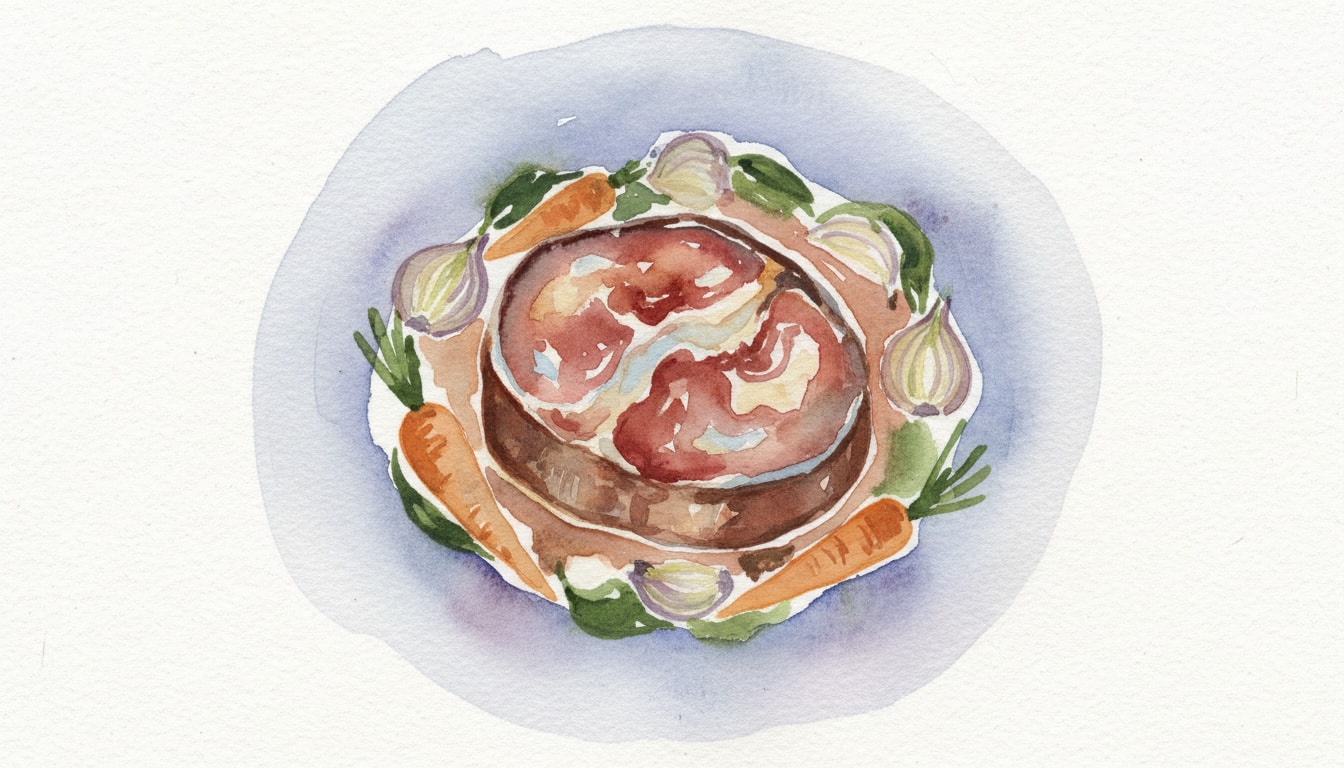
Slice the beef against the grain into thick slabs. Arrange on a platter and spoon the sauce and vegetables generously over the top.
Chef's Notes
- Patting the meat dry after marinating is the single most critical step for flavor. If the meat is wet, it will steam instead of searing, and you will lose the rich fond development.
- Traditionally, this dish involves 'larding'—threading strips of fat through the meat using a special needle. Using a chuck roast, which has good internal marbling, mimics this effect without the special tools.
- The brandy adds a distinct sweetness and complexity that separates this from a standard pot roast. Do not skip it; if you must, substitute with a splash of sherry vinegar at the end to brighten the heavy sauce.
- This dish tastes arguably better the next day as the gelatin settles and flavors meld. Reheat gently.
- Serve with potato gratin, mashed potatoes, or buttered egg noodles to soak up the sauce.
Storage
Refrigerator: 4 days — Flavor improves significantly after 24 hours.
Freezer: 3 months — Freeze slices in sauce to prevent drying out.
Reheating: Gently warm in a covered pot over low heat, adding a splash of water if the sauce is too thick.