Equipment
Ingredients
Stew Base
- 1000 g beef chuck, cut into 4cm pieces
- 250 g chorizo sausage, sliced thickly
- 200 g yellow onion, diced
- 150 g carrots, diced
- 100 g celery, diced
- 15 g garlic, minced
- 30 g tomato paste
- 30 g all-purpose flour
- 250 ml dry red wine
- 750 ml beef stock
- 5 g fresh thyme, leaves picked
- 2 bay leaves
Herb Dumplings
- 150 g self-raising flour
- 75 g beef suet
- 75 ml whole milk
- 10 g fresh parsley, finely chopped
- 3 g fine sea salt
Horseradish Mash
- 1000 g russet potatoes, peeled and cut into uniform chunks
- 100 g unsalted butter, cubed
- 100 ml double cream
- 45 g prepared horseradish
- kosher salt
Nutrition (per serving)
Method
Preheat the oven to 150°C/300°F. Ensure all meats and vegetables are chopped and measured before beginning the searing process.
Place the Dutch oven over medium heat. Add the sliced chorizo and cook until the spicy red fat renders out and the edges crisp. Remove the chorizo with a slotted spoon and set aside, leaving the vibrant orange fat in the pan.
Increase the heat to medium-high. Working in batches to avoid crowding the pan, sear the beef chunks in the rendered chorizo fat until deeply browned on all sides. Transfer the browned beef to the plate with the chorizo.
Lower the heat to medium. Add the diced onion, carrots, celery, and garlic to the residual fat in the Dutch oven. Cook until softened and lightly browned, using the moisture from the vegetables to scrape up any fond from the bottom of the pot.
Stir the tomato paste and all-purpose flour into the vegetables, cooking for two minutes to cook out the raw flour taste. Pour in the dry red wine, scraping the bottom of the pot vigorously with a wooden spoon, and let it reduce by half.
Return the seared beef and cooked chorizo to the pot. Pour in the beef stock, then add the fresh thyme and bay leaves. Bring the liquid to a gentle simmer, cover with the lid, and transfer to the preheated oven at 150°C/300°F for two hours.
With forty-five minutes left on the stew, place the peeled potato chunks in a large saucepan. Cover with cold water, season generously with salt, and bring to a steady boil over medium-high heat. Simmer until the potatoes are completely tender.
While the potatoes boil, prepare the dumplings. In a mixing bowl, combine the self-raising flour, fine sea salt, chopped parsley, and cold suet or grated butter. Use your fingertips to gently rub the fat into the flour until the mixture resembles coarse breadcrumbs.
Gradually stir the whole milk into the flour mixture until a soft, slightly sticky dough forms. With lightly floured hands, gently divide and roll the dough into six to eight equal-sized balls.
Drain the cooked potatoes thoroughly and let them sit in the hot, empty saucepan for two minutes to steam dry. Pass the steaming hot potatoes through a potato ricer back into the pot or a clean warm bowl.
Warm the double cream and butter slightly, then gently fold them into the riced potatoes along with the prepared horseradish. Season with salt to taste, cover, and keep warm.
Remove the stew from the oven and carefully discard the bay leaves. Skim any excess fat from the surface. Arrange the dumplings on top of the bubbling stew, leaving space between them to allow for expansion. Cover immediately and return to the oven at 150°C/300°F for twenty minutes.
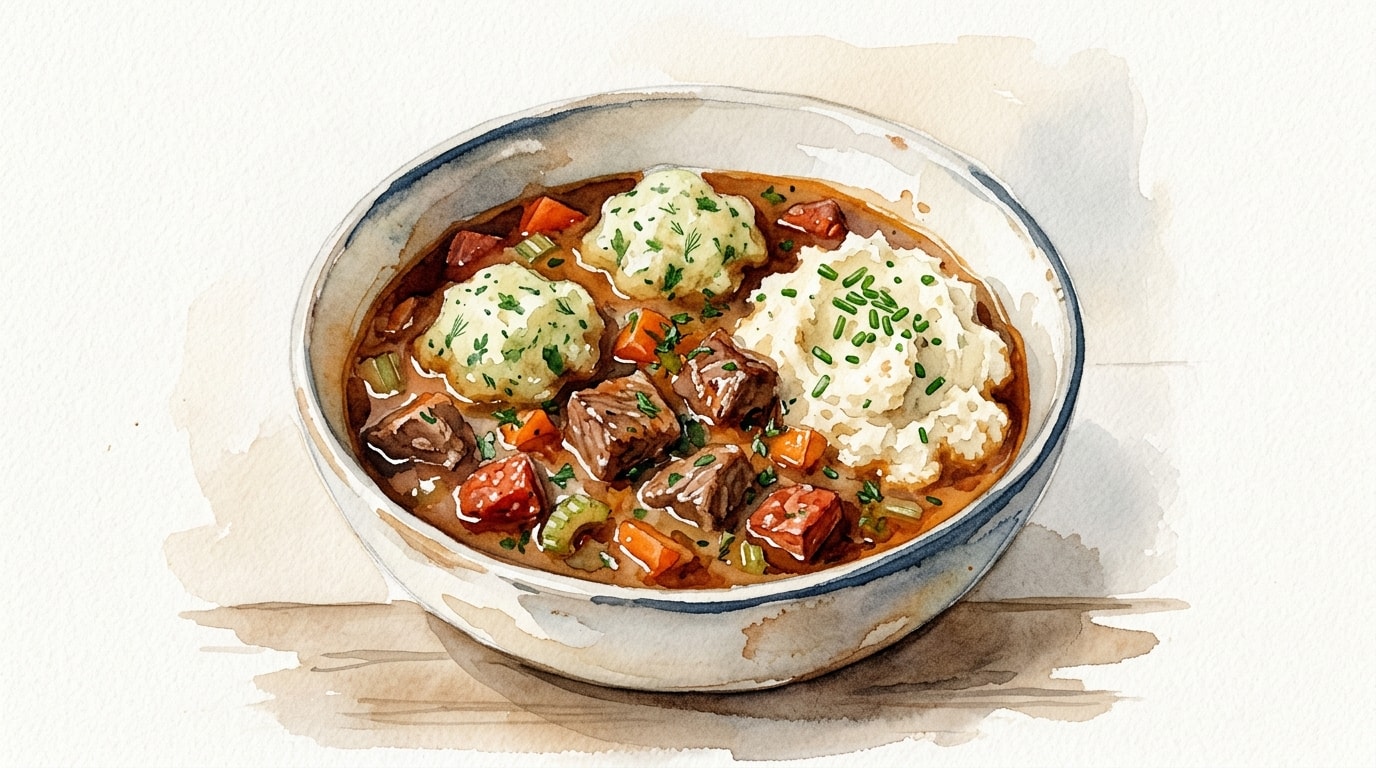
Spoon a generous bed of the warm horseradish mash into wide, shallow bowls. Ladle the rich beef and chorizo stew over the mash, ensuring each portion is topped with at least one fluffy dumpling. Serve immediately.
Chef's Notes
- Rendering the chorizo first provides a deeply flavorful, paprika-infused fat perfect for searing the beef. This layered fat building technique is essential for complex stews.
- For the absolute lightest dumplings, handle the dough delicately and ensure the stew liquid is actively simmering when the dumplings are placed on top. The initial blast of steam activates the baking powder immediately.
- Pushing potatoes through a ricer while they are steaming hot is crucial for a smooth, velvety texture. Starch granules burst and become gummy if they are overworked or processed when cool.
- Freshly grated horseradish root can be substituted for prepared jarred horseradish, but proceed with caution as the pungency of fresh root can vary wildly. Taste and adjust incrementally.
Storage
Refrigerator: 3 days — Store dumplings in a separate container from the stew if possible to prevent them from becoming completely saturated and losing structural integrity.
Freezer: 2 months — Stew freezes exceptionally well. Dumplings and mash will experience slight textural changes upon thawing.
Reheating: Gently reheat stew on the stovetop over low heat. Reheat mash with a splash of milk to restore creaminess.