Equipment
Ingredients
Binder Gel
- 15 g psyllium husk powder
- 350 ml warm water, heated to 40 degrees Celsius
Dry Ingredients
- 150 g fine brown rice flour
- 100 g tapioca starch
- 50 g sorghum flour
- 7 g instant yeast
- 10 g white sugar
- 6 g fine sea salt
Wet Ingredients
- 30 ml extra virgin olive oil
- 5 ml apple cider vinegar
Nutrition (per serving)
Method
Place a pizza stone in the oven and preheat to 250 degrees Celsius or 480 degrees Fahrenheit.
In a small bowl, briskly whisk the psyllium husk powder into the warm water until completely smooth. Set aside for 10 minutes until a thick, gelatinous paste forms.
In a large mixing bowl, whisk together the brown rice flour, tapioca starch, sorghum flour, instant yeast, sugar, and fine sea salt to ensure an even distribution of the starches and yeast.
Add the thickened psyllium gel, extra virgin olive oil, and apple cider vinegar to the dry ingredients. Knead the mixture with your hands inside the bowl for 3 to 5 minutes until a cohesive, smooth dough forms. It will be slightly tacky but should hold together well.
Cover the bowl with a damp towel or plastic wrap. Let the dough proof in a warm spot for 1 hour, or until slightly puffed. Note that gluten-free dough will not double in size like traditional wheat dough.
Turn the dough out onto a clean surface and divide it into two equal portions. Place one portion onto a sheet of parchment paper. Lightly oil your hands and gently press the dough outward from the center to form a 10-inch circle, leaving a slightly thicker rim for the crust.
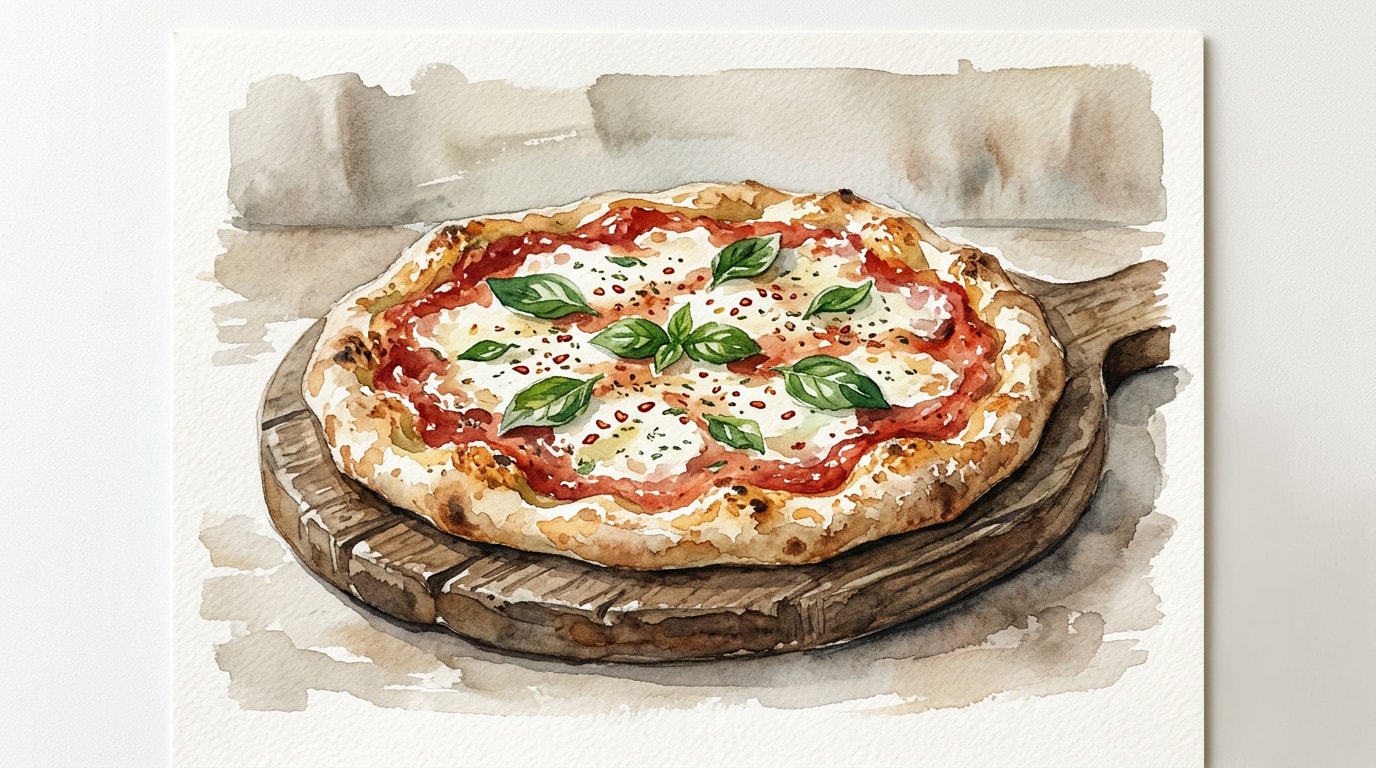
Slide the parchment paper with the shaped dough directly onto the preheated pizza stone. Par-bake the naked base for 8 to 10 minutes at 250 degrees Celsius or 480 degrees Fahrenheit.
Remove the par-baked crust from the oven. It is now ready to be topped and finished in the oven for an additional 5 to 7 minutes, or cooled and frozen for later use.
Chef's Notes
- The combination of brown rice, tapioca, and sorghum provides an optimal balance of whole-grain flavor, chew, and lightness. Do not substitute the tapioca starch, as it is crucial for the chewy texture.
- Psyllium husk is a hydrocolloid that acts as the gluten substitute here. It absorbs a massive amount of water to create a flexible, extensible network that xanthan gum alone cannot achieve.
- Unlike wheat dough, gluten-free pizza dough is pressed rather than stretched. Avoid using a rolling pin if possible, as pressing with dimpled fingers preserves the delicate gas bubbles from the yeast.
- Apple cider vinegar slightly lowers the pH of the dough, which relaxes the starches and provides an optimal environment for the yeast to thrive in the absence of wheat malt.
Storage
Refrigerator: 3 days — Wrap tightly in plastic wrap to prevent drying out.
Freezer: 3 months — Freeze par-baked bases wrapped in plastic and foil. Do not freeze raw dough.
Reheating: Top par-baked frozen base and bake directly from frozen at 250C/480F.