Equipment
Ingredients
Savory Pork Sauce
- 15 ml vegetable oil
- 300 g ground pork
- 15 g garlic, minced
- 15 g fresh ginger, minced
- 30 g scallions, finely chopped, white and green parts separated
- 45 g sweet bean sauce (tianmianjiang)
- 45 g yellow soybean paste (huangjijiang)
- 15 ml light soy sauce
- 5 ml dark soy sauce
- 15 ml shaoxing wine
- 10 g white sugar
- 120 ml water
Noodles and Garnish
- 400 g fresh wheat noodles
- 100 g cucumber, julienned
- 50 g carrot, peeled and julienned
- chili oil
Nutrition (per serving)
Method
In a mixing bowl, combine the sweet bean sauce, yellow soybean paste, light soy sauce, dark soy sauce, Shaoxing wine, white sugar, and water. Stir until fully homogenous and smooth.
Using a chef knife and cutting board, finely julienne the cucumber and carrot. Set the garnishes aside for assembly.
Heat vegetable oil in a wok over medium-high heat. Add the ground pork and stir-fry until the moisture evaporates and the meat begins to brown and render its fat, leaving a clear oil in the pan.
Add the minced garlic, minced ginger, and the white parts of the chopped scallions to the pork. Stir-fry constantly until highly fragrant.
Pour the prepared sauce mixture into the wok. Bring to a rapid simmer, then reduce heat to low. Cook until the sauce is thick, glossy, and the oil slightly separates at the edges.
Meanwhile, bring water to a rapid boil at 100 degrees Celsius or 212 degrees Fahrenheit in a large pot. Add the fresh wheat noodles and cook according to package instructions until tender but pleasantly chewy. Drain thoroughly.
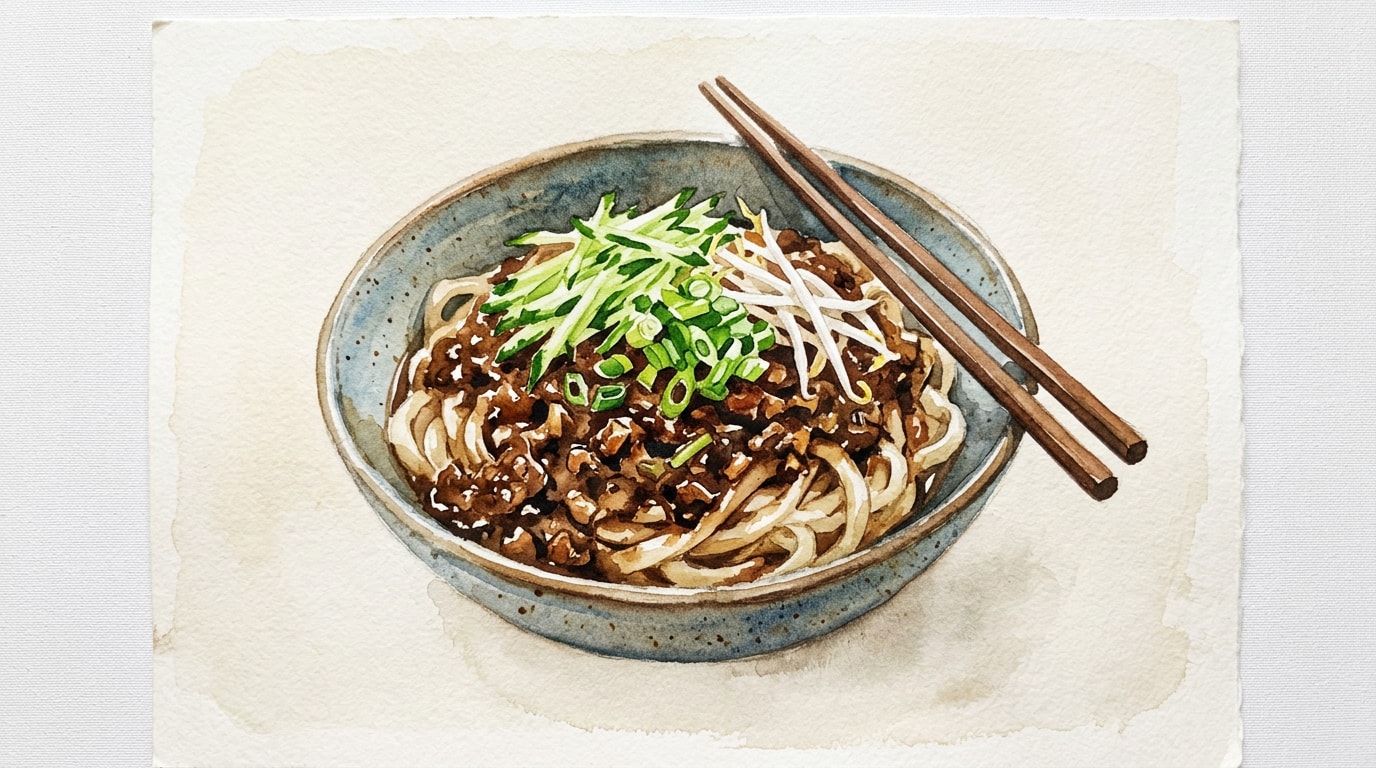
Divide the hot drained noodles into serving bowls. Ladle the hot savory meat sauce generously over the center of the noodles. Surround the sauce with the julienned cucumber and carrot. Garnish with the reserved green scallion tops and optional chili oil. Diners should toss the bowl thoroughly before eating.
Chef's Notes
- The secret to an authentic Zha Jiang sauce is patience during the frying and simmering stages. Allowing the fermented bean paste to fry in the rendered pork fat removes its raw, harsh edge and transforms it into a mellow, complex umami profile.
- Zha Jiang literally translates to fried sauce. Ensure you cook the pork initially until it sizzles in its own clear fat before adding the aromatics, rather than just boiling the meat in its own juices.
- This meat sauce is an exceptional make-ahead component for busy weeknights. It will keep in the refrigerator for up to a week, and its flavor actually deepens and improves after the first day.
- Traditional Beijing Zha Jiang Mian relies heavily on the distinct flavor of yellow soybean paste. If you absolutely cannot source it, Korean doenjang makes a highly effective substitute due to similar fermentation processes.
Storage
Refrigerator: 1 week — Store the meat sauce and chopped vegetables in separate airtight containers. Cook fresh noodles when ready to serve.
Freezer: 3 months — The cooked pork sauce freezes exceptionally well. Thaw overnight in the refrigerator before reheating.
Reheating: Warm the meat sauce in a saucepan over medium heat, or microwave until bubbling. Serve over freshly boiled noodles.