Equipment
Ingredients
Mustard Paste
- 10 g black mustard seeds
- 10 g yellow mustard seeds
- 30 ml water, warm
- 40 g unsweetened coconut, freshly grated or rehydrated desiccated
- 2 serrano pepper, roughly chopped
- 50 g red onion, roughly diced
- 3 g ground turmeric
- 2 g red chile powder
- 5 g salt
- 15 ml mustard oil
Fish and Assembly
- 600 g cod fillets, cut into 4 equal pieces
- 15 ml mustard oil, raw
Nutrition (per serving)
Method
Combine the black and yellow mustard seeds with 30ml of warm water in a small bowl. Let them soak for 10 minutes to soften and reduce their inherent bitterness.
Preheat the oven to 200°C/400°F.
Transfer the soaked mustard seeds and any remaining soaking liquid into a blender. Add the grated coconut, serrano peppers, red onion, ground turmeric, red chile powder, salt, and 15ml of the mustard oil. Blend until a smooth, thick paste forms.
Pat the cod fillets dry with a paper towel. Coat each piece of fish completely and evenly with the blended mustard-coconut paste.
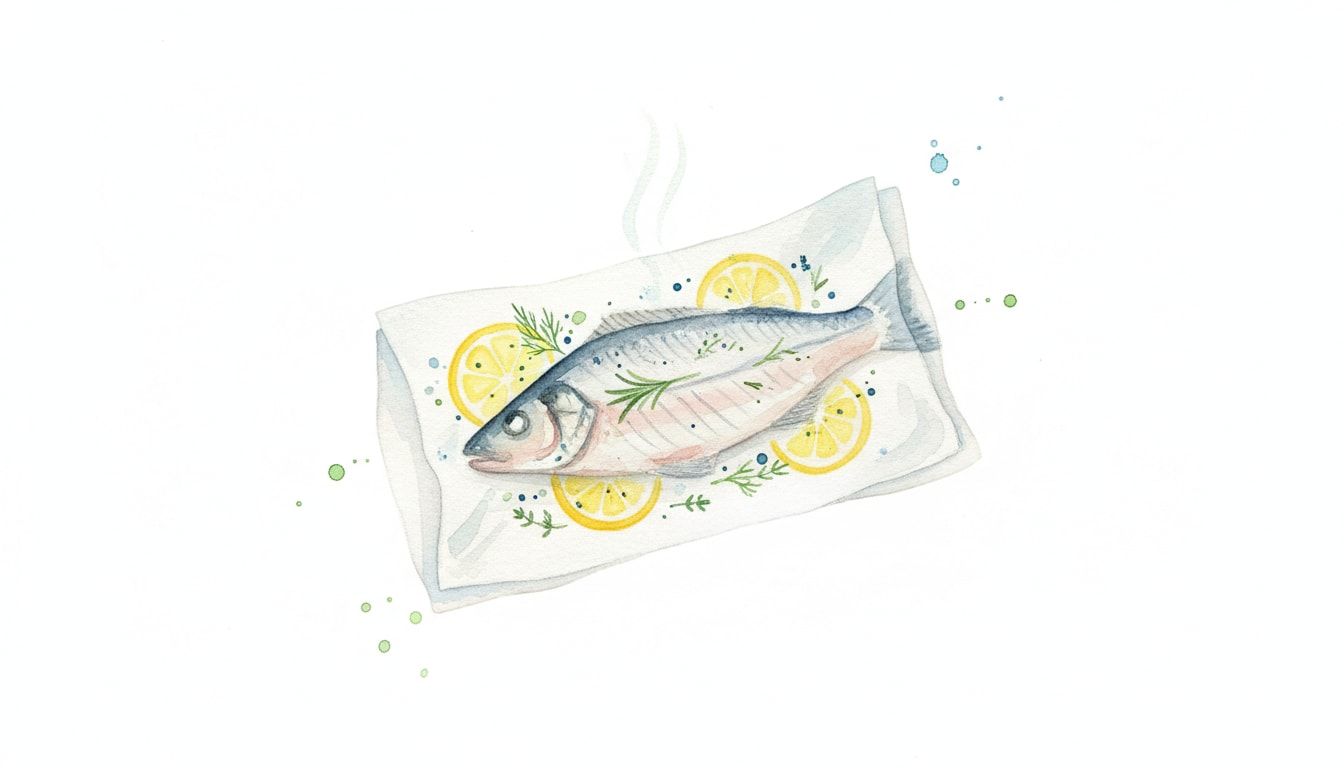
Place each coated cod fillet in the center of a square piece of aluminum foil. Bring the edges of the foil together and fold them tightly over themselves to create a sealed packet, ensuring there is a little empty space above the fish for steam to circulate.
Place the sealed foil packets on a baking sheet. Bake for 12 to 15 minutes at 200°C/400°F until the fish reaches an internal temperature of 63°C/145°F and flakes easily.
Carefully open the foil packets, taking care to avoid the hot escaping steam. Drizzle the remaining 15ml of raw mustard oil over the hot fish fillets and serve immediately.
Chef's Notes
- Mustard oil has a pungent, sinus-clearing quality similar to horseradish. Using raw mustard oil as a finishing drizzle is deeply authentic to Bengali cuisine and provides a signature fiery kick.
- If you cannot find food-grade mustard oil, you can mimic the pungency slightly by infusing neutral oil with a pinch of dry mustard powder, though the authenticity of the dish relies heavily on real mustard oil.
- For the best texture in your paste, use fresh coconut if possible. If using desiccated coconut, soak it in warm water for 5 minutes alongside your mustard seeds to rehydrate it before blending.
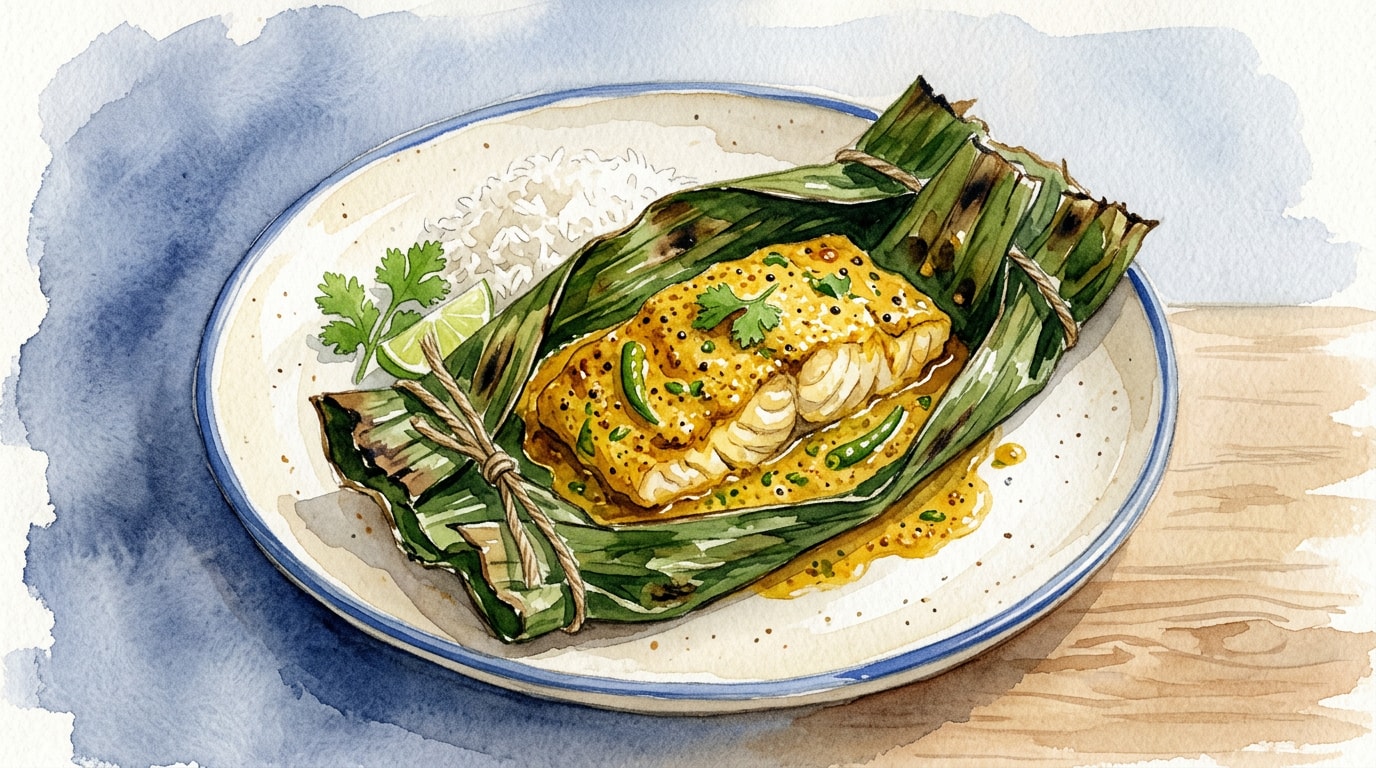
- Traditional paturi is wrapped in lightly toasted banana leaves. While aluminum foil lacks the subtle tea-like aroma a banana leaf imparts, it provides an airtight seal that guarantees a perfectly steamed, foolproof weeknight meal.
Storage
Refrigerator: 2 days — Keep in the sealed foil packets to retain moisture
Reheating: Reheat gently in the oven at 150 Celsius for 10 minutes until just warm to avoid overcooking the fish