Equipment
Ingredients
Lentil Base
- 100 g toor dal, rinsed well
- 600 ml water
- 2 g ground turmeric
Vegetables and Broth
- 15 g tamarind paste
- 300 ml water
- 100 g carrot, diced into bite-sized pieces
- 100 g eggplant, cubed
- 80 g green beans, cut into 5cm pieces
- 100 g tomato, chopped
- 15 g sambar powder
- 8 g salt
Tempering (Tadka)
- 15 ml coconut oil
- 3 g black mustard seeds
- 2 g cumin seeds
- 1 g fenugreek seeds
- 2 dried red chilies
- 1 g asafoetida
- 15 fresh curry leaves, washed and dried
Garnish
- 10 g fresh cilantro, roughly chopped
Nutrition (per serving)
Method
Place the rinsed toor dal, 600ml water, and ground turmeric into a pressure cooker or large pot. Cook at high pressure for 15 minutes, or boil at 100°C/212°F for 45 minutes until the lentils are completely soft and falling apart.
Using a whisk, vigorously beat the cooked lentils until they form a smooth, homogenous puree without distinct grains. Set aside.
In a medium saucepan, combine the tamarind paste, 300ml water, carrot, eggplant, green beans, tomato, sambar powder, and salt. Bring to a boil at 100°C/212°F, then reduce the heat to maintain a steady simmer at around 90°C/195°F for 15 minutes.
Pour the mashed lentils into the simmering vegetable and tamarind broth. Stir well to combine. Simmer for an additional 5 minutes to meld the flavors. If the stew is too thick, incorporate a splash of hot water.
Heat coconut oil in a small frying pan over medium-high heat, around 170°C/340°F. Add the black mustard seeds. As soon as they begin to sputter, add the cumin seeds, fenugreek seeds, and dried red chilies.
Immediately remove the small frying pan from the heat and stir in the asafoetida and fresh curry leaves. They will sizzle violently. Carefully pour this entire tempering mixture over the simmering sambar.
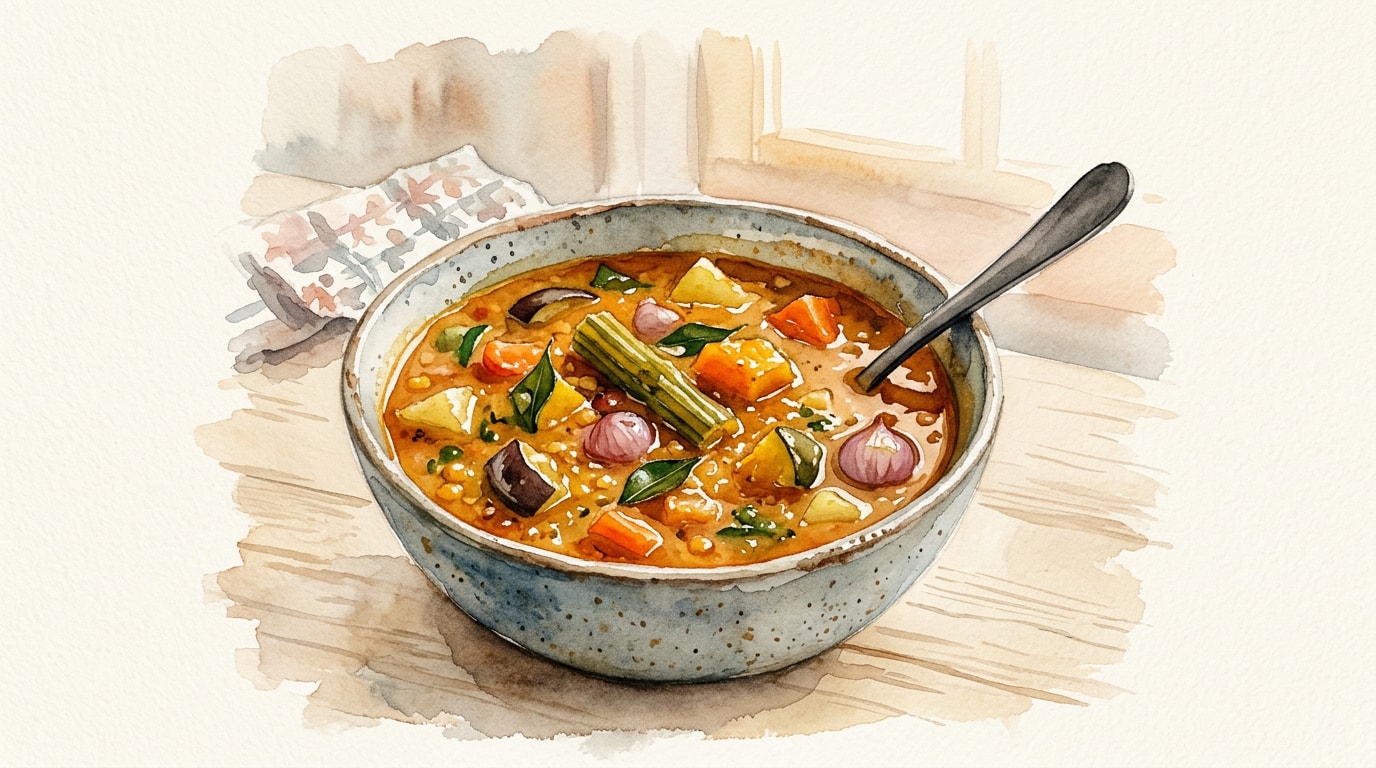
Gently fold the tempered spices and oils into the sambar. Remove from heat, garnish with fresh chopped cilantro, and serve hot.
Chef's Notes
- The quality of your sambar powder fundamentally dictates the final flavor profile of the dish. Source a high-quality brand or, ideally, toast and grind your own spices from scratch.
- Do not aggressively boil the sambar after the final tempering is added. Boiling evaporates the volatile aromatic oils released from the curry leaves and spices.
- Resting the sambar for at least 30 minutes before serving allows the tamarind, spices, and lentils to properly harmonize into a unified broth.
- For the most authentic texture, do not dice the vegetables too finely. They should retain their structural integrity while being completely tender.
Storage
Refrigerator: 4 days — Flavors deepen and harmonize beautifully overnight.
Freezer: 3 months — Vegetables may soften further upon thawing, but the broth retains its flavor.
Reheating: Reheat gently on the stovetop over medium heat, adding a splash of water if the stew has thickened too much.